
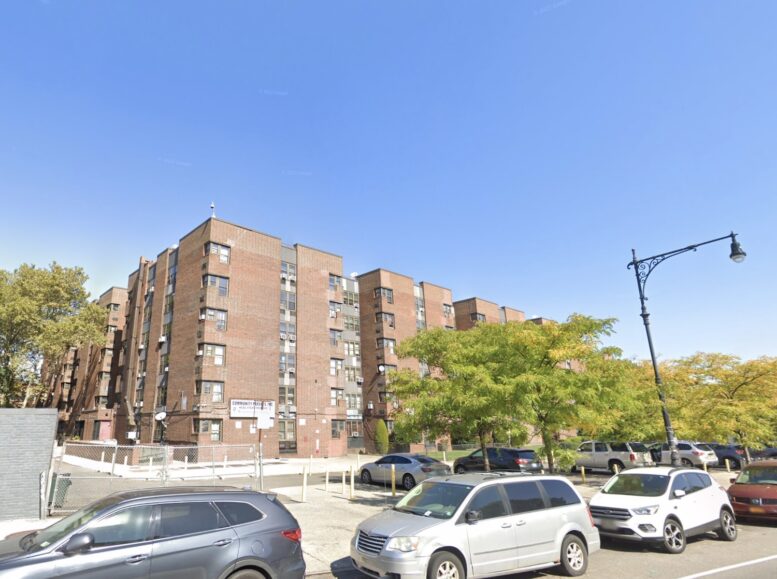
Governor Kathy Hochul announced that seven New York City properties have been recommended for listing on the State and National Registers of Historic Places, highlighting sites across Brooklyn, The Bronx, Manhattan, and Staten Island. The NYC nominations include affordable and public housing developments, neighborhood health and religious institutions, and a Depression-era clinic with later community-organized uses, many designed by notable architects and firms.
In Brooklyn, the Brooklyn Garden Apartments in Wallabout, designed by Frank H. Quinby and constructed 1929–1932 under the 1926 State Housing Law, is recognized for its garden-apartment site plan of two U-shaped buildings around a central courtyard and for pioneering the law’s eminent domain provision. Also in Brooklyn, Fulton Park Plaza in Bedford-Stuyvesant, designed 1972–1974 by L.E. Tuckett & Thompson, was developed by Jackie Robinson with substantial community input.
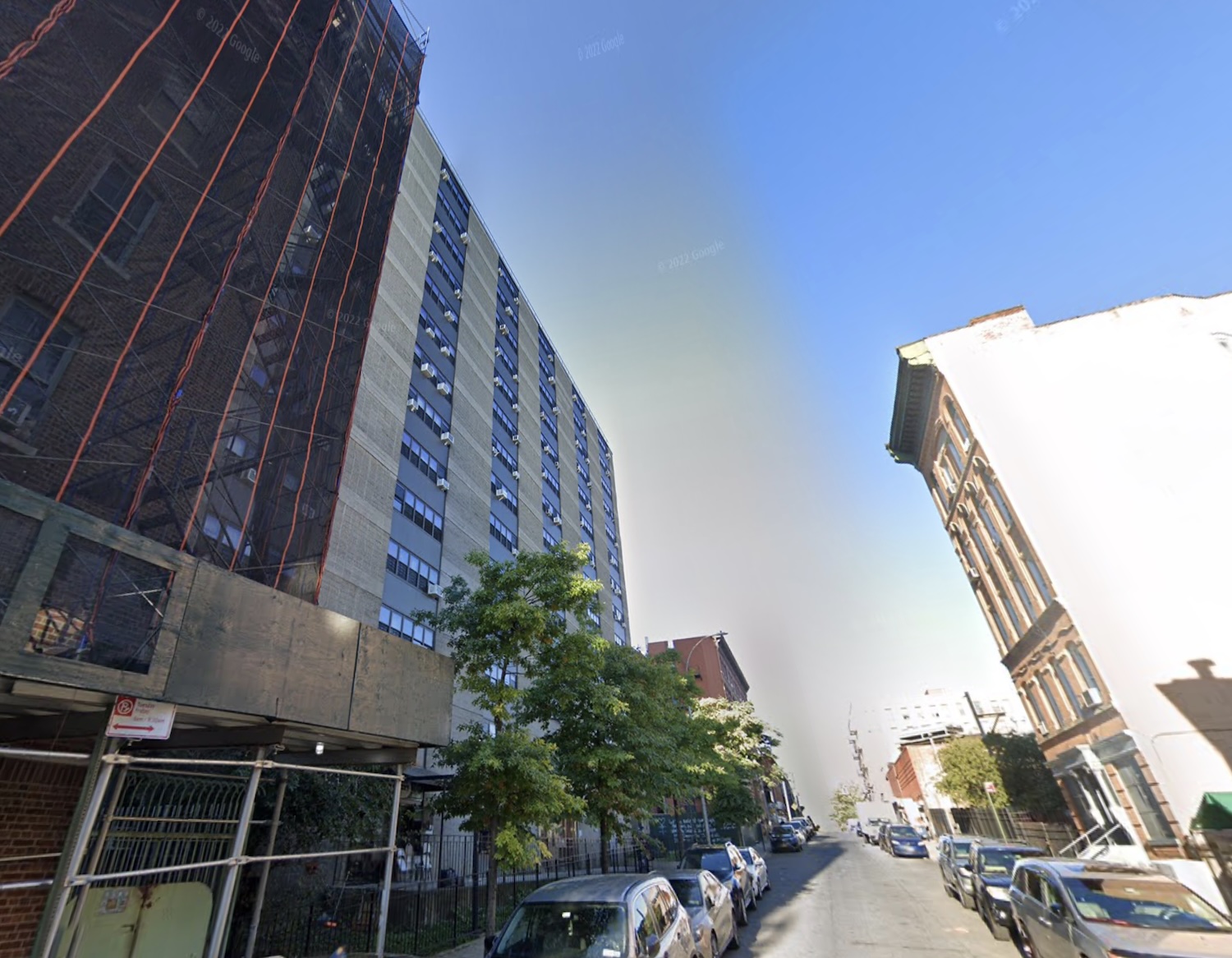
370 E 152nd Street, via Google Maps.
In The Bronx and Manhattan, the East 152nd Street–Courtlandt Avenue Houses in Melrose were designed by the architectural firm Ames Kagan Stewart. The complex exemplifies NYCHA’s vest-pocket and turnkey programs and grew out of a resident-driven Melrose-Morrisania planning process. The Mott Haven Health Center, which opened in 1937, was designed by William H. Gompert and Kenneth M. Murchison as a Public Works Administration–funded Modern Classical clinic. It was planned with dedicated treatment zones and a notable double-height light-therapy room. In the 1970s, the facility housed the Lincoln Detox People’s Program, which advanced acupuncture-based addiction treatment.
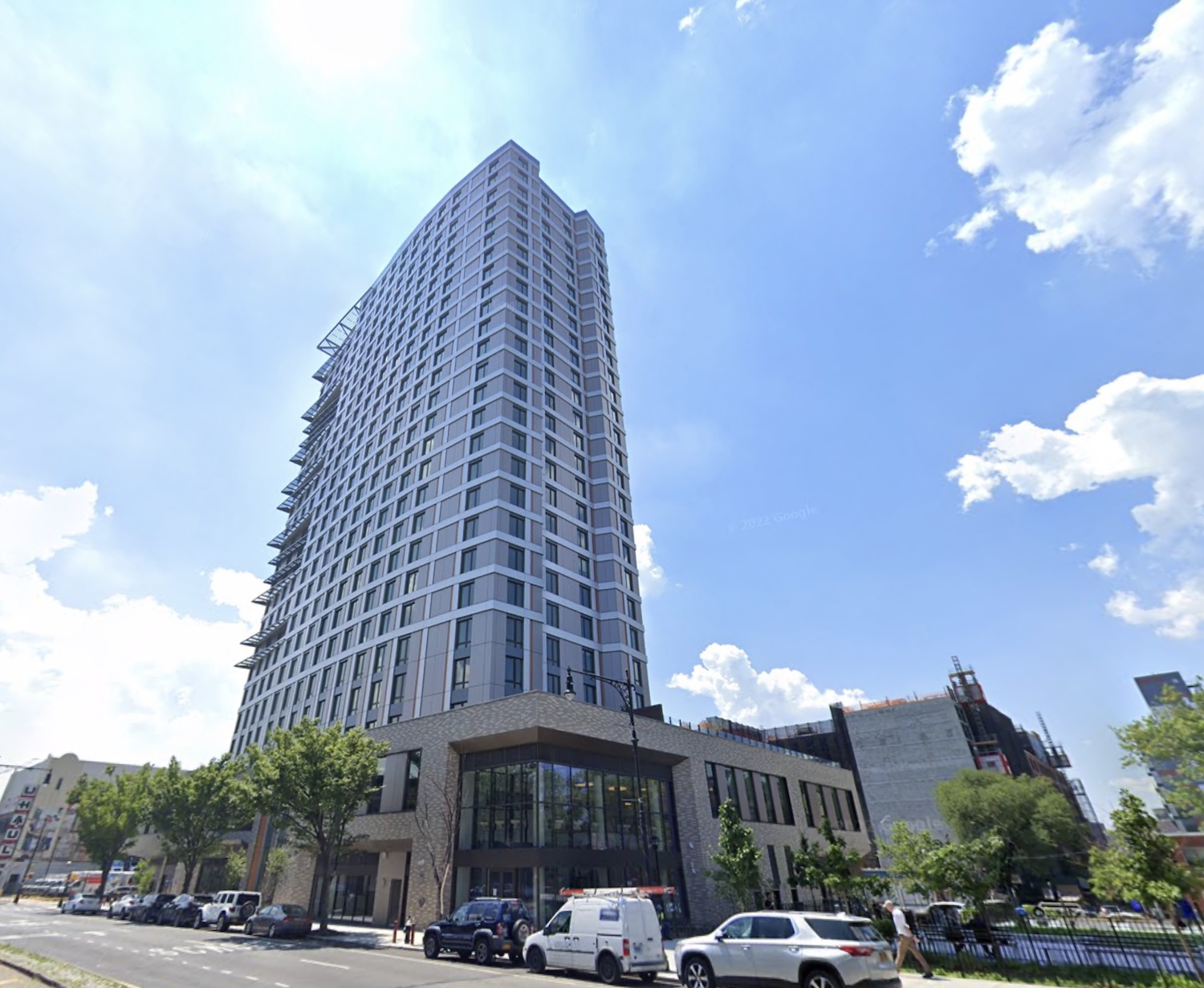
448 Grand Concourse, via Google Maps.
In East Harlem, the Jackie Robinson Houses were built between 1973 and 1974 and designed by the firm Bond, Ryder and Associates, led by J. Max Bond Jr. and Donald P. Ryder. The project emerged from the East Harlem Triangle Plan developed by the Community Association of the East Harlem Triangle and the Architects’ Renewal Committee in Harlem, which sought to reframe renewal around housing for residents.
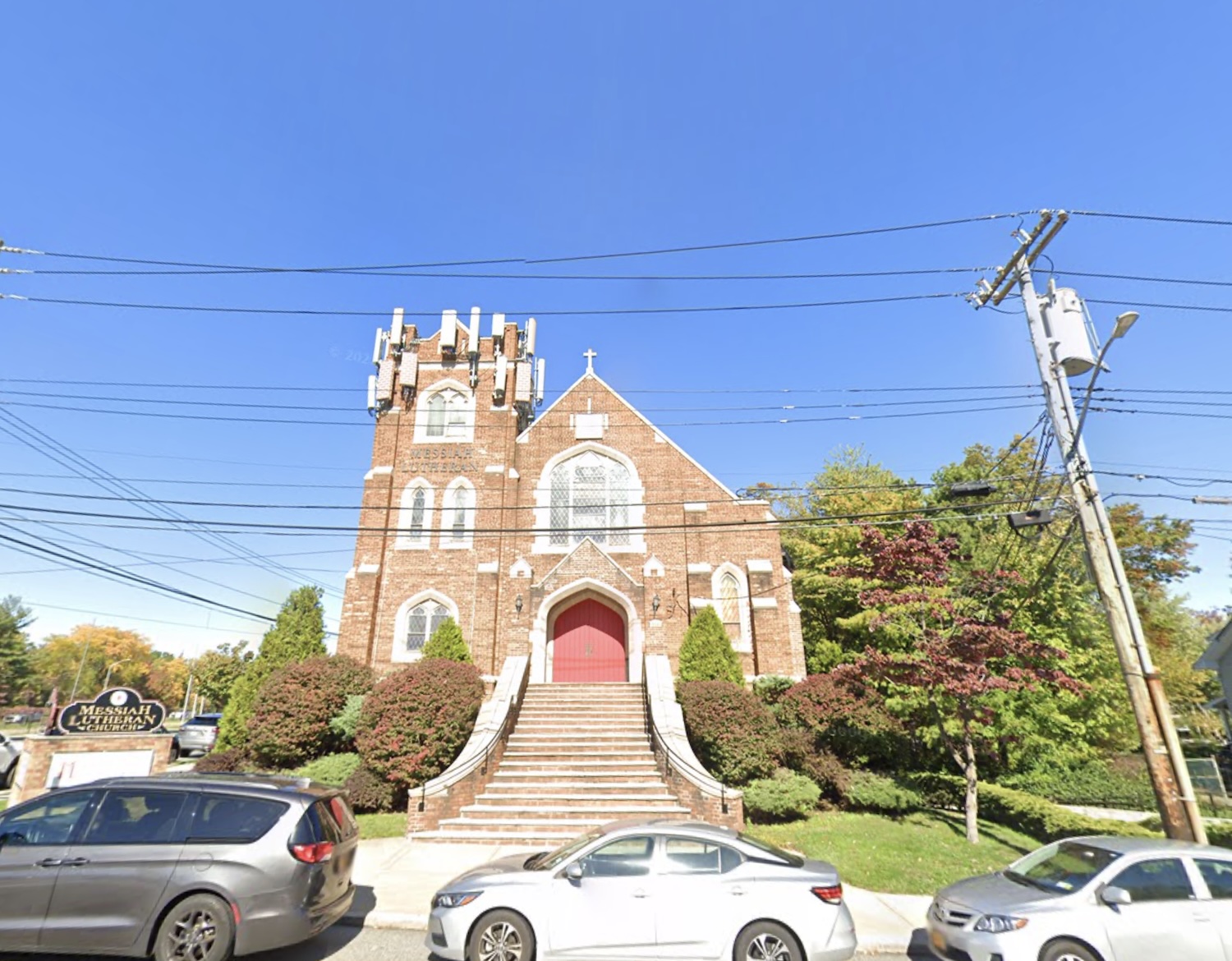
205 Jefferson Boulevard, via Google Maps.
On Staten Island, the Messiah Lutheran Church in Annadale was completed in 1931 and designed by architect Leonard Burd. The church represents Late Gothic Revival ecclesiastical design and reflects the community life of Scandinavian settlers and their descendants. St. Paul’s Methodist Episcopal Church in Tottenville was built in 1859, expanded in 1862, and further altered in 1961. The building is notable for its brick Romanesque Revival architecture, stained-glass windows with Masonic symbolism, and a rare and elaborate Felgemaker pipe organ.
Subscribe to YIMBY’s daily e-mail

Follow YIMBYgram for real-time photo updates
Like YIMBY on Facebook
Follow YIMBY’s Twitter for the latest in YIMBYnews
I fail to see how “St. Cell Phone” rises to any sort of landmark or historic status.
That Staten Island church barnacled with cellular dishes is the most Staten Island thing I’ve ever seen.
That’s mean, but very funny.
So we’re celebrating imminent domain now…
This is a joke. The majority of these are out-of-date housing projects. I understand the historical significance, but I bet Jackie Robinson would prefer them to be demolished and built to double the size to house even more people in need.
cannot agree more
Were the Brooklyn Gardens buildings severely altered at some point? It does not look like a building built in 1932 at all
Hard to believe there are no buildings of historical importance in Queens.
The church should be disqualified just for the cell antennas.
Bushwick in the house