
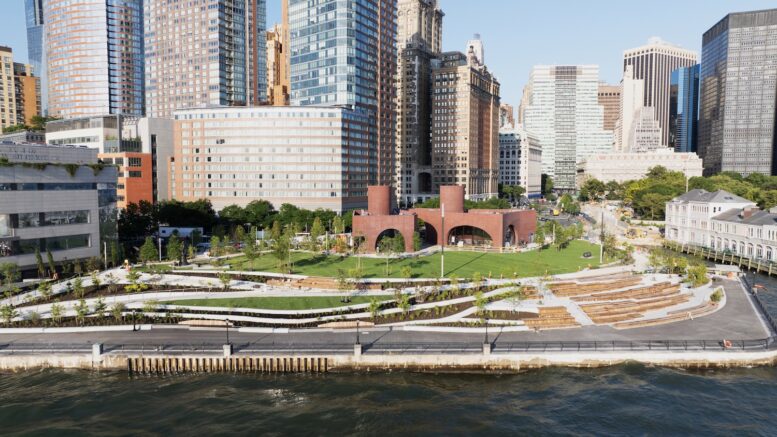
Robert F. Wagner, Jr. Park reopened Tuesday in Lower Manhattan’s Financial District following a $296 million redesign as part of the South Battery Park City Resiliency Project, a broader effort to defend Lower Manhattan against coastal flooding. Located along the Hudson River in Battery Park City, the 3.5-acre park was temporarily closed in March 2023 for construction aimed at safeguarding the area from coastal flooding. The redesign was led by the Battery Park City Authority (BPCA), with Thomas Phifer and Partners responsible for the new Pavilion design and AECOM as architect and engineer with EW Howell Construction Group serving as the general contractor.
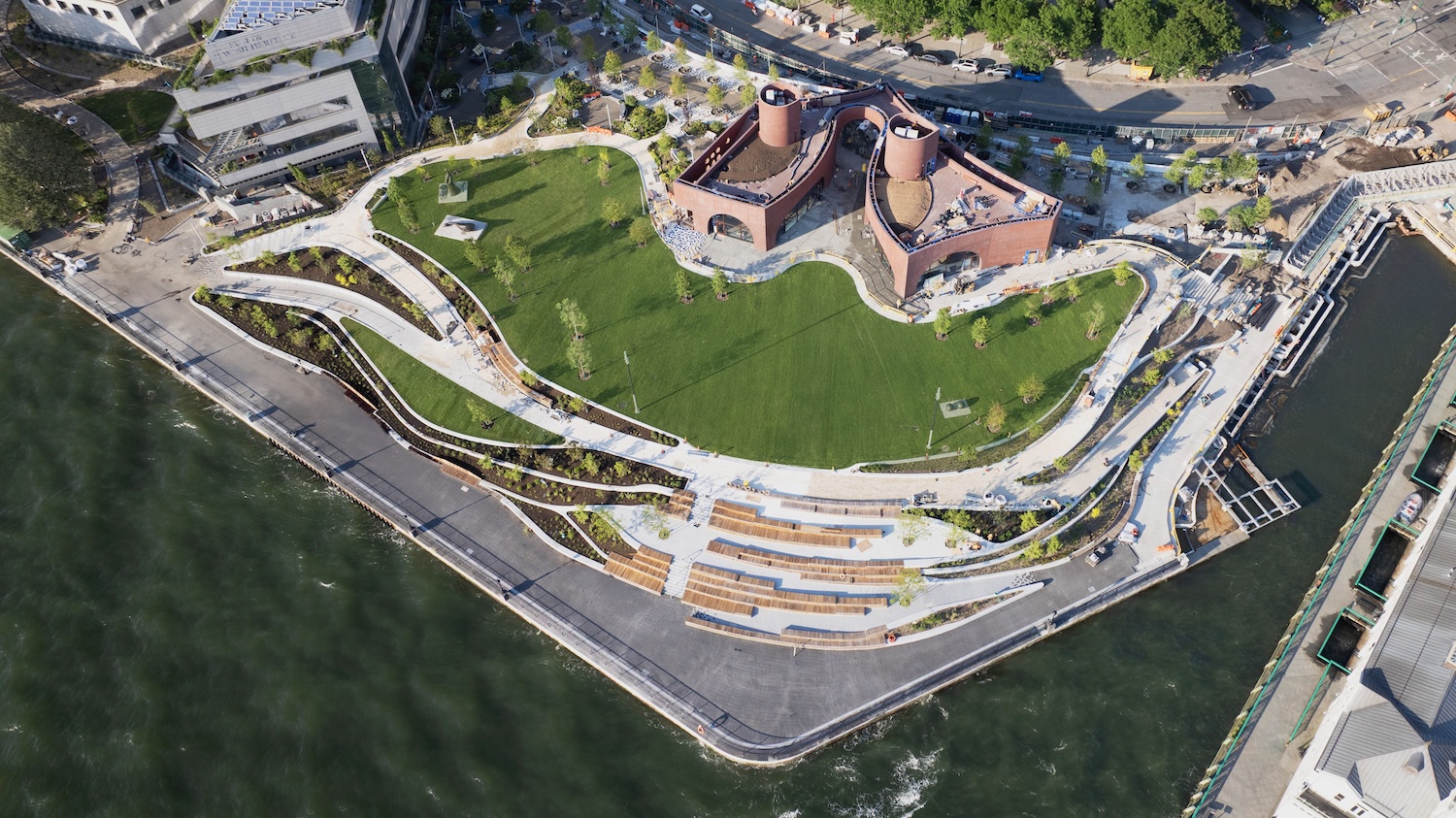
Photograph of Robert F. Wagner, Jr. Park. Courtesy of Battery Park City Authority
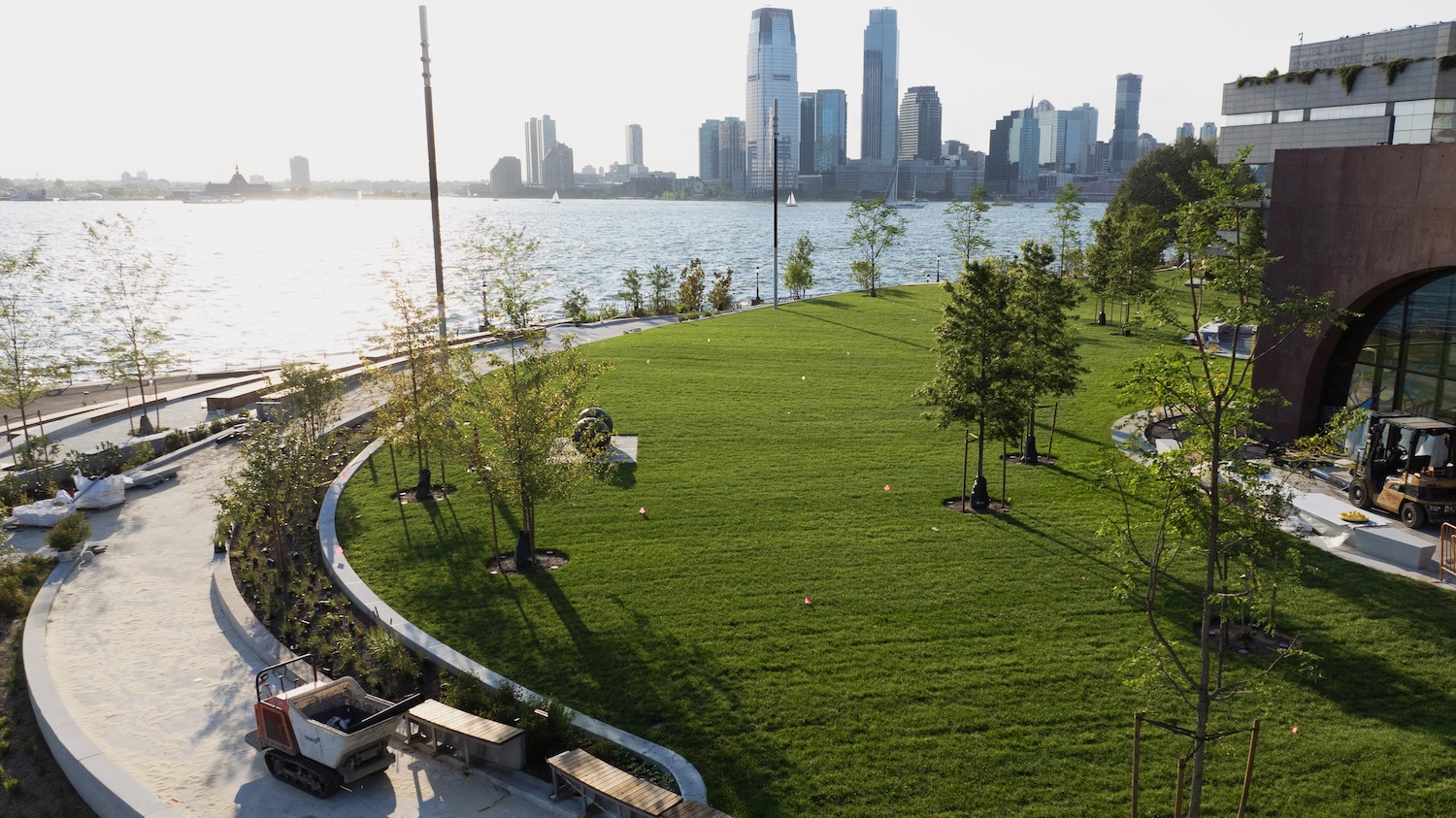
Photograph of Robert F. Wagner, Jr. Park. Courtesy of Battery Park City Authority
The revitalized park integrates multiple resiliency features including a concealed floodwall designed to withstand storms for up to 100 years, a 63,000-gallon underground cistern for rainwater reuse, and an upgraded stormwater management system. Sustainable infrastructure includes native plantings across four ecological zones, reused materials from the original park, and solar-powered, dark sky-compliant lighting. The Pavilion, to be completed in phases through 2026, includes public restrooms, a classroom, a future dining venue, and a publicly accessible rooftop offering harbor views.
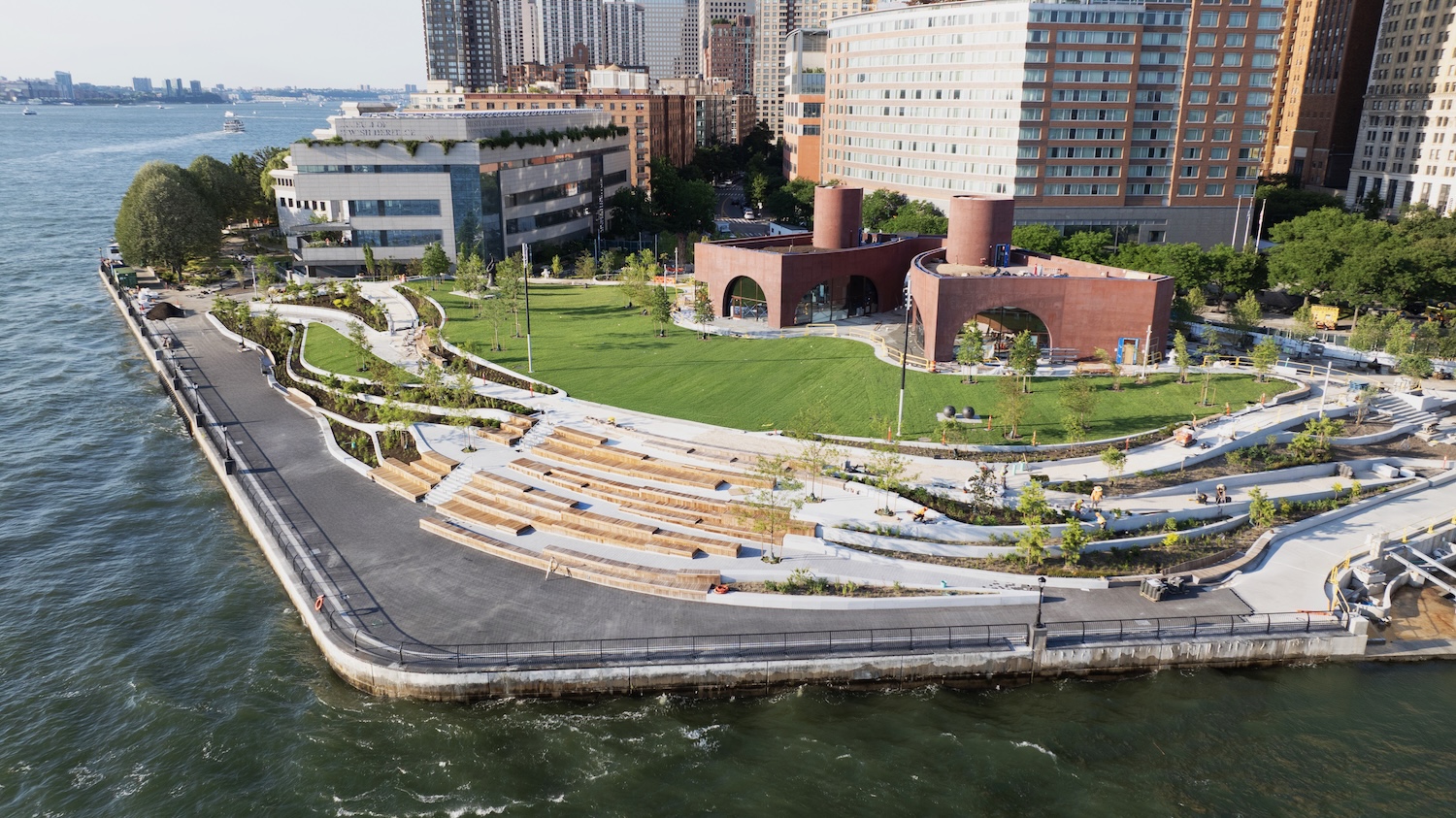
Photograph of Robert F. Wagner, Jr. Park. Courtesy of Battery Park City Authority
The South Battery Park City Resiliency Project is part of the broader Lower Manhattan Coastal Resiliency initiative. Beyond Wagner Park, BPCA will begin work on the North/West Battery Park City Resiliency Project later this year to extend flood protection across the remaining Battery Park City waterfront and western Tribeca. Proposed features include flood barriers, upgraded tide gates, a wet-weather pump station, and improved drainage systems.
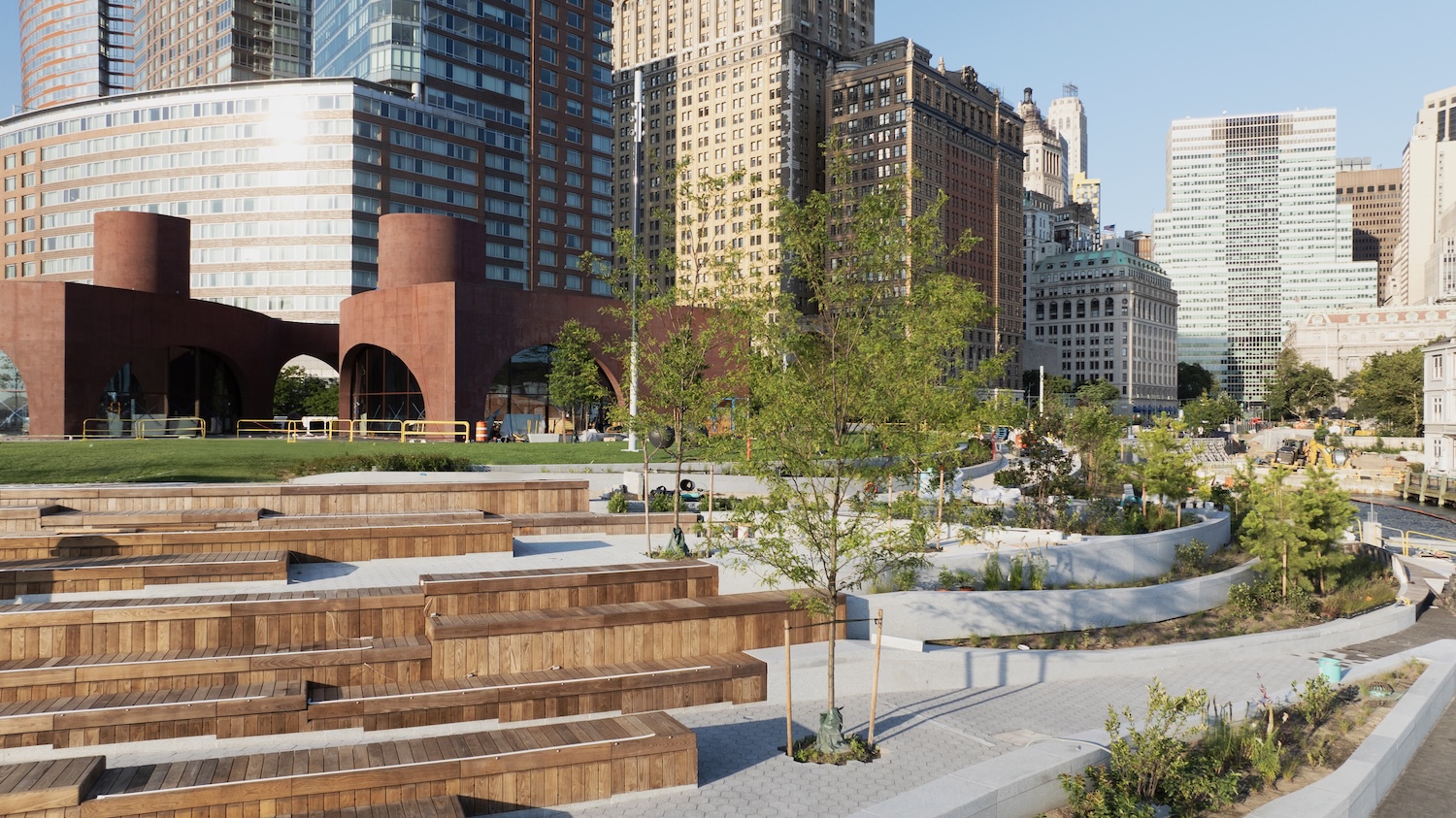
Photograph of Robert F. Wagner, Jr. Park. Courtesy of Battery Park City Authority
“We were thrilled to contribute Cini-Little’s foodservice and hospitality expertise to the Wagner Park project,” said Marleen St. Marie, Cini-Little senior project manager, New York. “It’s wonderful to see Battery Park City revitalizing this cherished community space, and we’re excited that our work will help create experiences that bring people together for years to come.”
Subscribe to YIMBY’s daily e-mail

Follow YIMBYgram for real-time photo updates
Like YIMBY on Facebook
Follow YIMBY’s Twitter for the latest in YIMBYnews




NYC has got to get ahead of the ridiculous costs associated with these projects. The city should also study Shanghai’s sponge project because this park is likely going to need to be redeveloped long before 100 years passes.
The costs of projects are out of control. 300 million dollars to redo a three acre park?
With global warming, the “once in a hundred year” storms will start to occur yearly..
Really we haven’t had something like hurricane Sandy in 13 years 👎
The old Wagner Park was nice and survived Sandy. Kind of crazy to rebuild the Park for
these big costs.
You just have to look at the park’s situation in relation to the harbor to realize that nature is in control there. Imagine the power generated by the harbor waters during a major tropical storm event. It’s just a fragile site and the cost of keeping the waters at bay will always be high.
Corruption got us into this mess, and NYC corruption means we will pay multiple times more to deal with it. Luckily a few privileged crooks will make a lot of money from it all. Bless the Rich.
Yes David corruption is the problem
but blame the politicians (yes pretty much all “progressives”) Not the so called “rich” .
yes Im sure some contractors made bucks, but why do the Pols treat New Yorker like open check books .
Why did it cost $3.5 Billion for 3 stops on the second ave subway, when it costs $500 M for similar work in older cities like Rome and London?
enough with the class warfare it is misguided and getting old
Have you looked at average salaries between those cities? NYC salaries are at least 2x Rome
The class warfare will continue until cholos stop thinking we care about their opinions.
dont you have a BLM rally to attend.
This is pro development website.
and I was referring to govt waste – what’s a matter, you on the take?
who cares about your opinion Geisel.
What area did not flood or lose power after Hurricane Sandy?
Yup, Battery Park City. I lived there at the time. Only place below 23rd street WITH Power.
The power comes from a separate grid in Brooklyn. Who knew until then..
So why was this needed here?
I had to sell and move because of the ridiculously high common charges for my condo – due to the land lease with the State of New York, who uses BPC as a cash cow and of course.. subsidize “affordable housing” elsewhere.
Could not afford to stay
You obviously only care about yourself.
Shouldn’t you be watching Fox?
David, might be good to actually look into this before making comments like this. Taxes in battery park are like 50% more than other parts of Manhattan. You don’t think that’s absurd? Real estate taxes are a mess…mostly favoring ultra rich townhouse owners actually, not people owning a condo
Beautiful park, and a very important link in making lower manhattan more resilient and prepared for climate change.
Great blog you have here but I was curious if you knew of any community forums that cover the same topics talked about in this article? I’d really love to be a part of online community where I can get advice from other knowledgeable individuals that share the same interest. If you have any recommendations, please let me know. Appreciate it!
Wonderful write-up… This is very insightful. Keep up the good work