
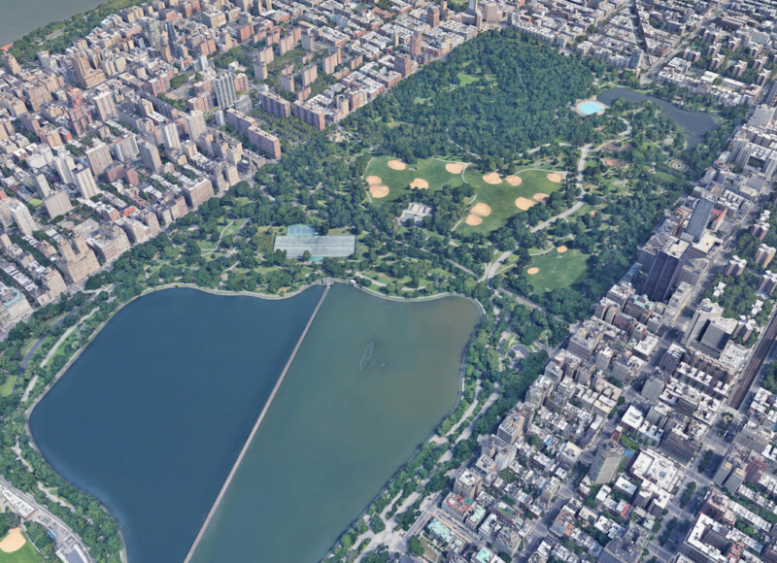
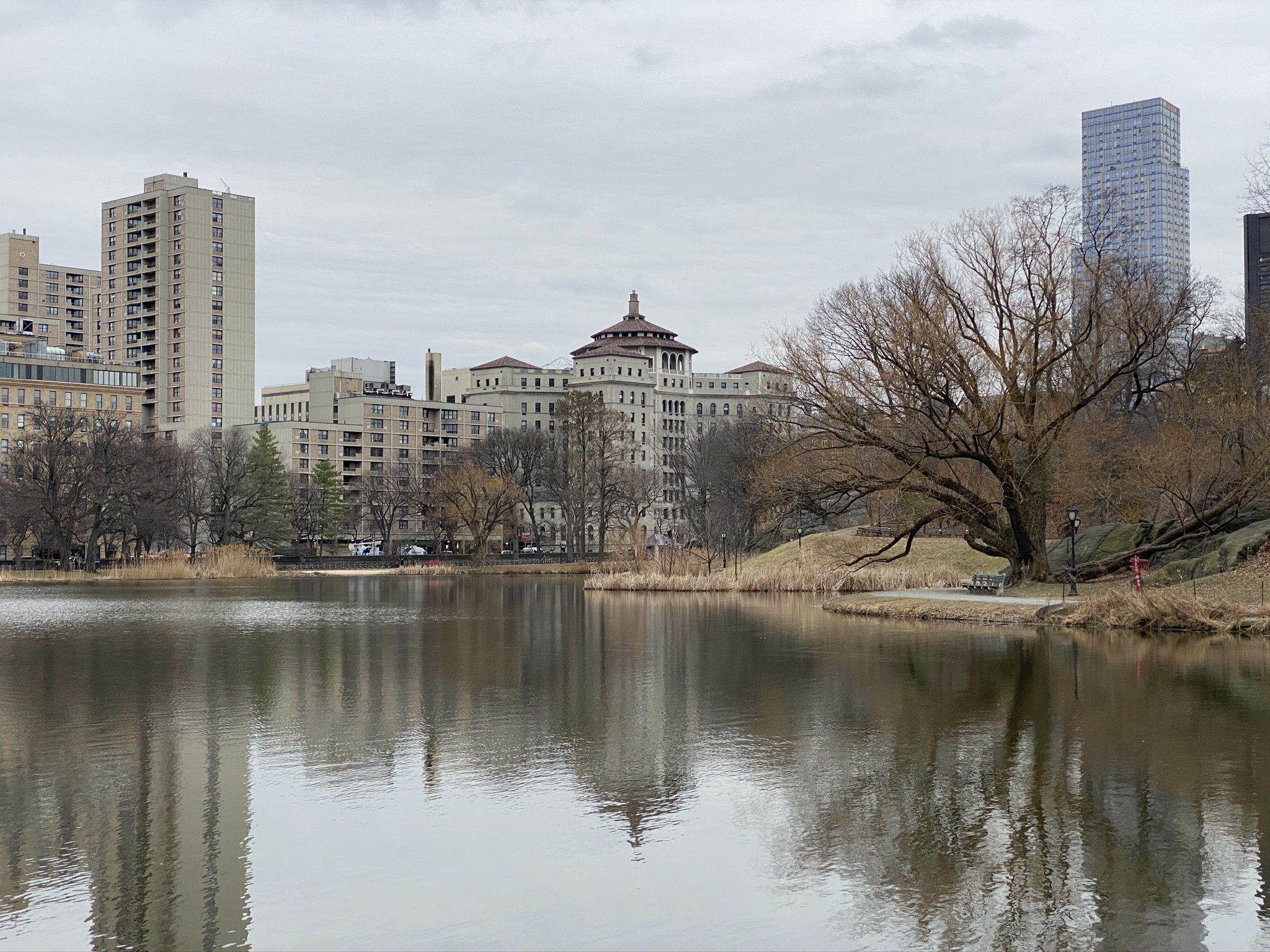
Construction has begun on the North End Recirculation Project, a $35.7 million stormwater infrastructure project in northern Central Park, Manhattan. The Central Park Conservancy is leading the project in partnership with the New York City Department of Environmental Protection and NYC Parks, with eDesign Dynamics leading design of the recirculation system. The project will connect the Pool, the Loch, and the Harlem Meer to reduce flooding in Harlem and East Harlem while conserving the city’s drinking water supply. The North End Recirculation Project’s anticipated completion date is slated for fall 2028.
A 2025 archaeological survey filed with the Landmarks Preservation Commission describes filtration vaults adjacent to the Pool and near the southern end of the Harlem Meer, recirculation piping across the baseball fields between the West and East Drives, and a wet well and pump adjacent to the East Drive. The scope also includes sediment excavation from the Harlem Meer, an outlet control structure, and a drain inside the northwest park boundary connecting the Pool to an Eighth Avenue main at 98th Street. The groundbreaking announcement did not disclose a general contractor.
Credit: eDesign Dynamics.
The system will recirculate and filter water among the three water bodies. During dry weather, water will be diverted from the Meer and pumped south of the Pool before flowing back through the system by gravity. When a major storm is forecast, the system will lower the Meer’s water level to create capacity for incoming rainfall. Rainwater will then refill the water bodies naturally, and normal recirculation will resume once conditions stabilize.
According to the mayor’s office, the project is expected to keep approximately 132 million gallons of water out of local sewers annually and reduce stormwater flows to city sewers by 90 percent across a 204-acre park watershed. It is also projected to conserve an estimated 175 million gallons of potable water each year, improve water quality, and reduce harmful algal blooms during warmer months.
Subscribe to YIMBY’s daily e-mail

Follow YIMBYgram for real-time photo updates
Like YIMBY on Facebook
Follow YIMBY’s Twitter for the latest in YIMBYnews



I am pleased to see the city taking steps to offset the heavy rainfalls that seem to be more common of late. It is often overlooked that Central Park has an elaborate plumbing system. In my area of Flushing, a larger under street sewage pumping plant is being built. When this plant is overwhelmed, the sewers back up.
New York’s old combined sanitary and storm sewers release into waterways as much as 27 billion gallons of untreated sewage a year. That’s almost 41,000 Olympic-sized swimming pools. It will only get worse as climate change has increased precipitation and major storm events.
Chicago is building tunnels and repurposing two huge former stone quarries as holding reservoirs for overflow sewage. NYC needs to get serious about this serious environmental problem.
Another clown talking about climate change who’s not even a native New Yorker.
At last they fix that problem. Thanks God we won’t get flooded.
A while back, a huge retention tank was constructed in southern Flushing. This helped to reduce the stench of Flushing Creek after heavy rains. It was entirely underground, with an athletic field built on top.
When my 1958 building was erected, there were two drainage systems. One for sanitary, and the other for roof water. However, only one sewer was built in this newly developed former swamp, so both flows join before going out to the street, a lost opportunity.
Many large American cities have this problem because of combined sewers and heavy rainfall. The outfalls exist to keep sewage from backing up into people’s homes. It’s disgusting and embarrassing, but honestly, it’s an issue across the country. Building separate sanitary and storm sewer networks matters. Chicago has built massive underground reservoirs that hold back sewage so it can all be treated before it’s released into the waterways. Here in Philadelphia, one of the nation’s oldest cities, we’re doing the same thing, building reservoirs deep underground. It’s nice to see Chicago, New York, and Philadelphia all taking the steps needed to move from the past into the future. It’s not easy. Tunnels and reservoirs seem to be the go-to solution, but we’re also dealing with it in a different way. We’re installing stormwater culverts at intersections that hold thousands of gallons of water and slowly release it into the ground after a storm. The city is also encouraging residents to build their own ways to divert water from the sewer into planters and gardens. There are solutions. We just have to look and work harder to find them.