
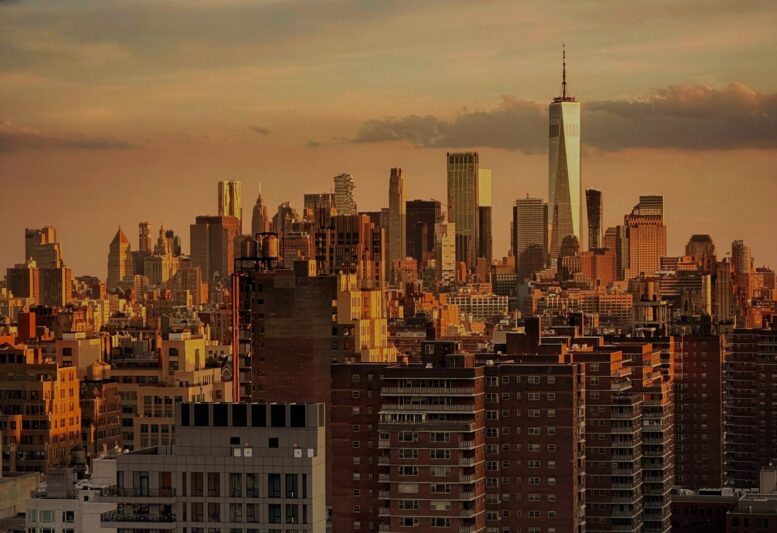
YIMBY checked in on the progress of ten office-to-residential conversions underway in Manhattan. The projects, located in the Financial District, Tribeca, NoHo, Midtown, and Hell’s Kitchen, will repurpose the underutilized properties into nearly 3,000 new housing units.
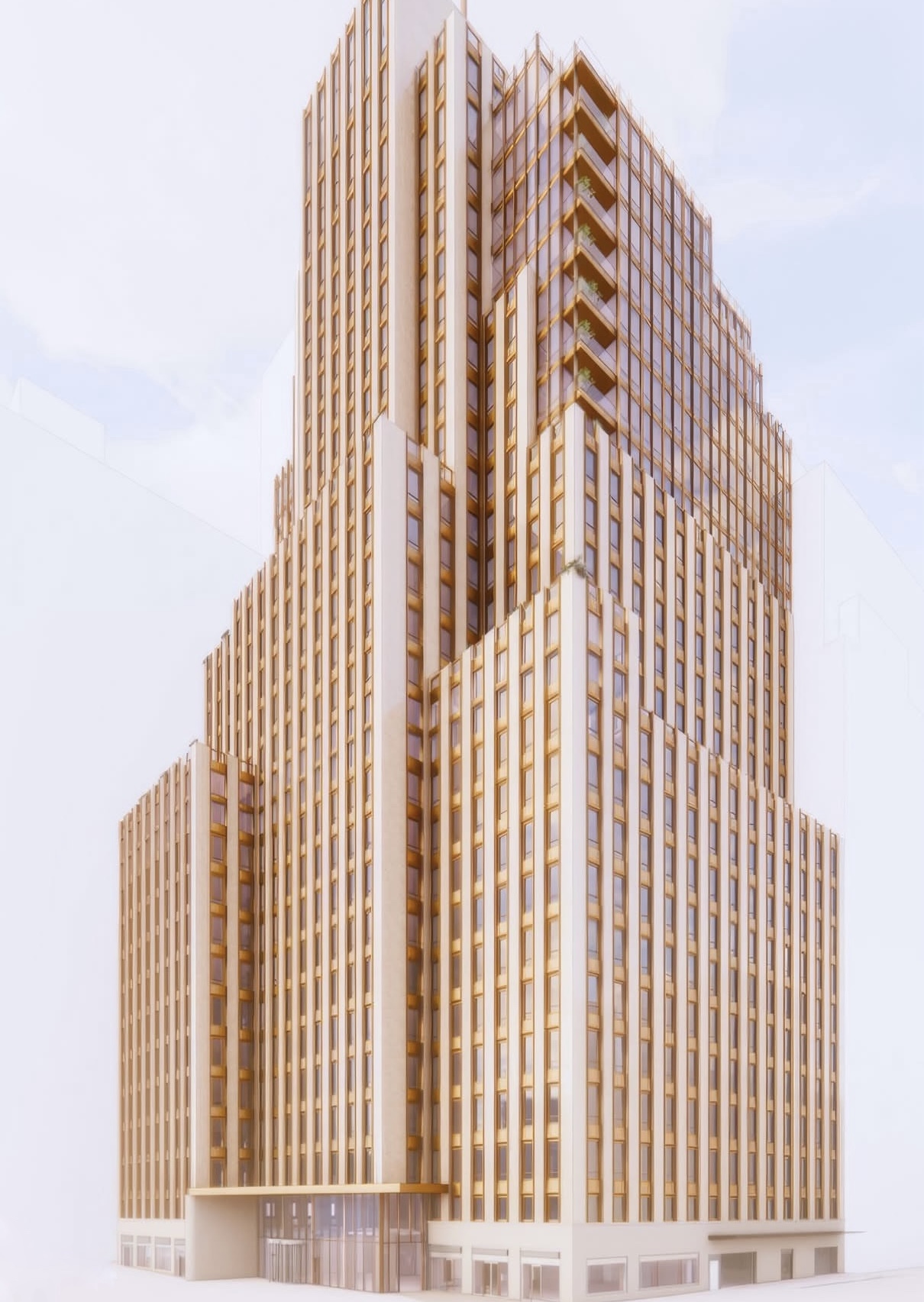
First is 101 Franklin Street, a forthcoming conversion and vertical expansion in Tribeca. Designed by Steven Harris Architects and developed by Skylight Real Estate Partners, Cannon Hill Capital Partners, and TPG, the project will add four floors to the 17-story structure, bringing it to 21 stories and 304 feet tall. The expanded building will span 251,000 square feet and yield 72 condominium units in two- to five-bedroom layouts, as well as 2,654 square feet of retail space and 15 enclosed parking spots. Hill West Architects is the architect of record, and Rees Roberts + Partners is the interior designer for the property, which is alternately addressed as 250 Church Street and located between Franklin and Leonard Streets.
The ground level along Franklin Street will be redesigned with a light stone façade surrounding double-height arched windows, all covered by a wraparound metal canopy. The stories above will be clad in beige brick with dark metal spandrels, some embellished with an abstract sculptural pattern. The new upper levels will have multiple corner terraces and expansive outdoor space on the setbacks.
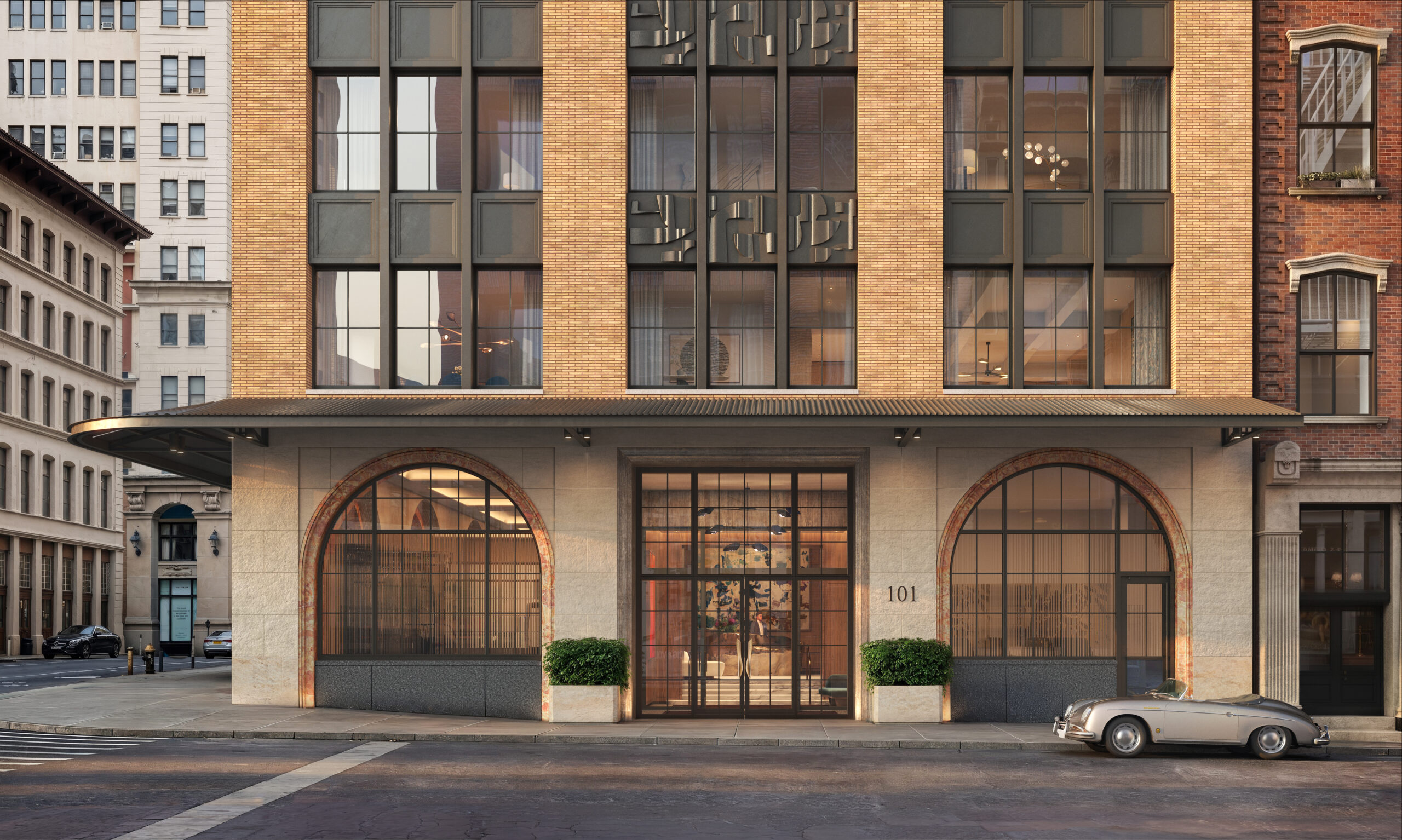
101 Franklin Street. Rendering courtesy of VISUALISATION ONE.
Corcoran Sunshine Marketing Group will handles sales and marketing for the units. The nearest subway from the redevelopment is the 1 train at the Franklin Street station to the west. An anticipated completion date for 101 Franklin Street has yet to be announced.
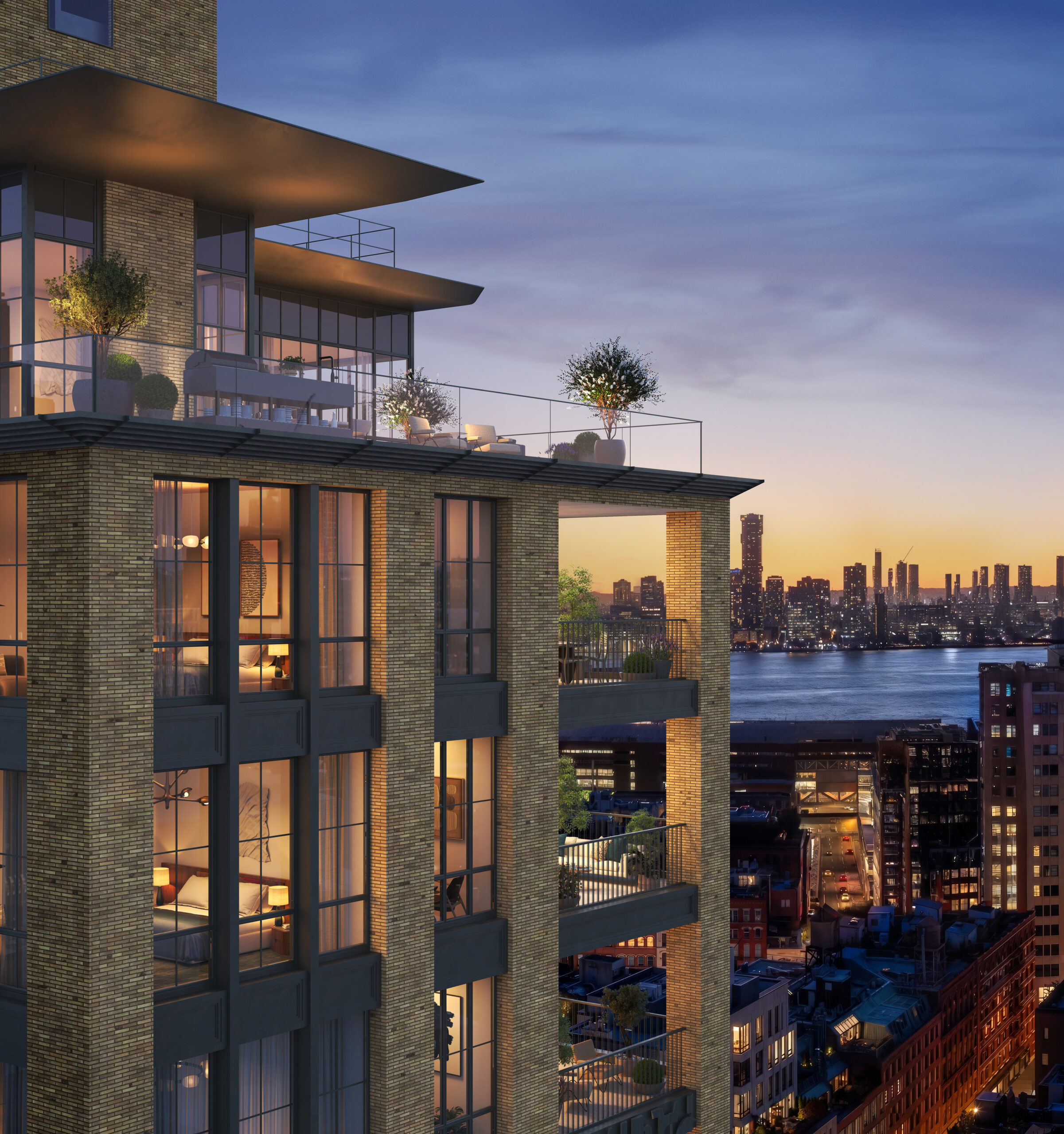
101 Franklin Street. Rendering courtesy of VISUALISATION ONE.
Work is moving along on 77 Water Street, a 26-story tower in the Financial District. Designed by CetraRuddy Architecture and developed by Vanbarton Group, the project is adding seven new floors to the 525,000-square-foot structure, bringing it to 610,400 square feet, and will yield 647 rental units. The façade is also being altered to incorporate large open-air cutouts. Twenty-five percent of the units will be dedicated to affordable housing. The property is located between Gouverneur Lane and Old Slip.
The steel-framed addition is rising above the former roof, while portions of the façade have been removed, revealing expansive voids on the mechanical floors around the midpoint of the building.
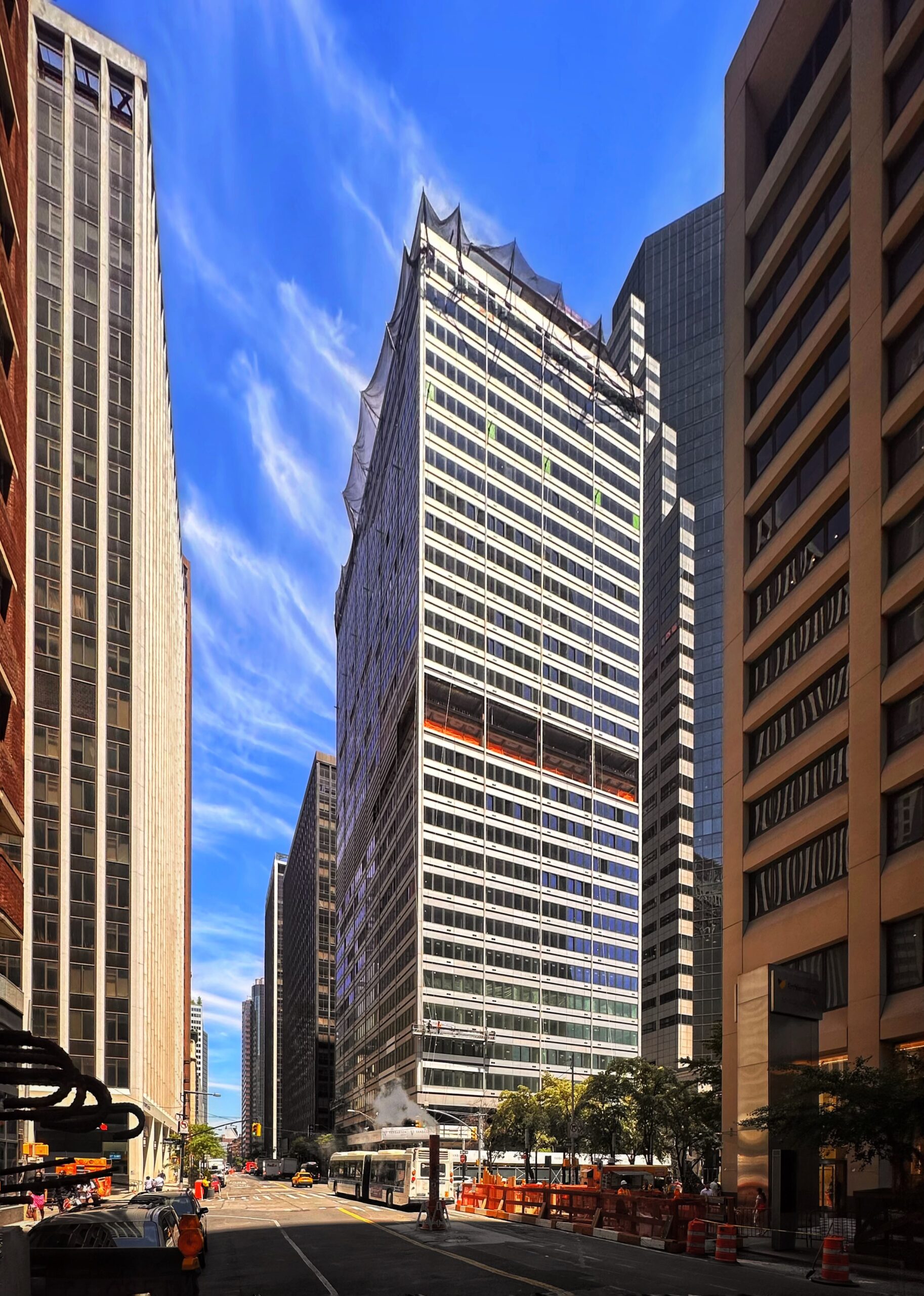
77 Water Street. Photo by Michael Young.
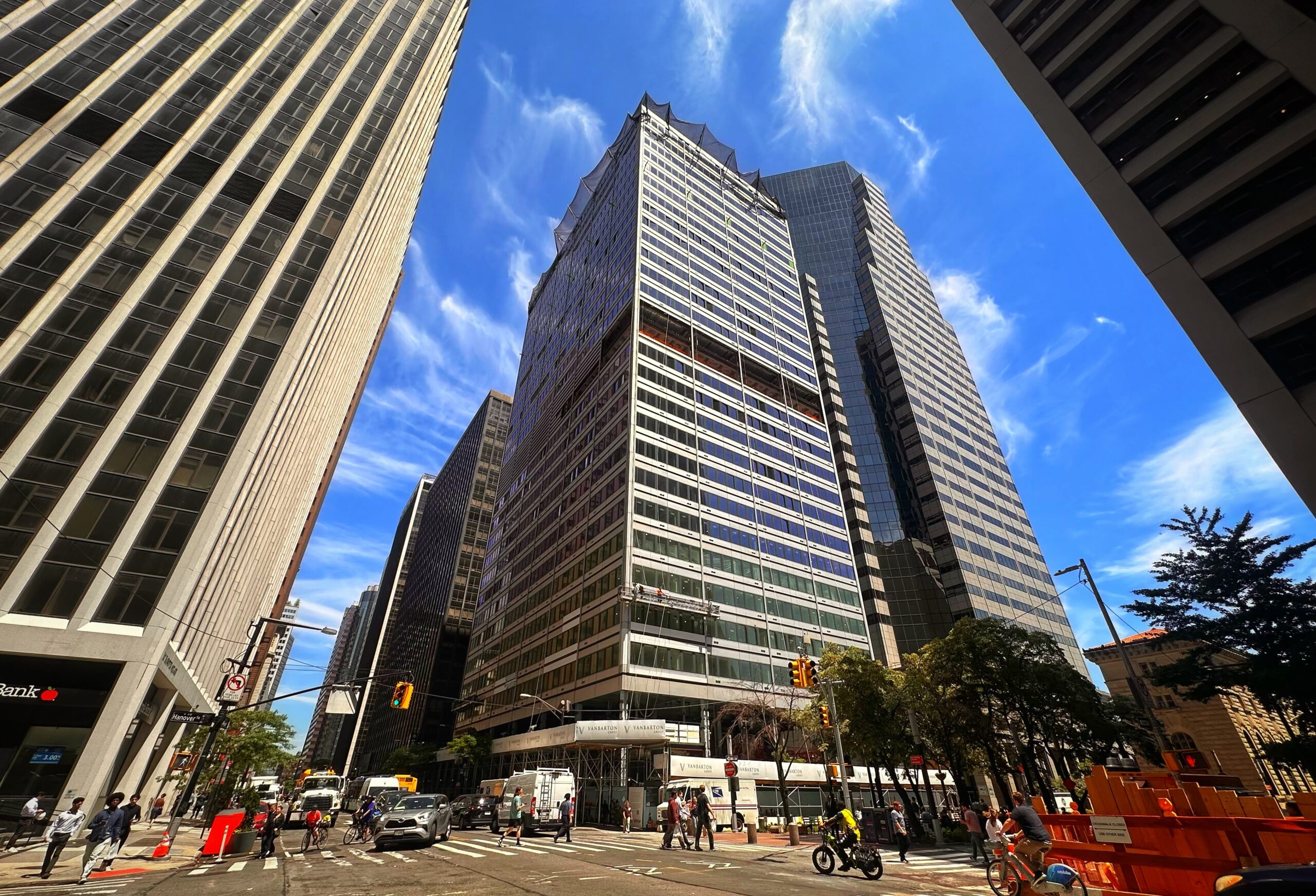
77 Water Street. Photo by Michael Young.
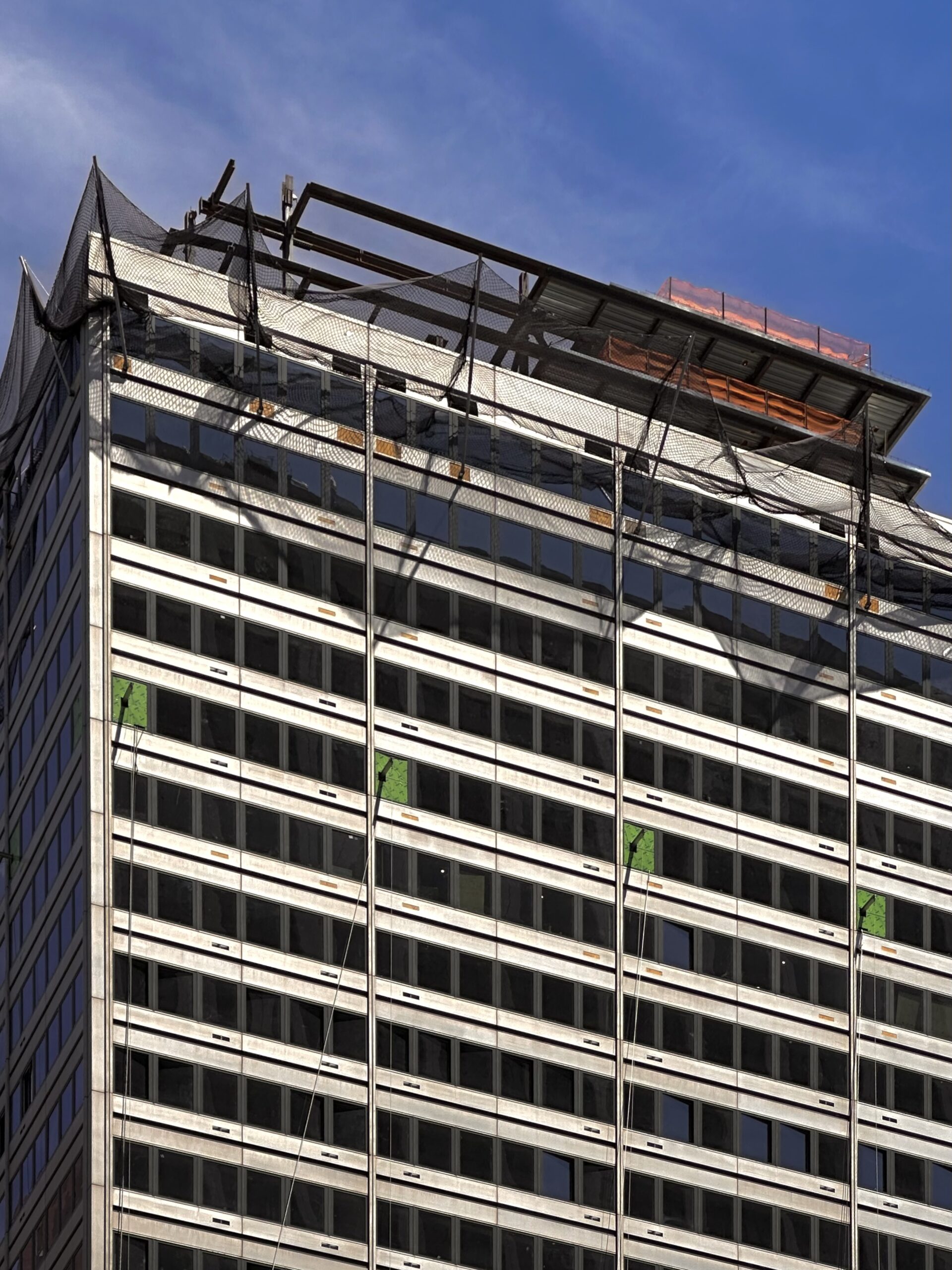
77 Water Street. Photo by Michael Young.
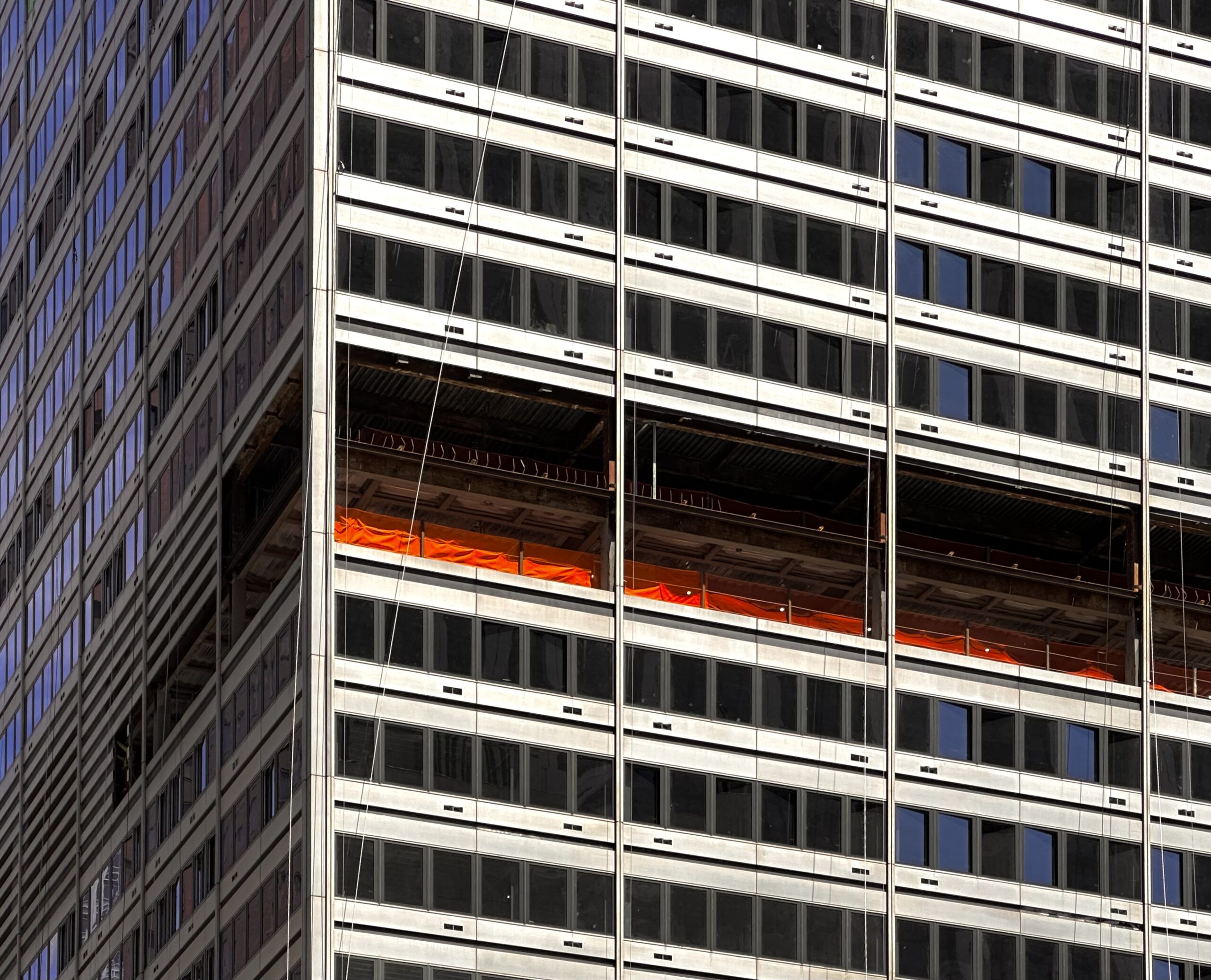
77 Water Street. Photo by Michael Young.
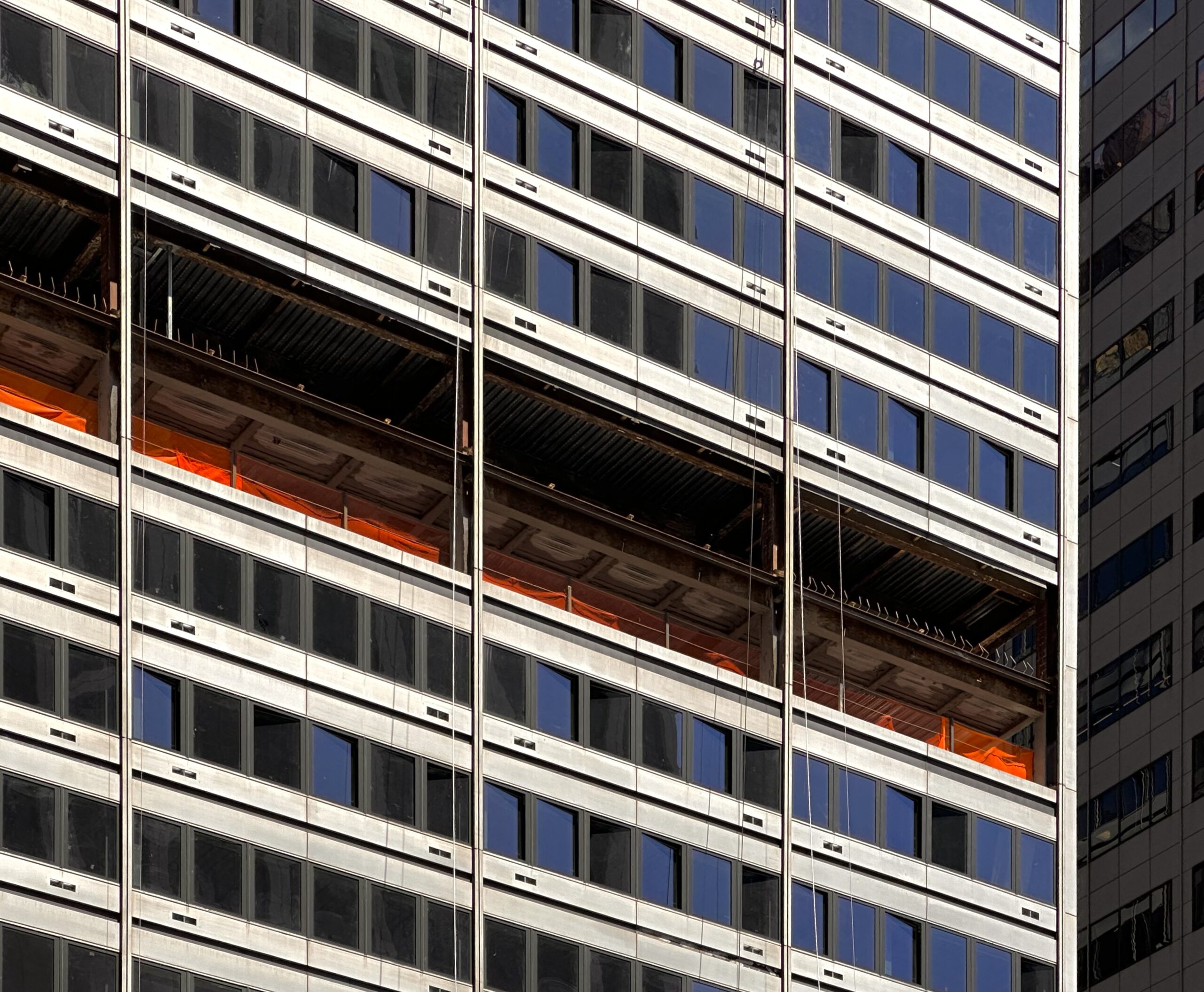
77 Water Street. Photo by Michael Young.
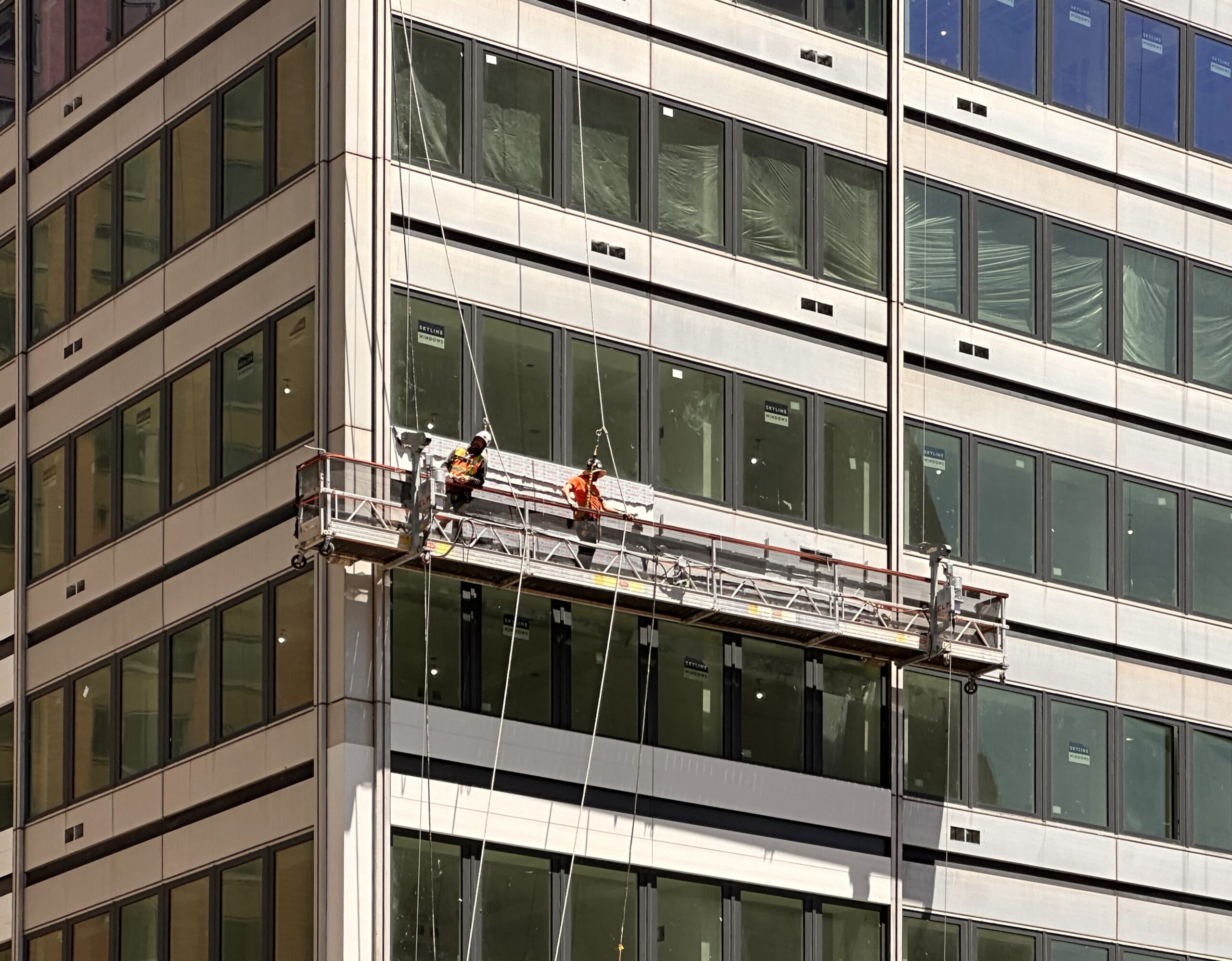
77 Water Street. Photo by Michael Young.
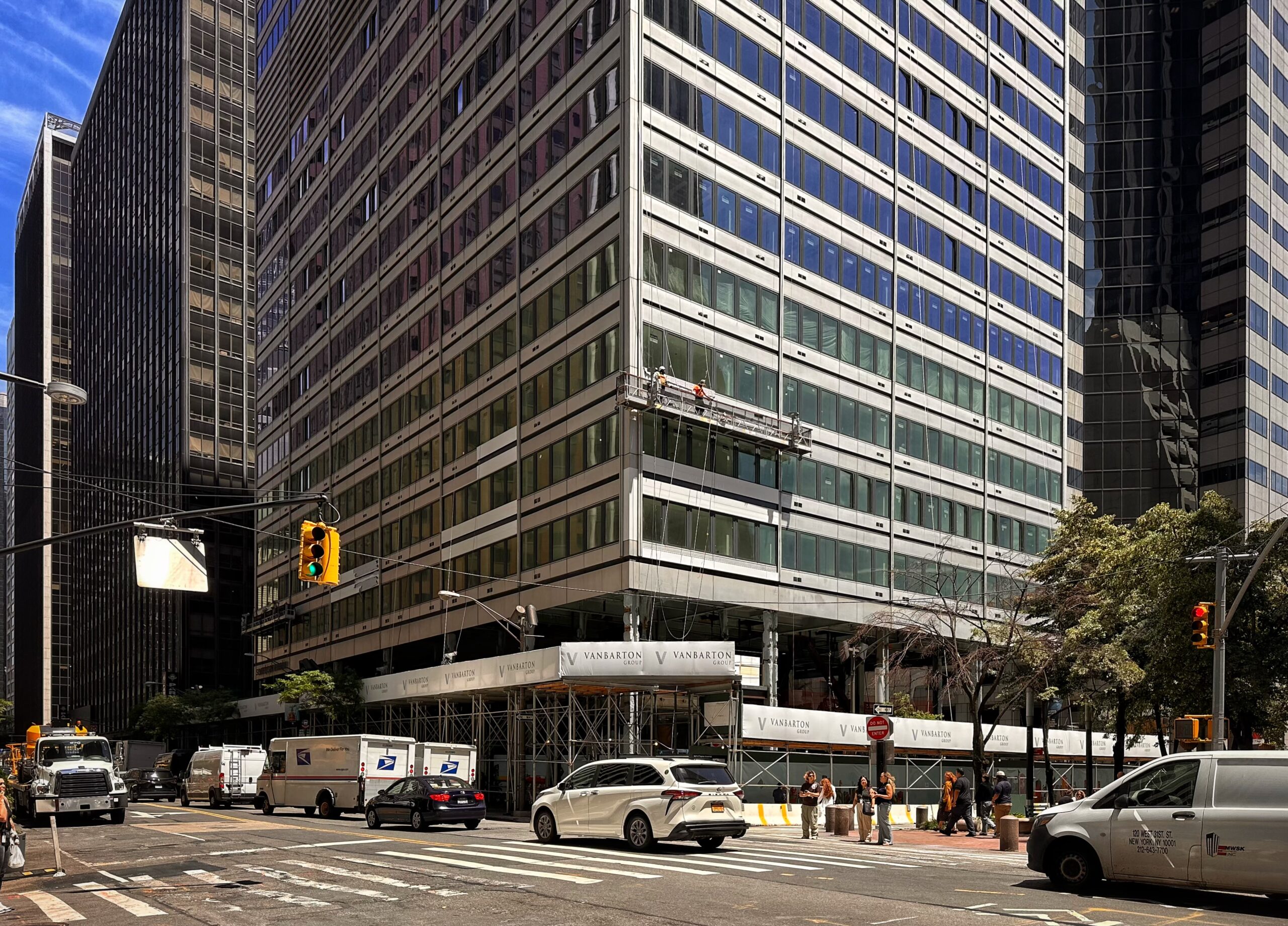
77 Water Street. Photo by Michael Young.
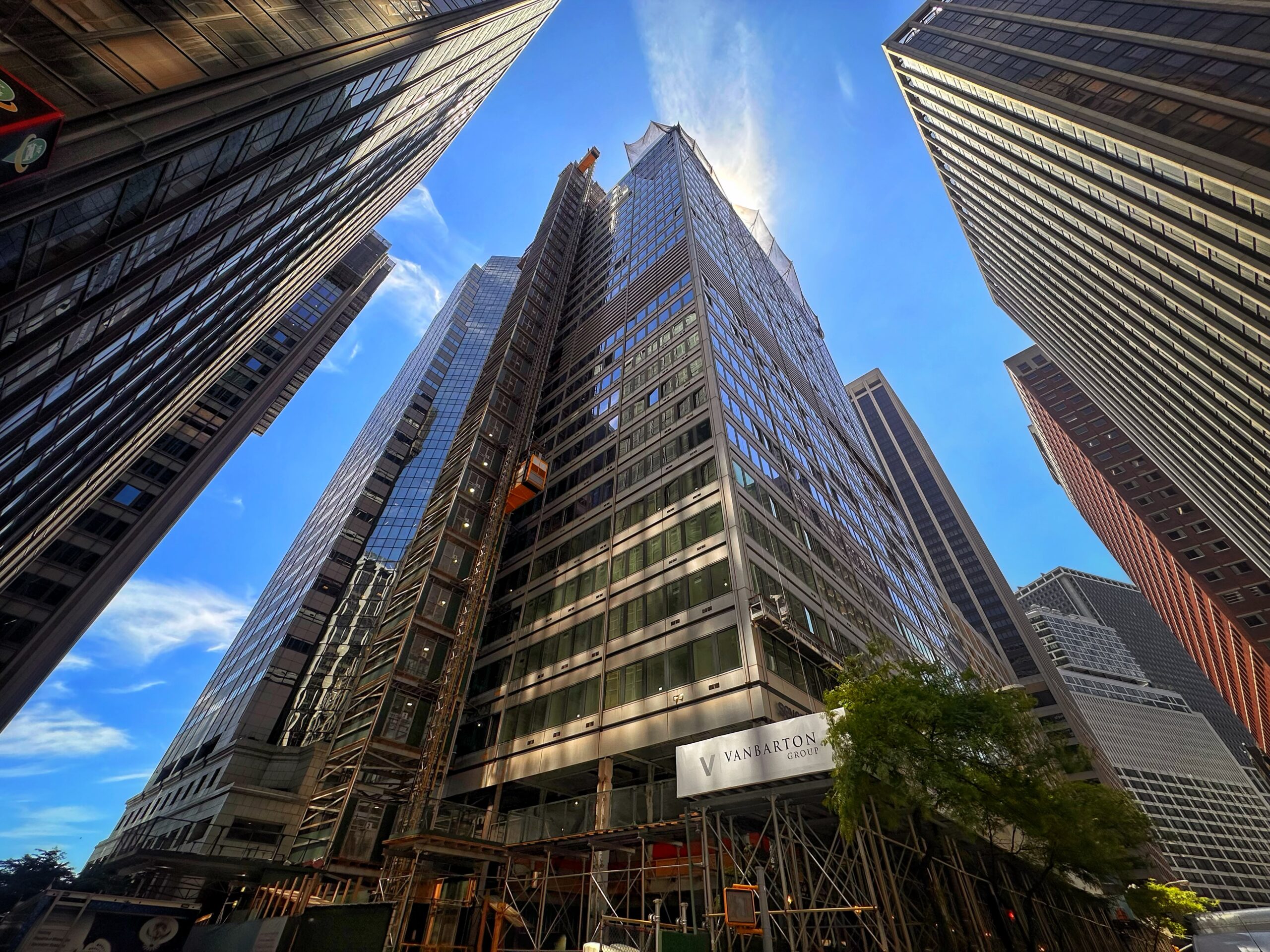
77 Water Street. Photo by Michael Young.
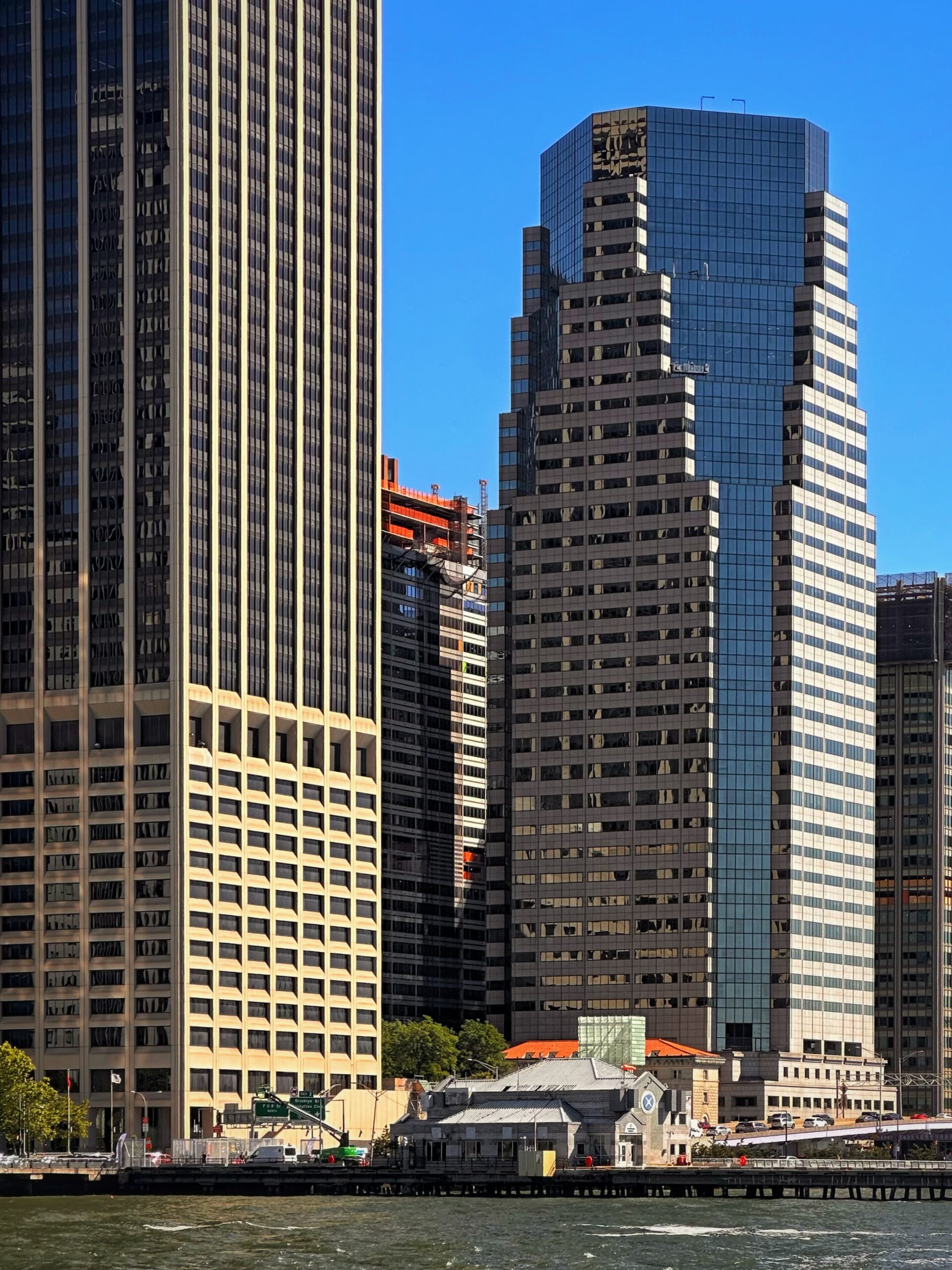
77 Water Street. Photo by Michael Young.
The below rendering shows the new floors clad in a glass curtain wall with expansive wraparound balconies on the northeastern and southwestern elevations. New trees and landscaping will surround the property.
Amenities will include an indoor/outdoor lounge, a golf simulator, speakeasy, yoga studio, and a full-service spa. Work is slated for completion in spring 2027, as noted on site.
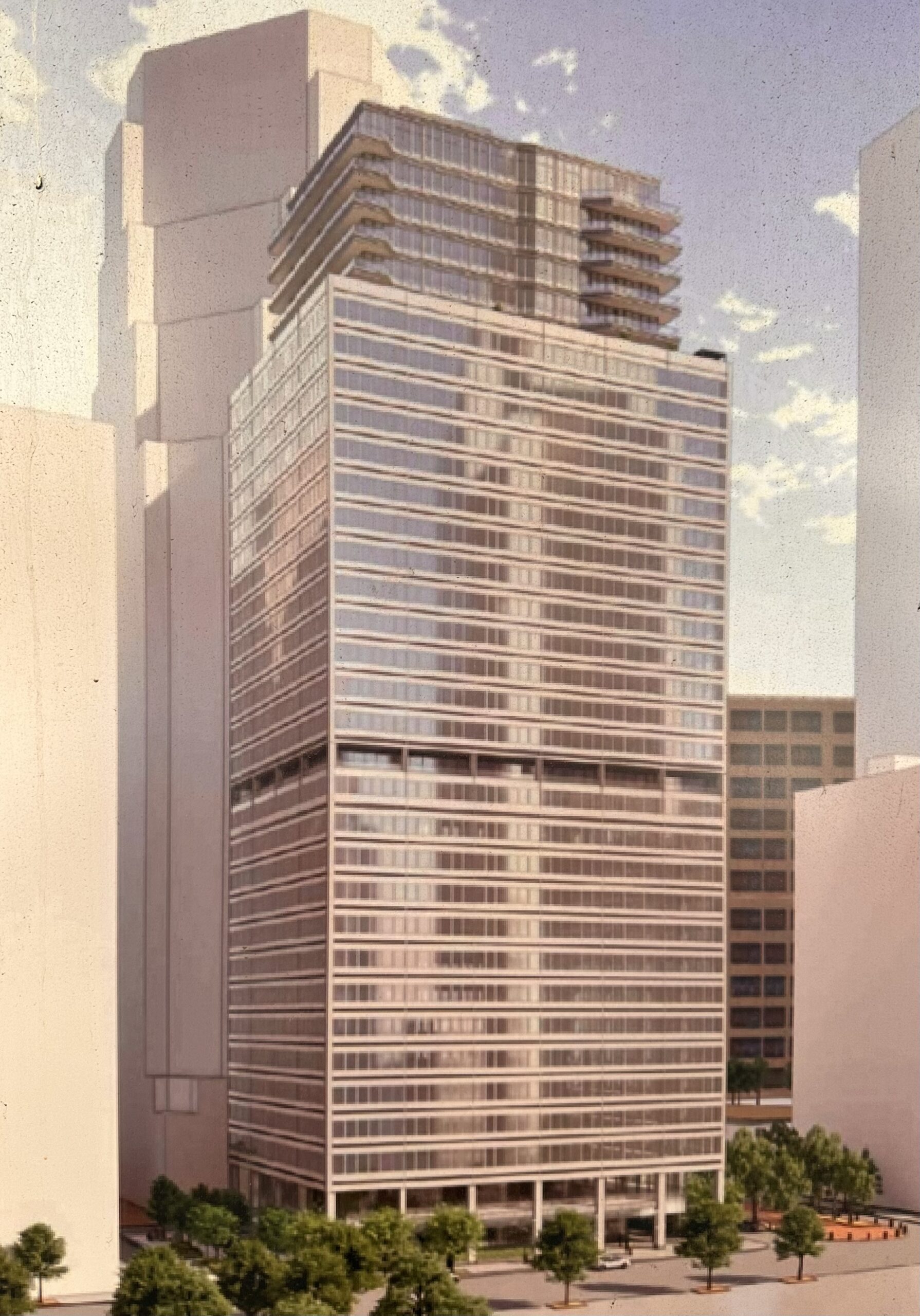
77 Water Street. Photo by Michael Young.
Work is progressing on Pearl & Pine, a 38-story tower at 80 Pine Street in the Financial District. Designed by CetraRuddy Architecture and developed by Bushburg, the project will convert the bottom 16 floors of the 1.2-million-square-foot structure into 713 rental units, and will also include ten levels of amenities. The property is alternately addressed as 180 Pearl Street and is bounded by Pine Street, Pearl Street, Water Street, and Maiden Lane.
A sidewalk shed surrounds the property as interior work progresses. A stretch of panels on the Water Street elevation has been removed, and most of the office space is currently empty. Trees are visible on one of the midpoint setbacks facing the East River, where a portion of the amenities is located.
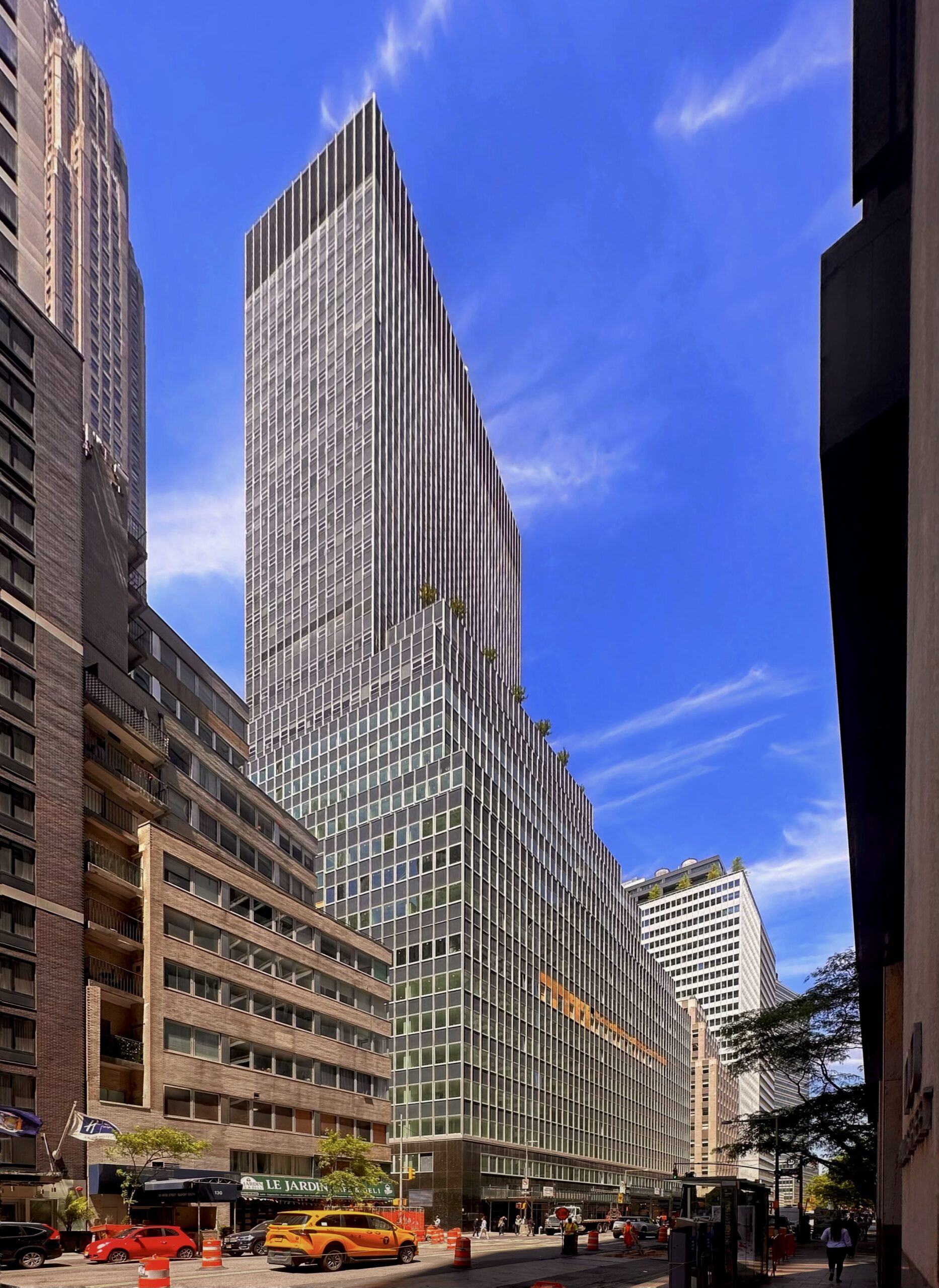
80 Pine Street. Photo by Michael Young.
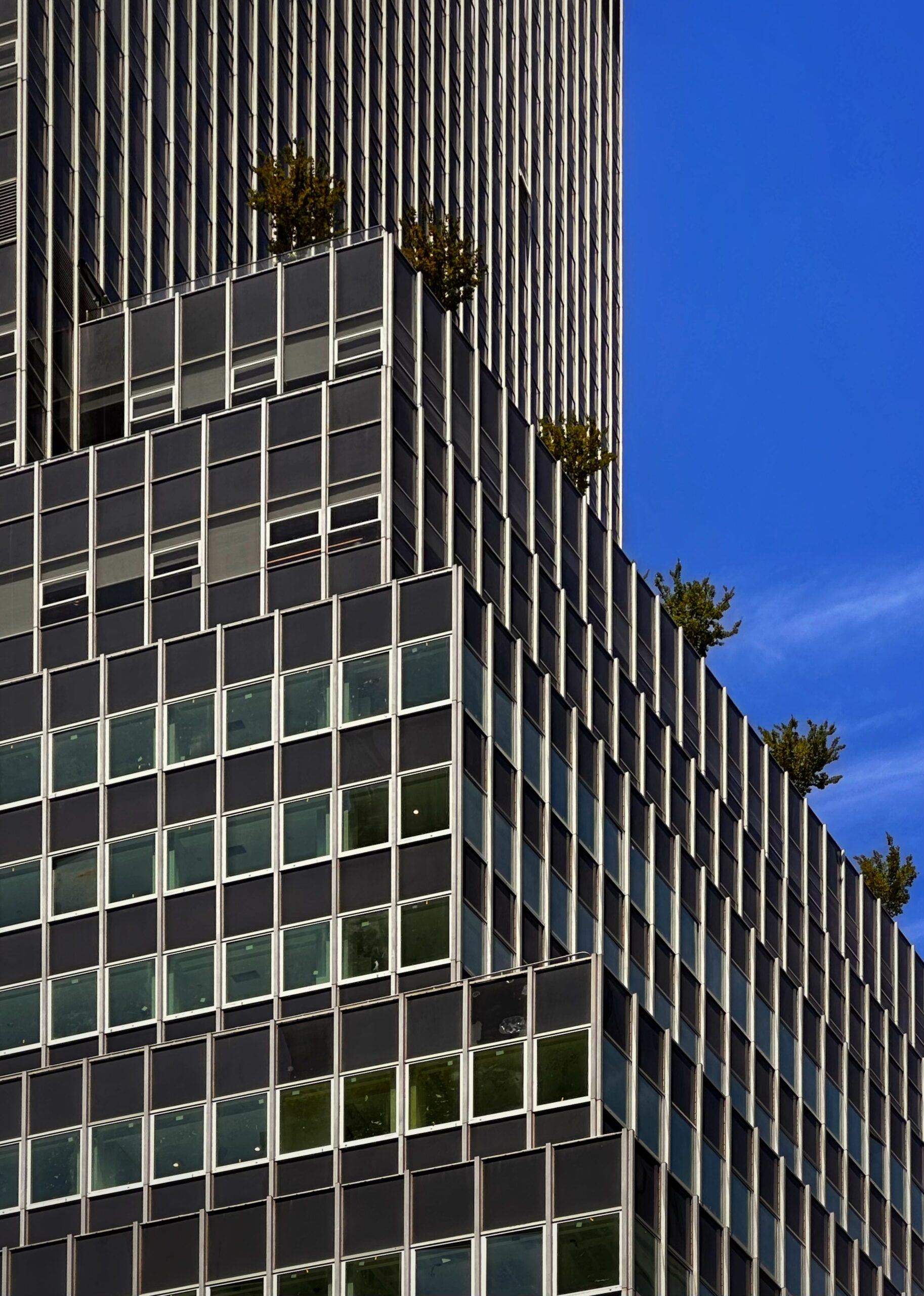
80 Pine Street. Photo by Michael Young.
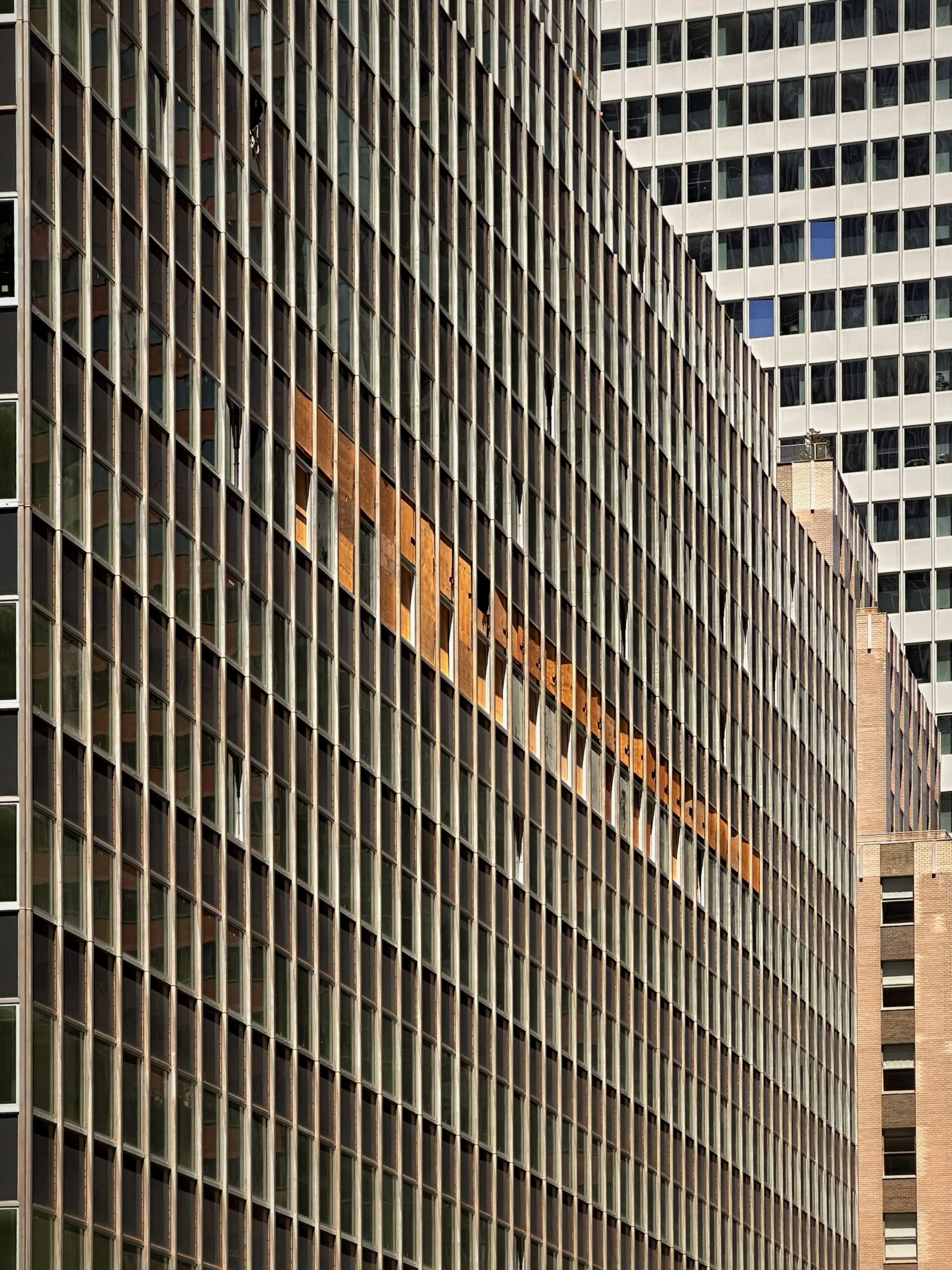
80 Pine Street. Photo by Michael Young.
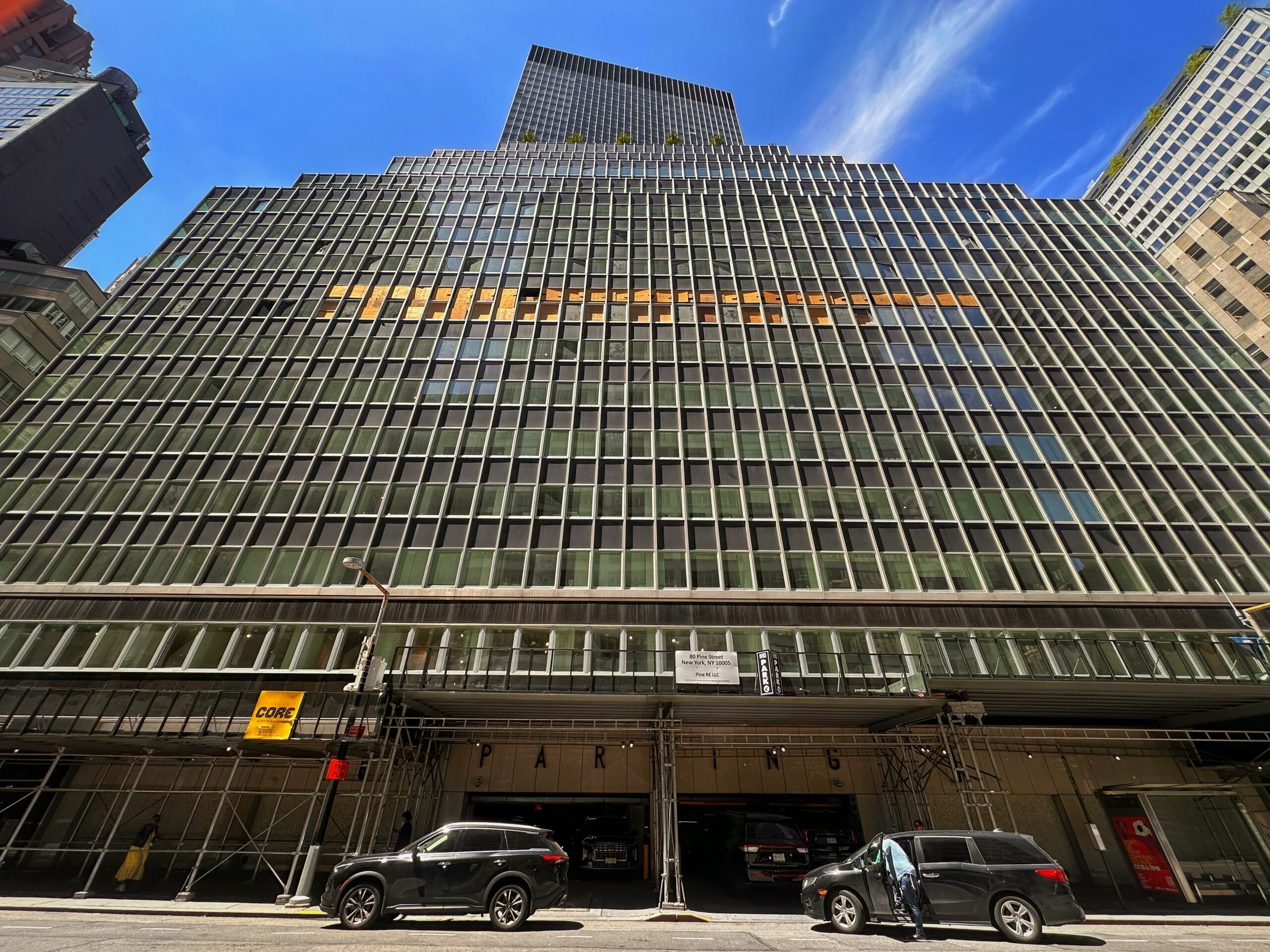
80 Pine Street. Photo by Michael Young.
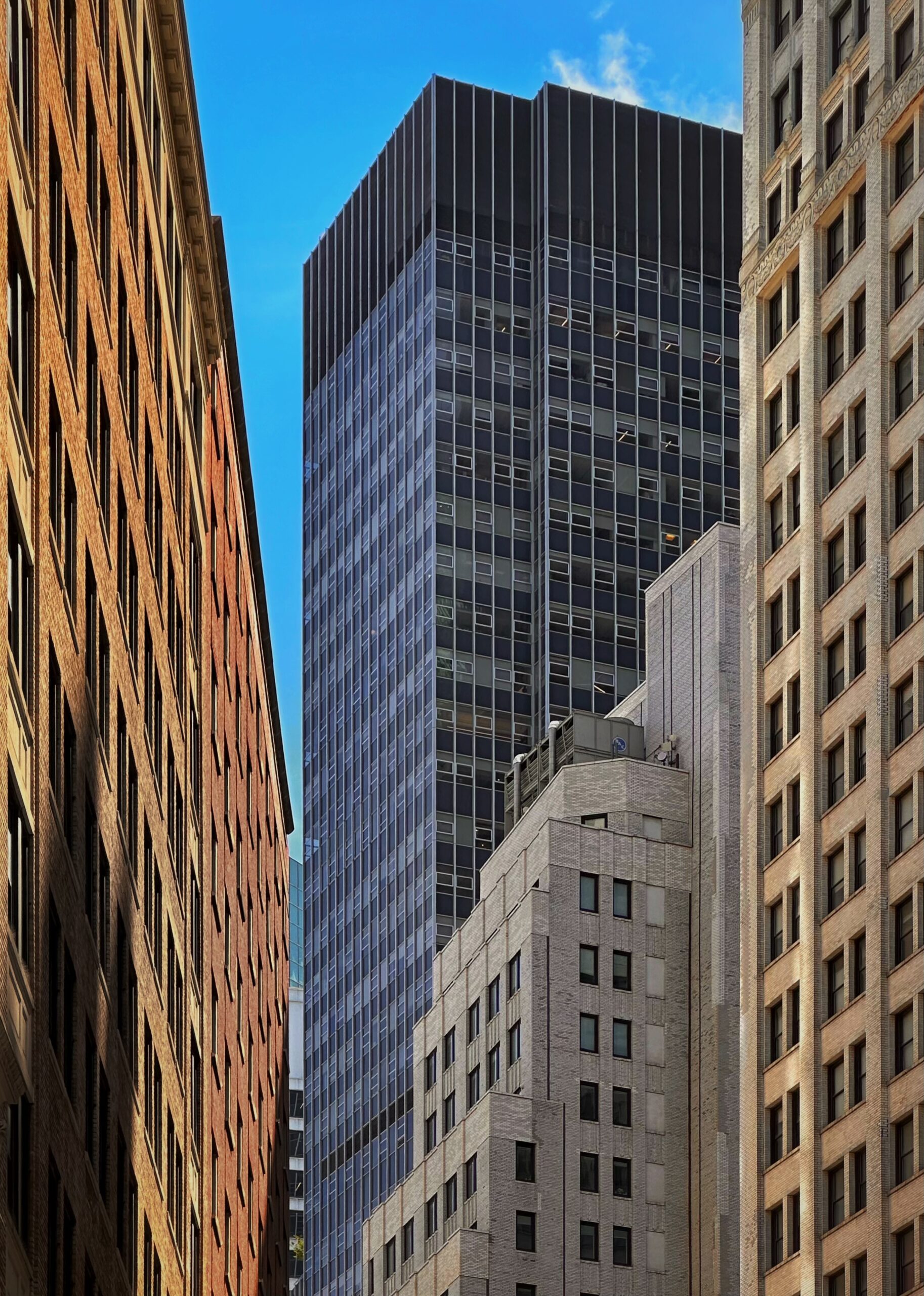
80 Pine Street. Photo by Michael Young.
The main entrance is located along Maiden Lane.
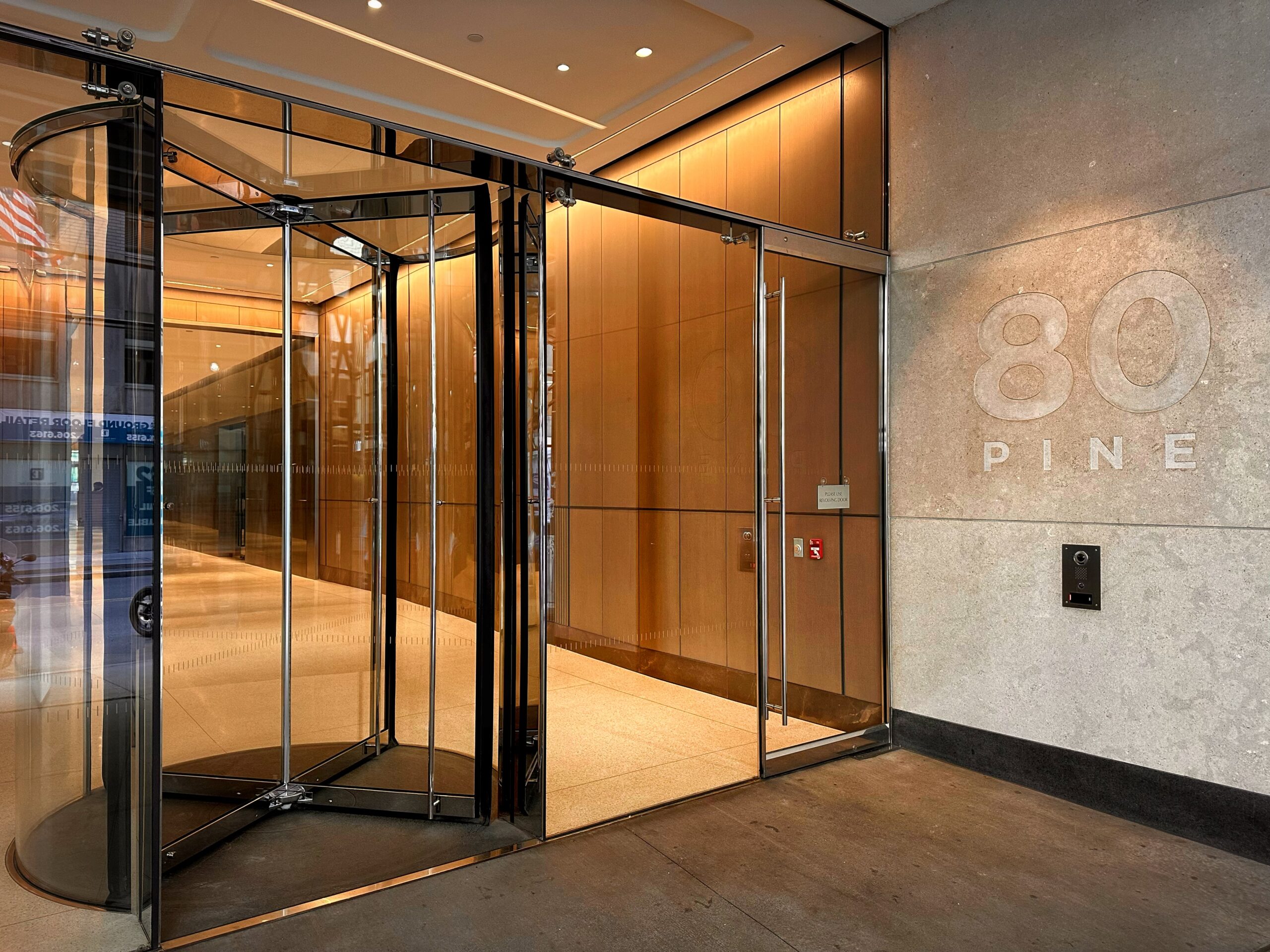
80 Pine Street. Photo by Michael Young.
Amenities will include multiple rooftop terraces; an outdoor pool, lounge, and bar; a two-story fitness center with a cardio and weightlifting room, meditation room, infrared sauna, a hot and cold plunge, a chill and salt room, and a yoga studio; a pickleball court; game lounges; a digital gaming room; a photo studio; a music room; and a podcast suite.
Bushburg acquired the property from Rudin Management for $160 million in 2024, then secured a $320 million construction loan from Bridge City Capital and Deutsche Bank. The developer plans to use the state’s 467-m tax incentive program, which provides a 35-year tax exemption in exchange for setting aside 25 percent of units for renters earning an average of 80 percent of the area median income (AMI). The first rental units were completed in January, though a completion date has yet to be announced.
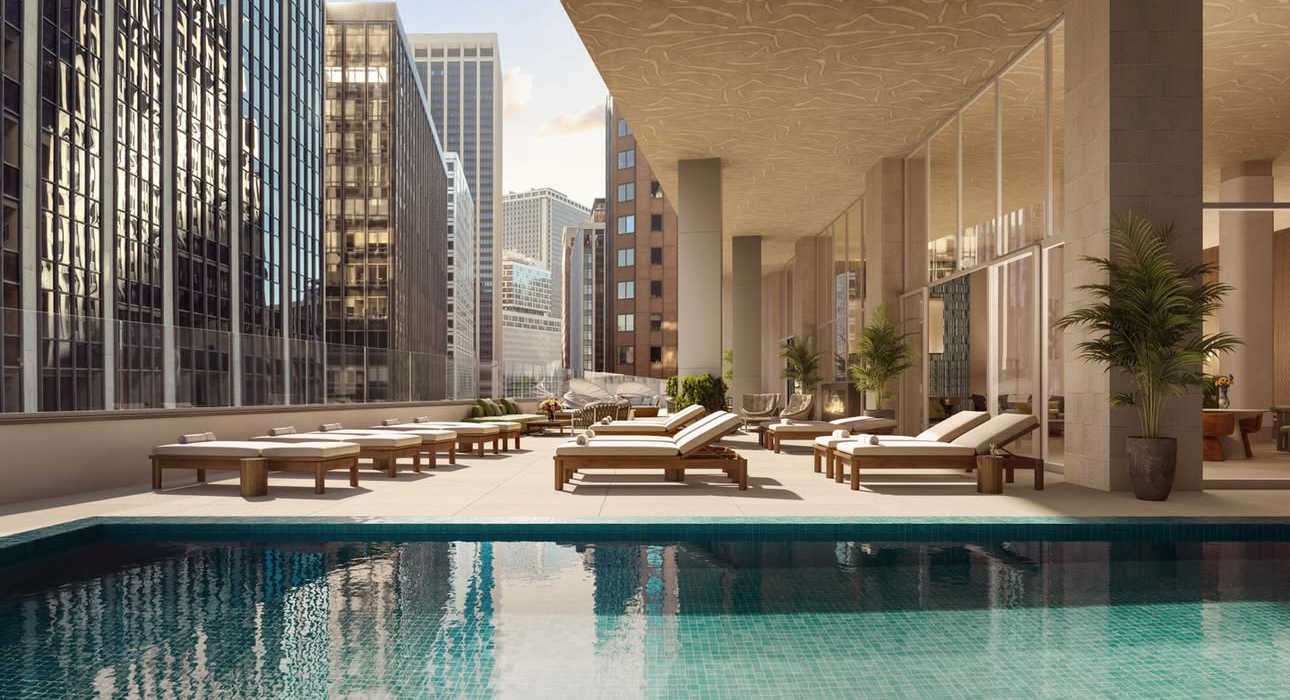
Renderings courtesy of Hayes Davidson.
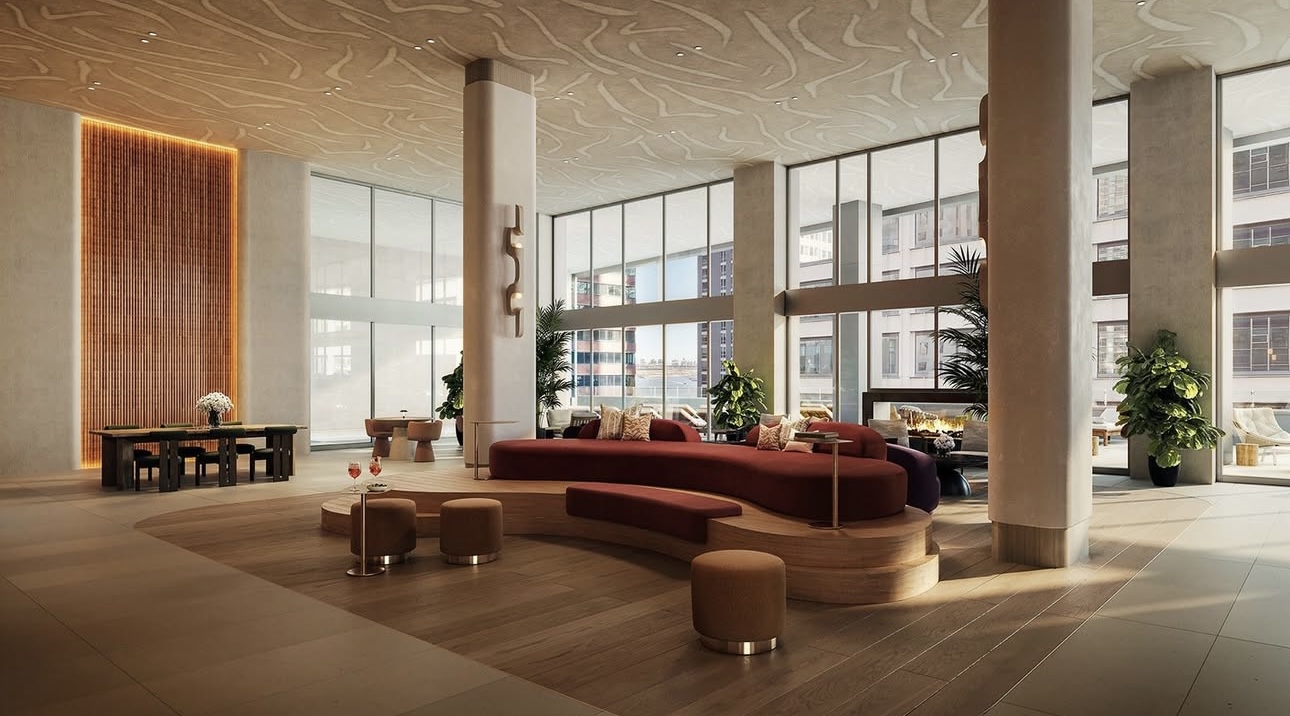
Renderings courtesy of Hayes Davidson.
The Landmarks Preservation Commission recently approved plans for the conversion of 26 Bleecker Street, a seven-story building in the NoHo East Historic District. Designed by BKSK Architects and developed by Izaki Group Investments, the project will repurpose the 43,000-square-foot structure into 15 condominium units with ground-floor retail space, and will also construct a penthouse level with two units above its former roof. The property is located at the corner of Bleecker and Mott Street.
The building will house no more than three units per floor. Amenities will include a fitness center, thermal spa, and a shared roof deck. Exterior renovations will include restoring the brick, terracotta, cast iron elements, and the cornice, while installing new energy-efficient windows.
The developer purchased the 126-year-old Classical Revival-style building last year for $38.1 million.
The closest subway from the site is the 6 train at the Bleecker Street station to the west. A construction timeline has yet to be announced.
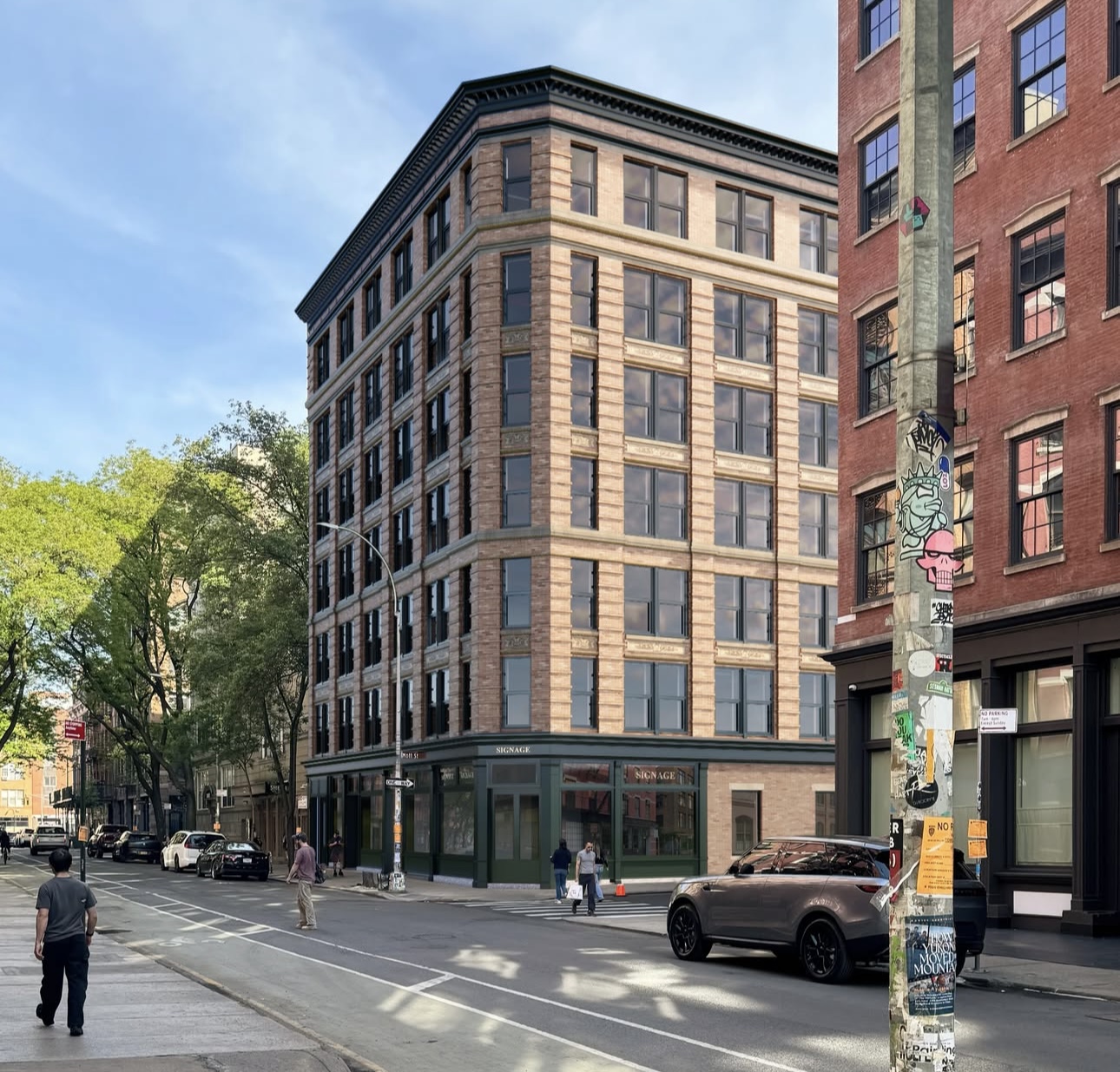
26 Bleecker Street. Rendering courtesy of 26 Bleecker Street.
Work is underway on 355 Lexington Avenue, a 22-story building in Midtown East. Developed by longtime owner Rudin Management, the $32 million project will add four floors to the structure, expanding it to 276 feet tall and approximately 280,000 square feet, and will yield 297 market-rate and affordable apartments as well as ground-floor retail space. The property is located at the corner of Lexington Avenue and East 40th Street.
A sidewalk shed has been assembled around the empty ground level, and the floors above have been vacated. Work has yet to begin on the expansion. A construction timeline has not been announced.
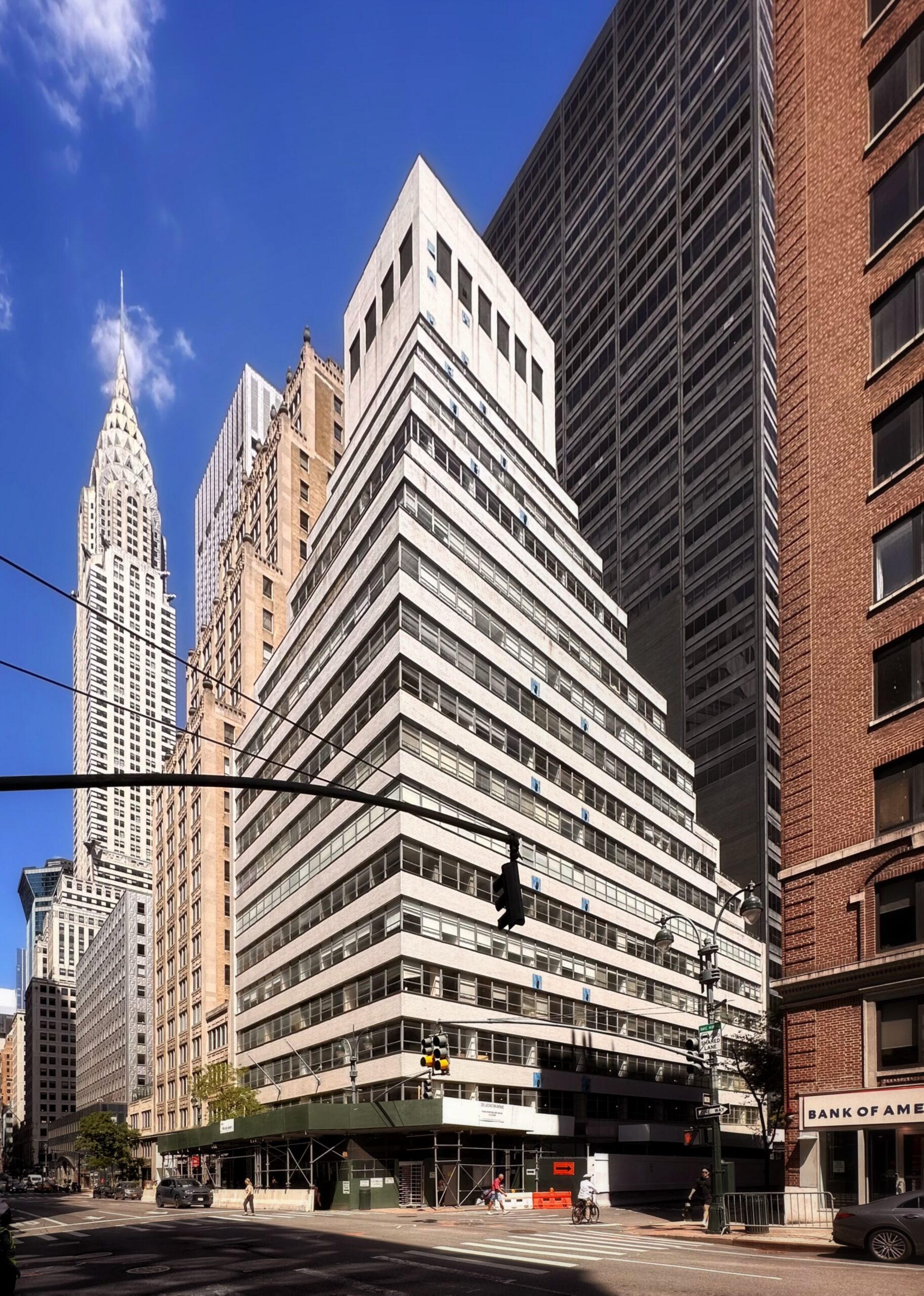
355 Lexington Avenue. Photo by Michael Young.
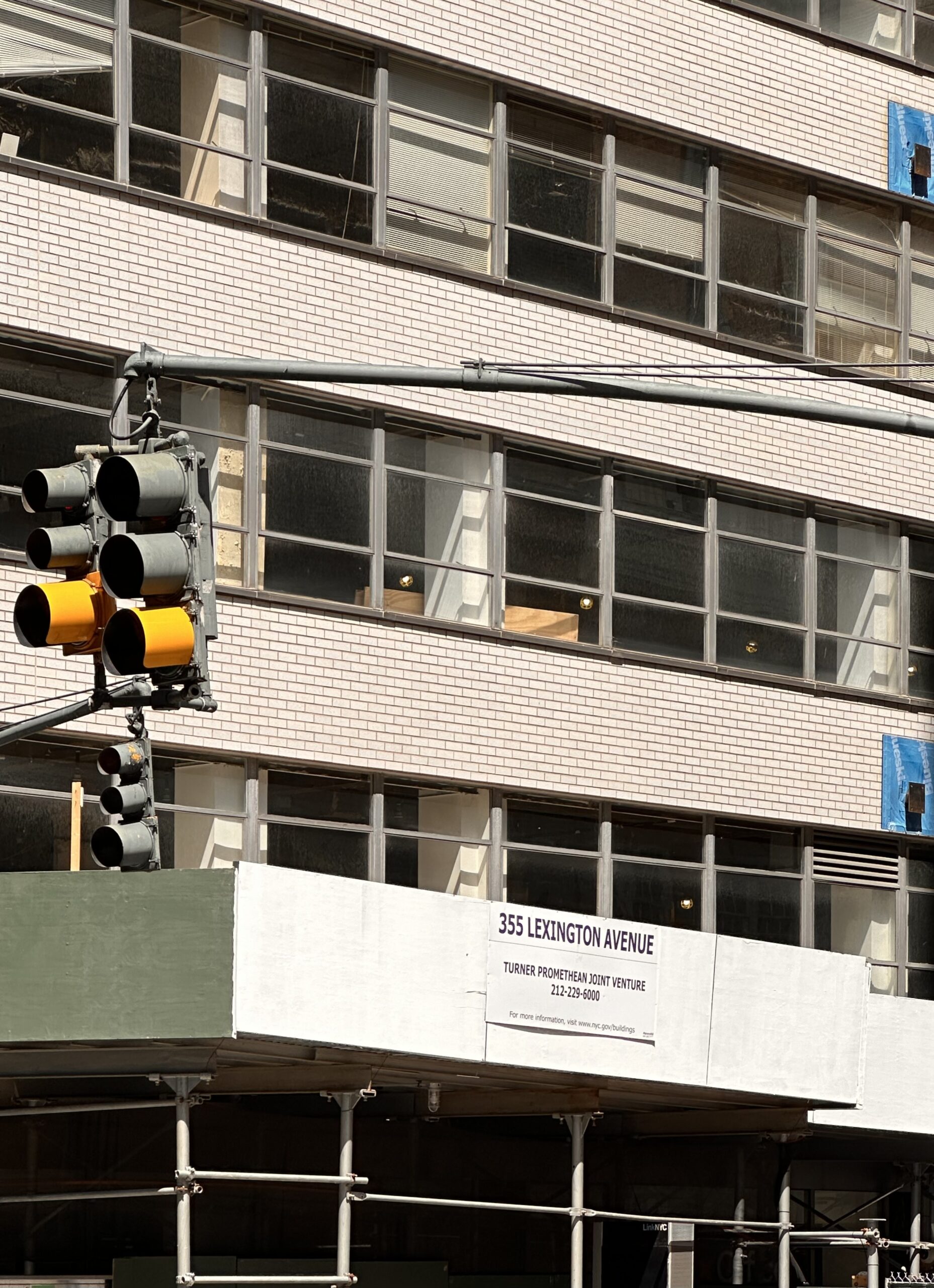
355 Lexington Avenue. Photo by Michael Young.
Work is ramping up on 300 Second Avenue, a partial conversion of an 18-story building in Midtown East. Developed by CSC, the project will repurpose a portion of the 235,000-square-foot structure’s interiors into 135 rental units. The existing 15,000 square feet of retail space and long-term leased office component on the upper and lowermost levels will remain. The commercial space is occupied by a number of diplomacy-oriented tenants due the building’s proximity to the United Nations. The property is located between East 41st and 42nd Streets.
CSC secured a $45 million senior first-mortgage loan to acquire the property and carry out the conversion. Northwind Group originated the loan through its Debt Fund III. The developer will also utilize the 467-m tax abatement program.
A sidewalk shed surrounds the property as interior work gets underway. An anticipated completion date was not disclosed.
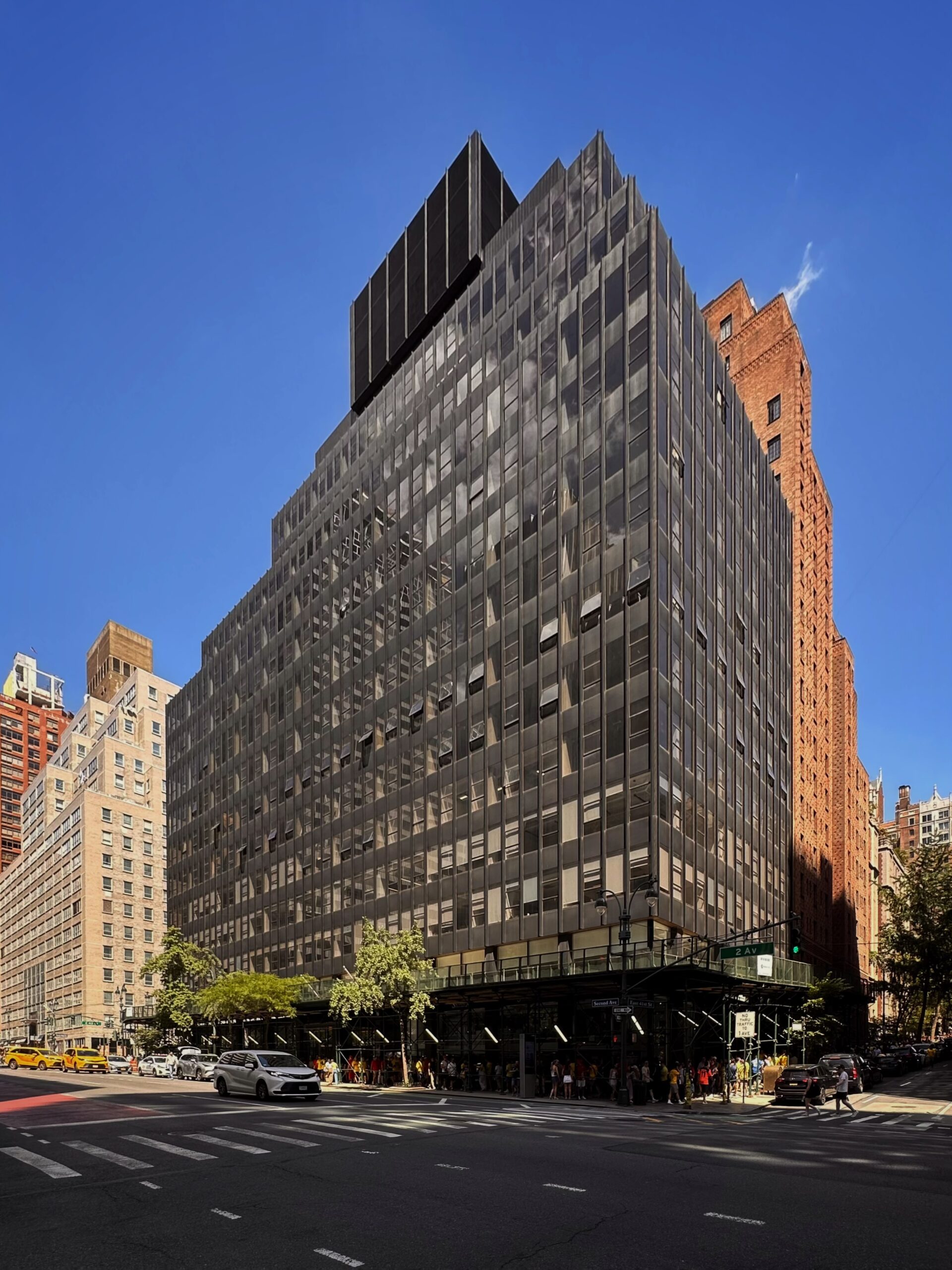
300 East 42nd Street. Photo by Michael Young.
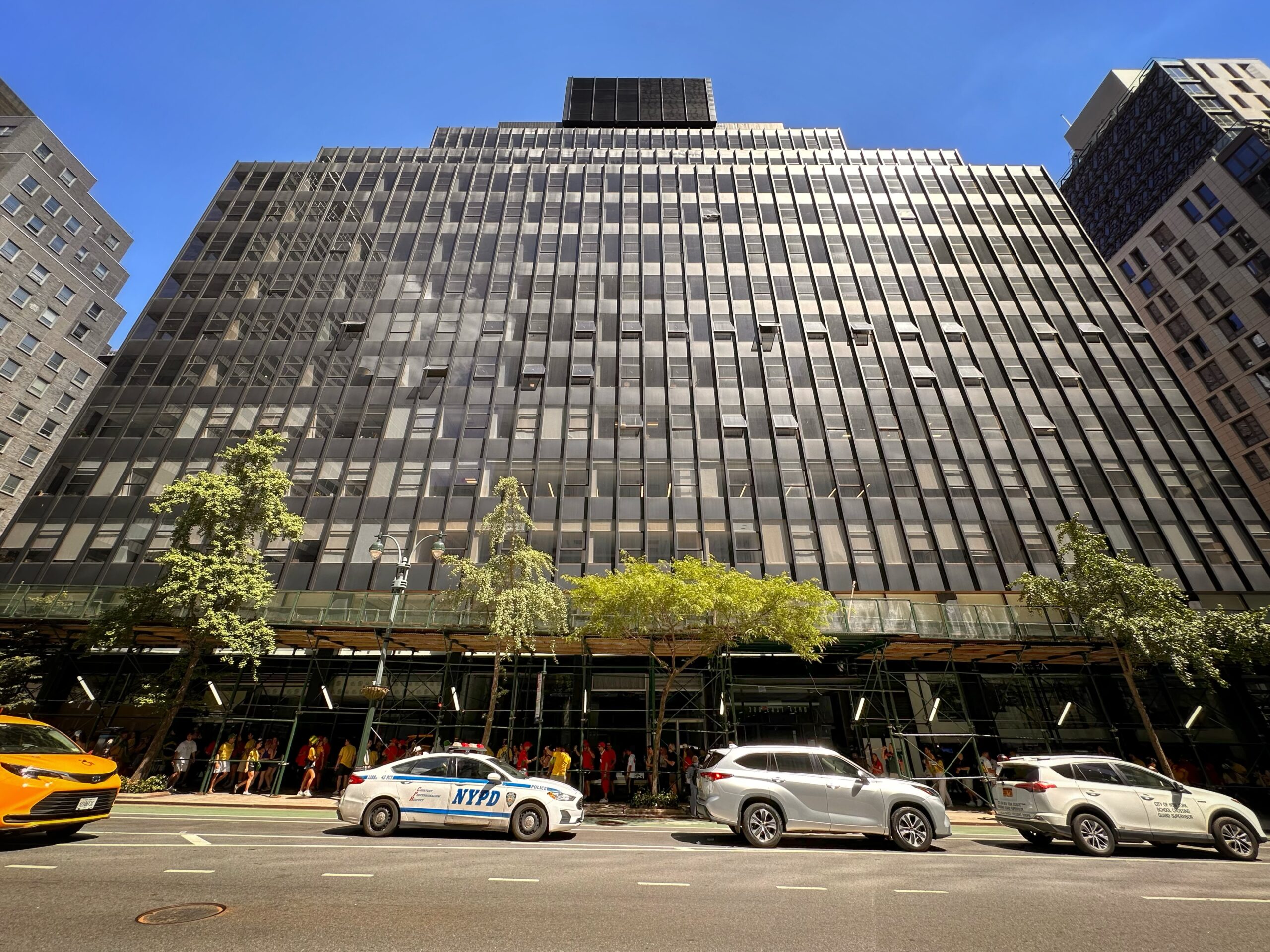
300 East 42nd Street. Photo by Michael Young.
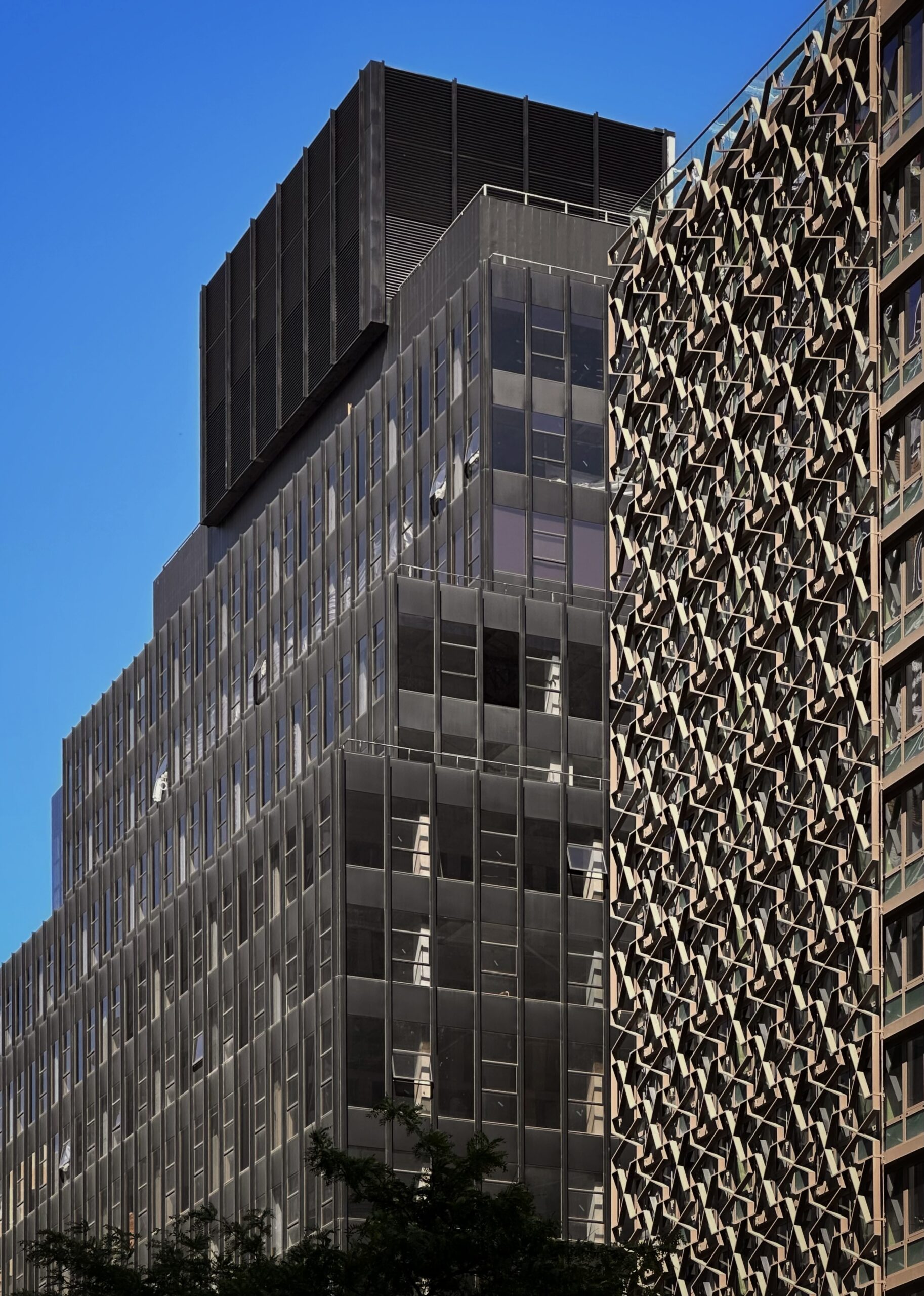
300 East 42nd Street. Photo by Michael Young.
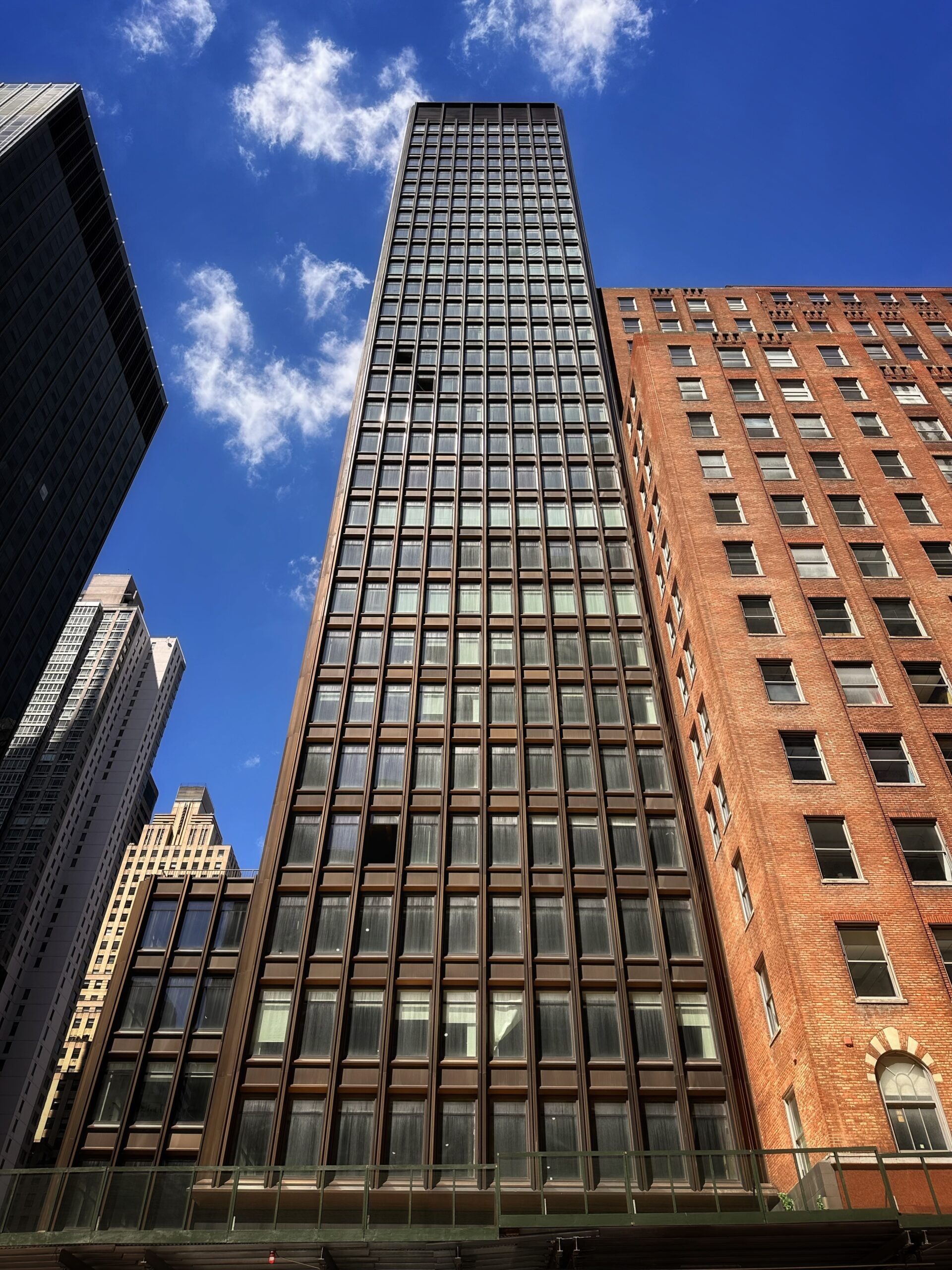
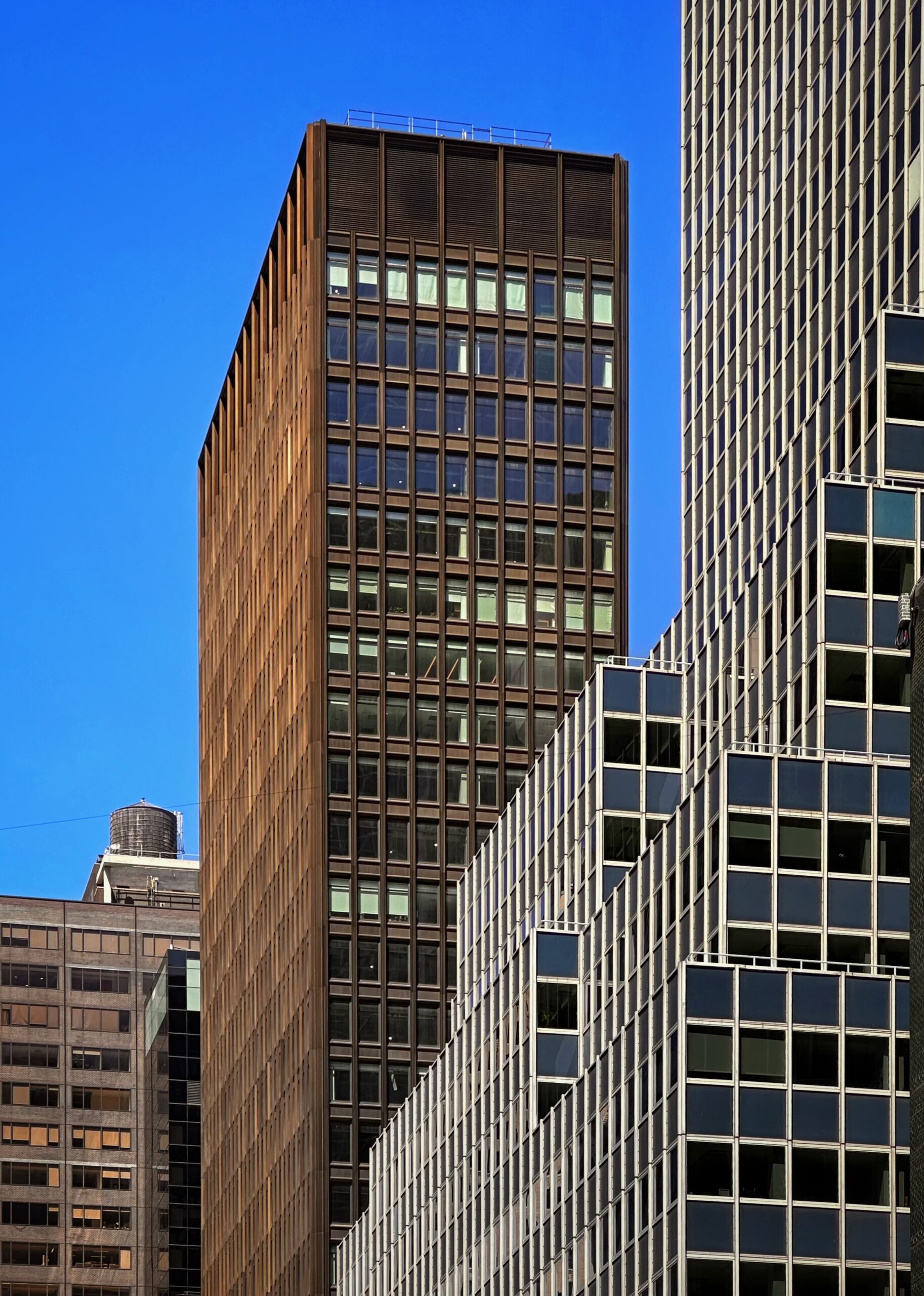
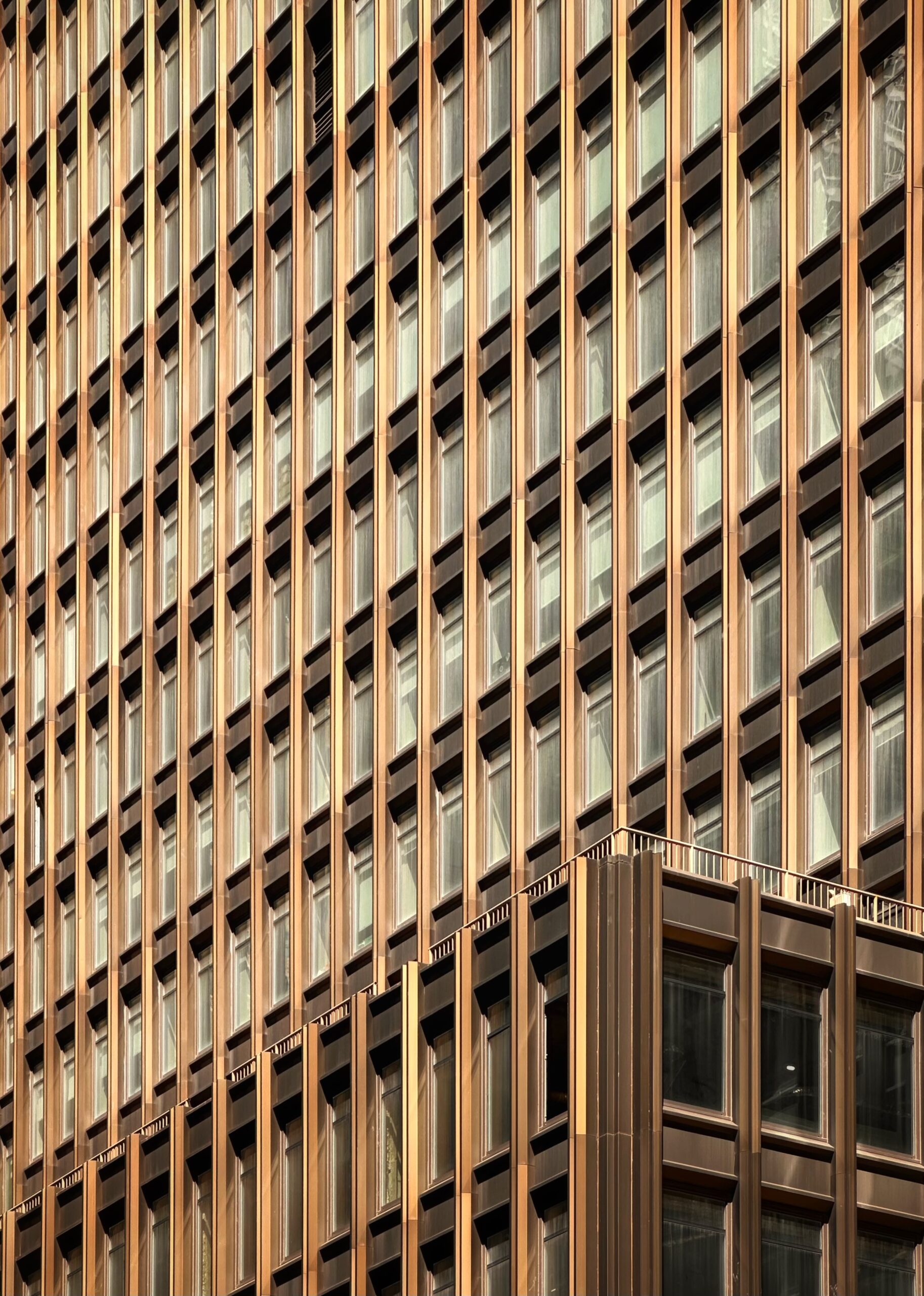
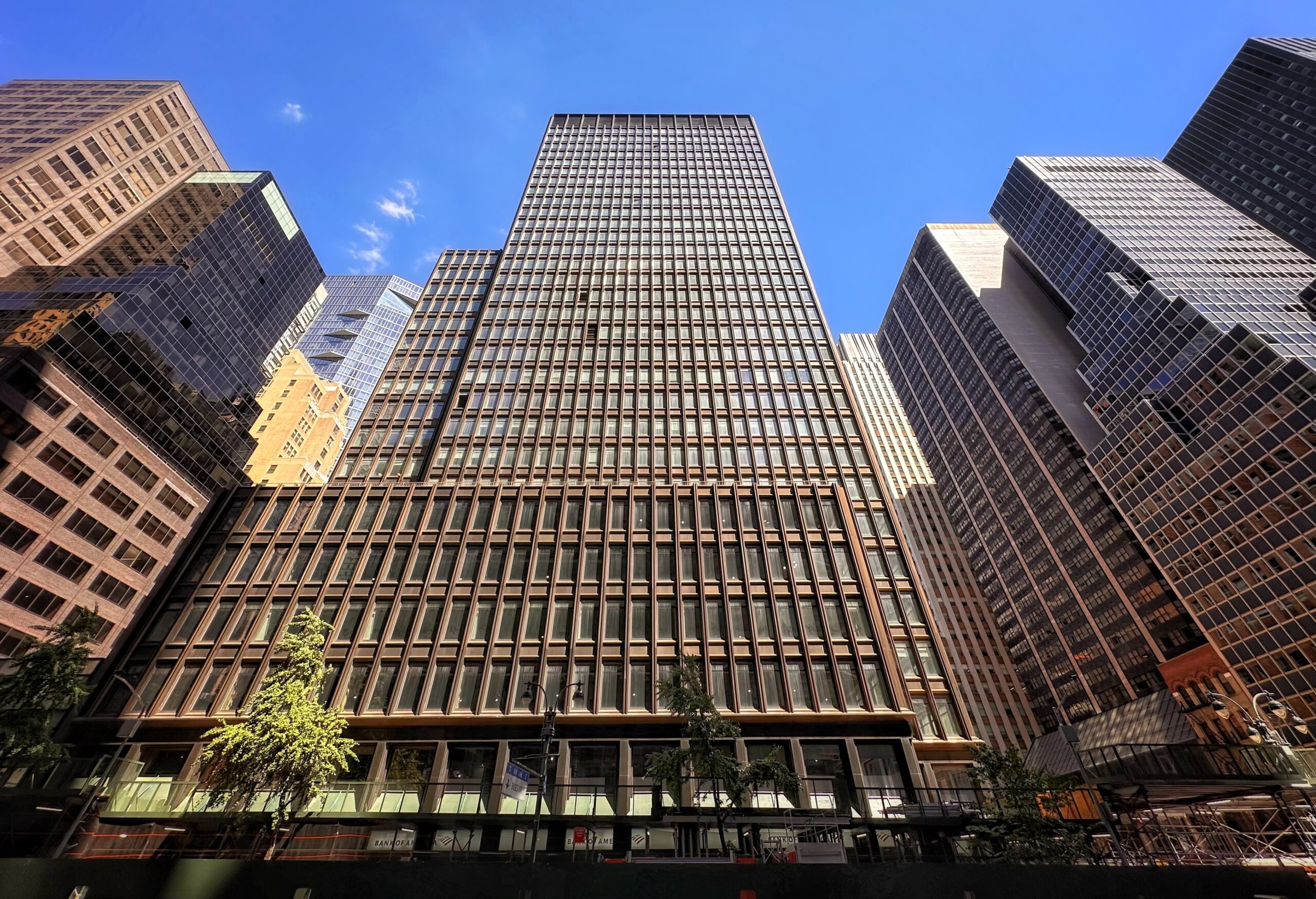
Progress is underway on 675 Third Avenue, a conversion and expansion in Midtown East. Developed by Metro Lift Management and David Werner Real Estate Investments, the project will add four floors to the structure, bringing it to 35 stories, and will convert its 321,000 square feet into 464 rental units. The property is located between East 42nd and 43rd Streets.
The development will also utilize the city’s 467-m tax abatement program, which requires a portion of the apartments to be rent-restricted. Northwind Group provided a $90 million senior first-mortgage loan for the property.
The public plaza and ground level is blocked off by a wraparound sidewalk shed and wooden fencing, and a few windows have been removed. The building slated for occupancy in the second quarter of 2027.
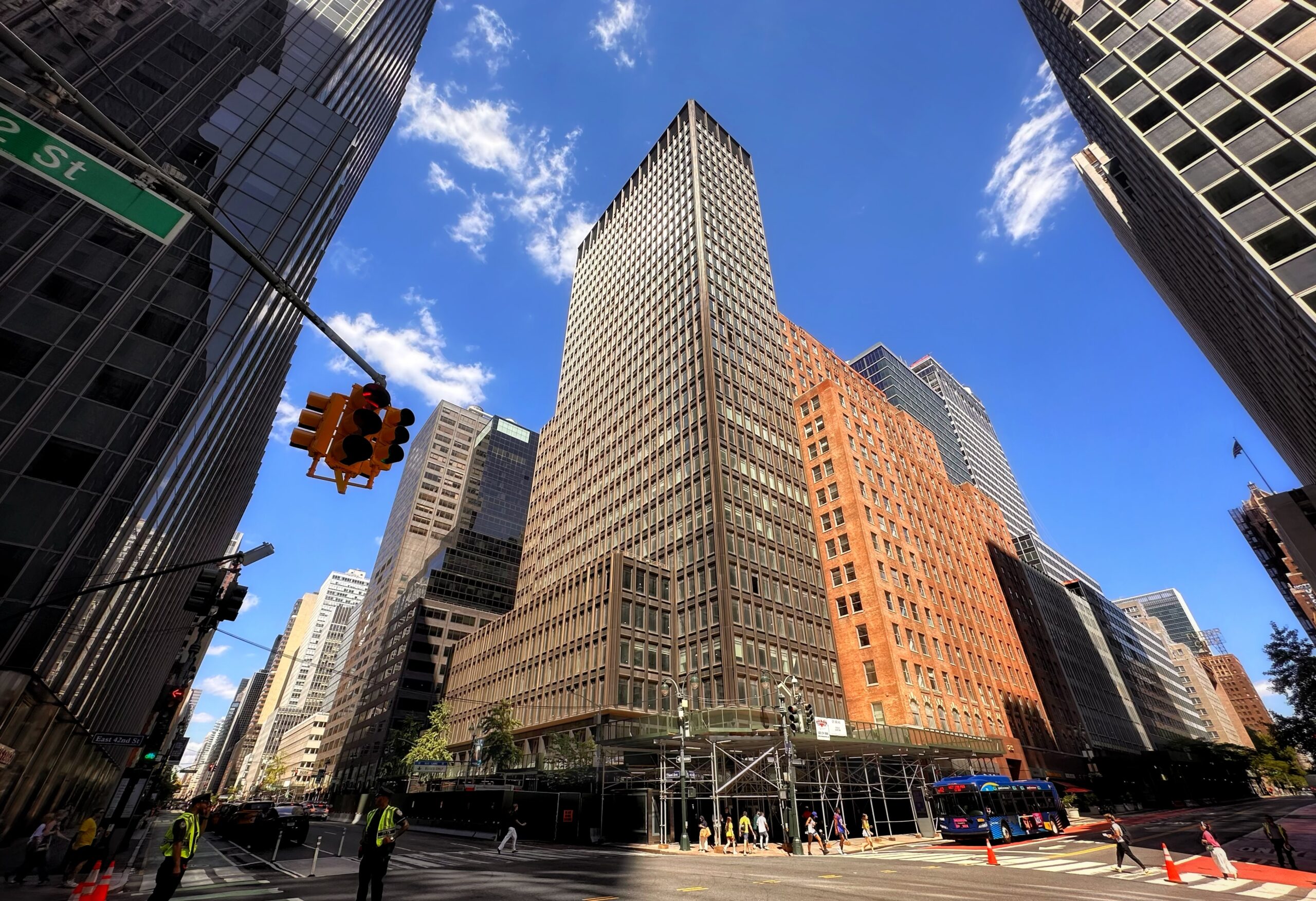
675 Third Avenue. Photo by Michael Young.
675 Third Avenue. Photo by Michael Young.
675 Third Avenue. Photo by Michael Young.
675 Third Avenue. Photo by Michael Young.
675 Third Avenue. Photo by Michael Young.
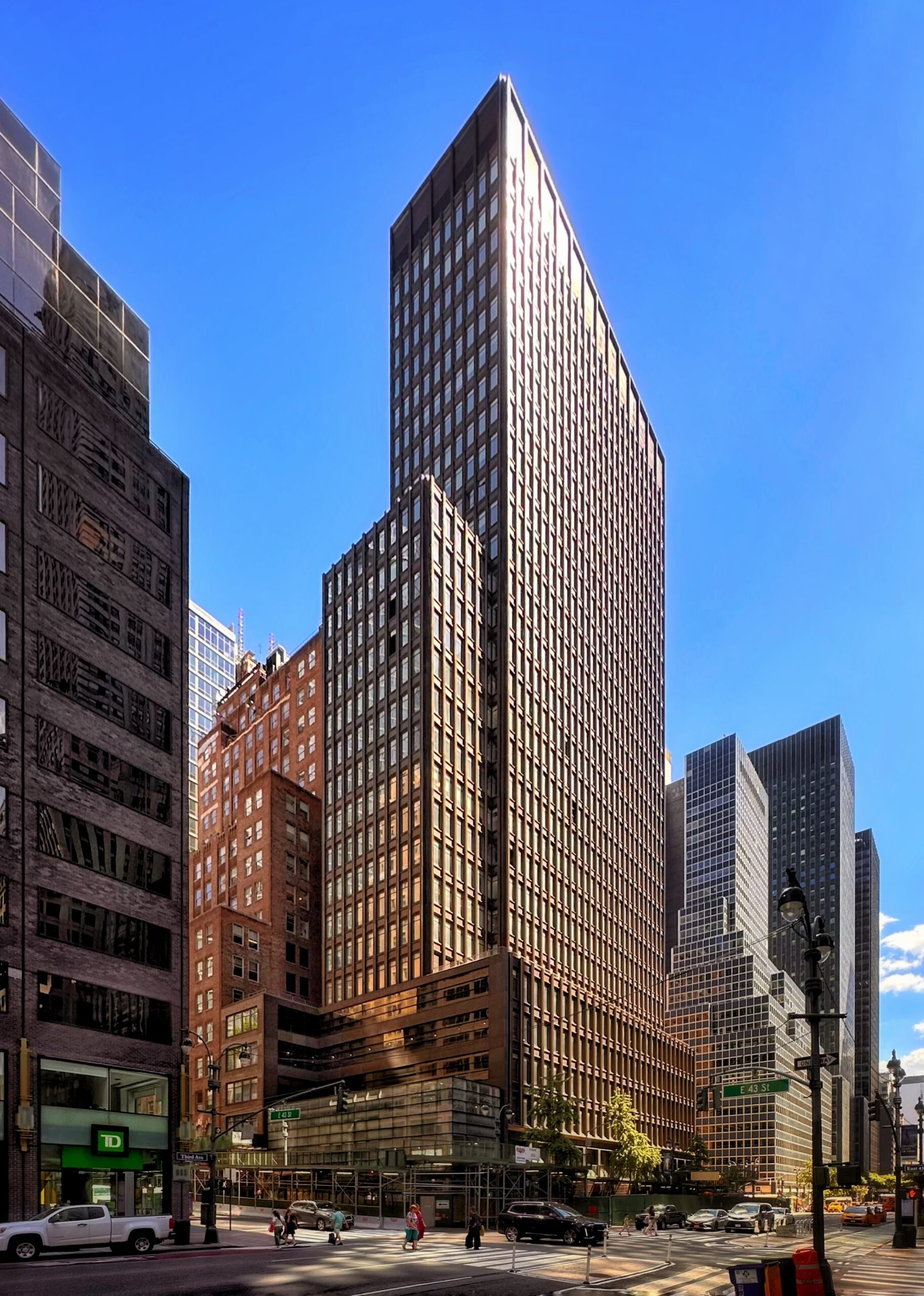
675 Third Avenue. Photo by Michael Young.
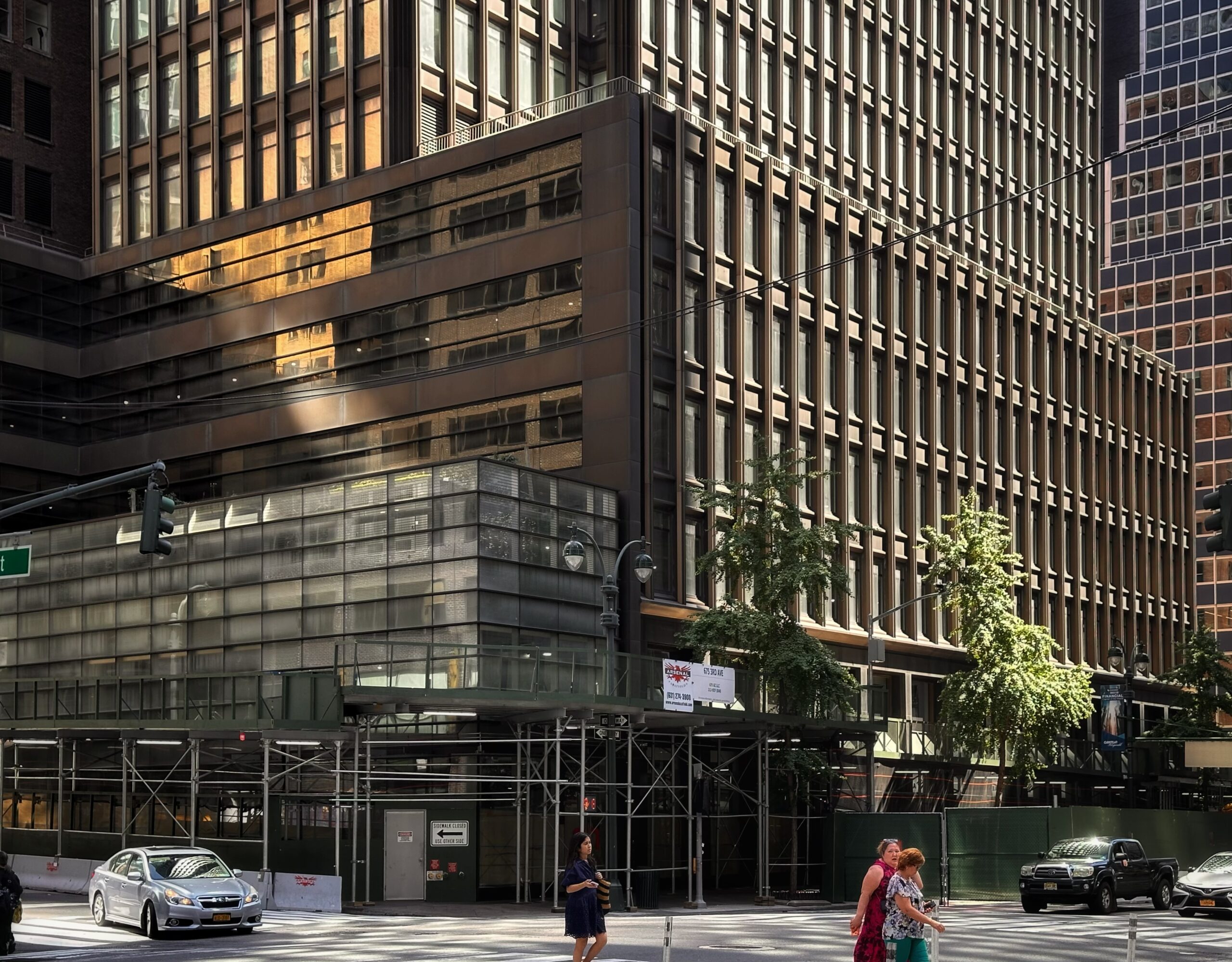
675 Third Avenue. Photo by Michael Young.
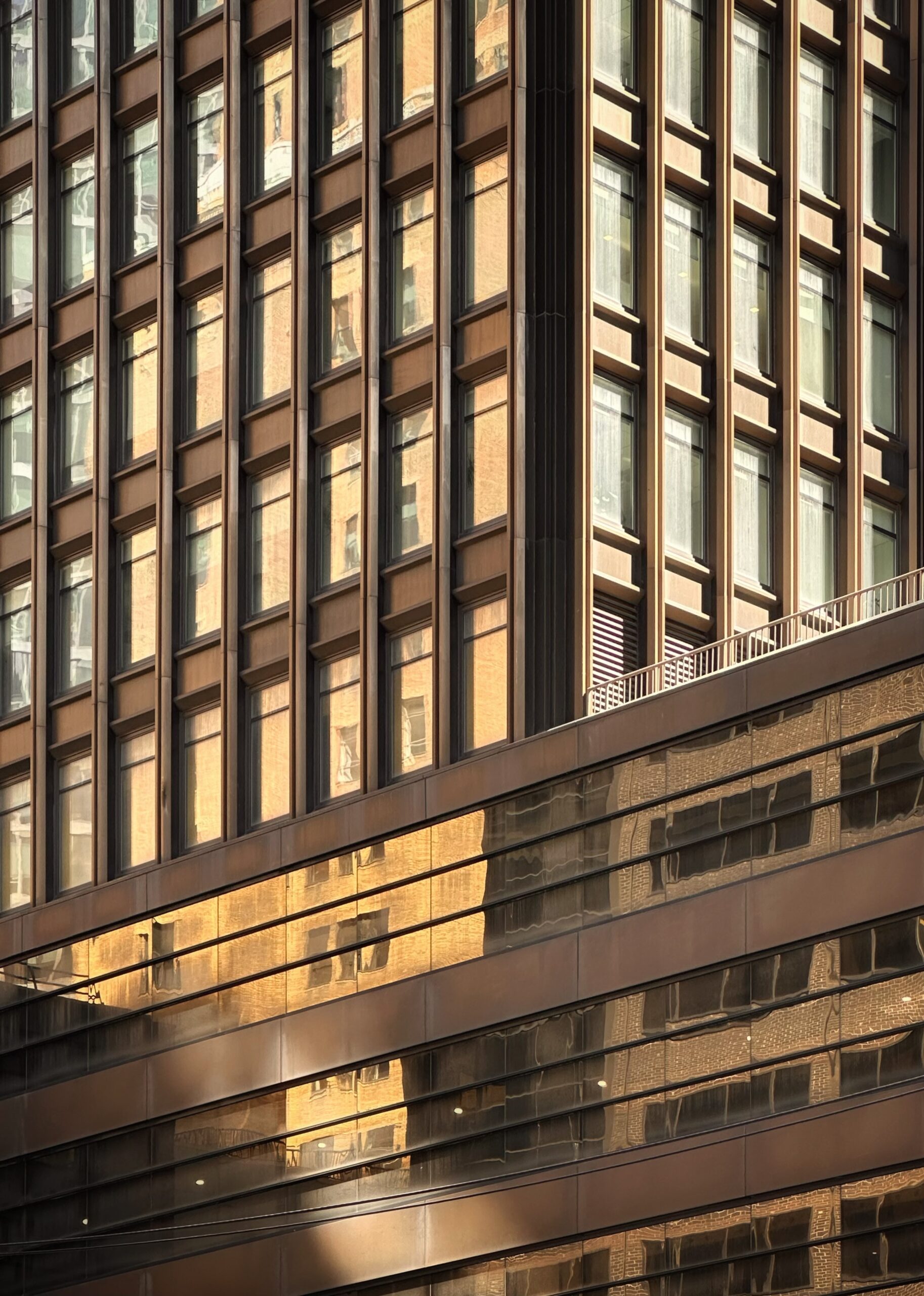
675 Third Avenue. Photo by Michael Young.
Exterior work is progressing on 1740 Broadway, a 26-story building in Midtown. Designed by BKSK Architects and developed by Yellowstone Real Estate Investments, the $34.7 million project will convert the 525,000-square-foot structure into 426 rental apartments. The property is located between West 55th and 56th Streets.
The developer acquired the building from Blackstone for nearly $186 million in 2024 and secured a $203 million construction loan for the project.
Scaffolding and netting covers the lower levels of the southern profile, and a section of the windows and metal spandrels has been removed from the Broadway-facing elevation. A completion date has not been disclosed.
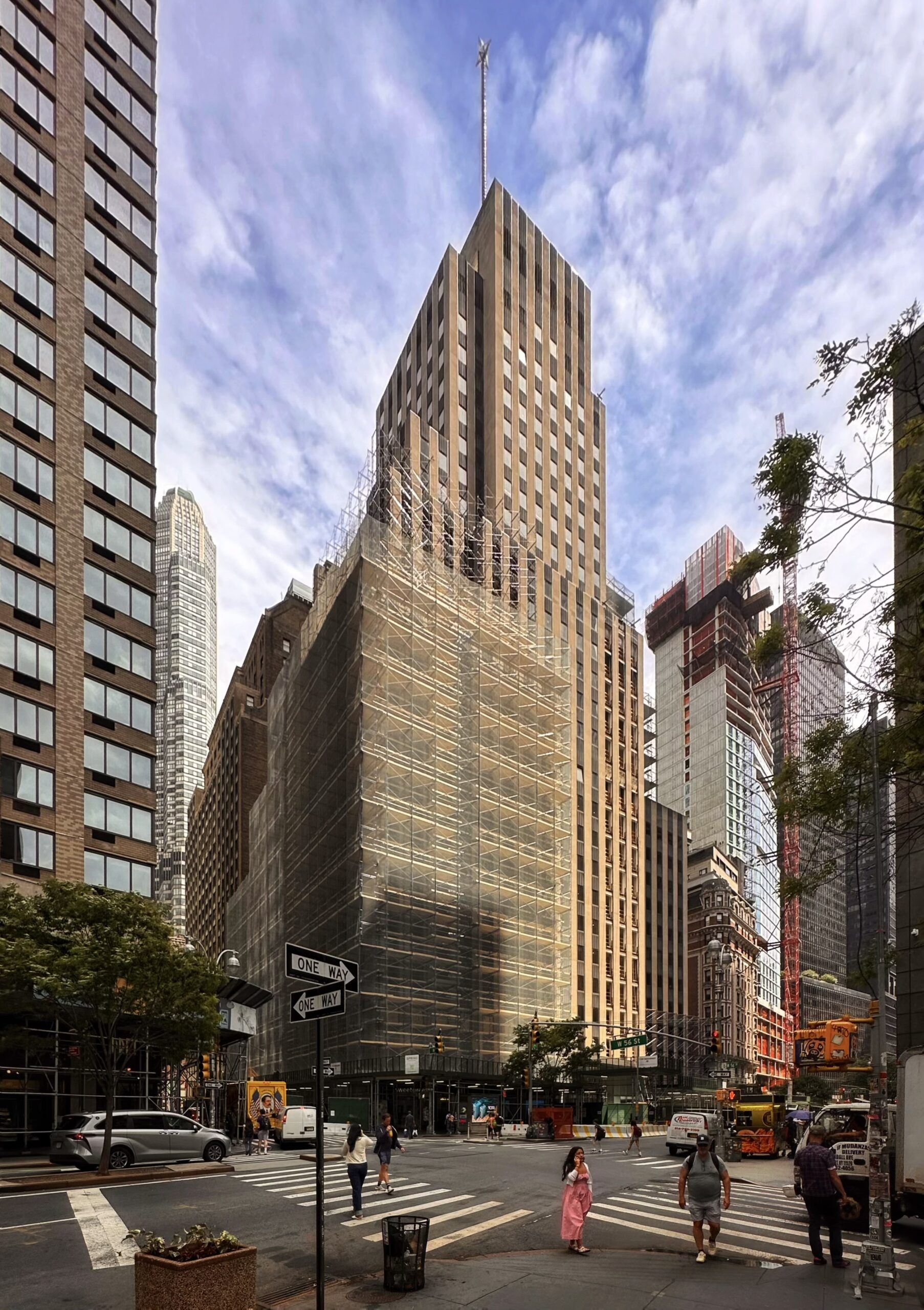
1740 Broadway. Photo by Michael Young.
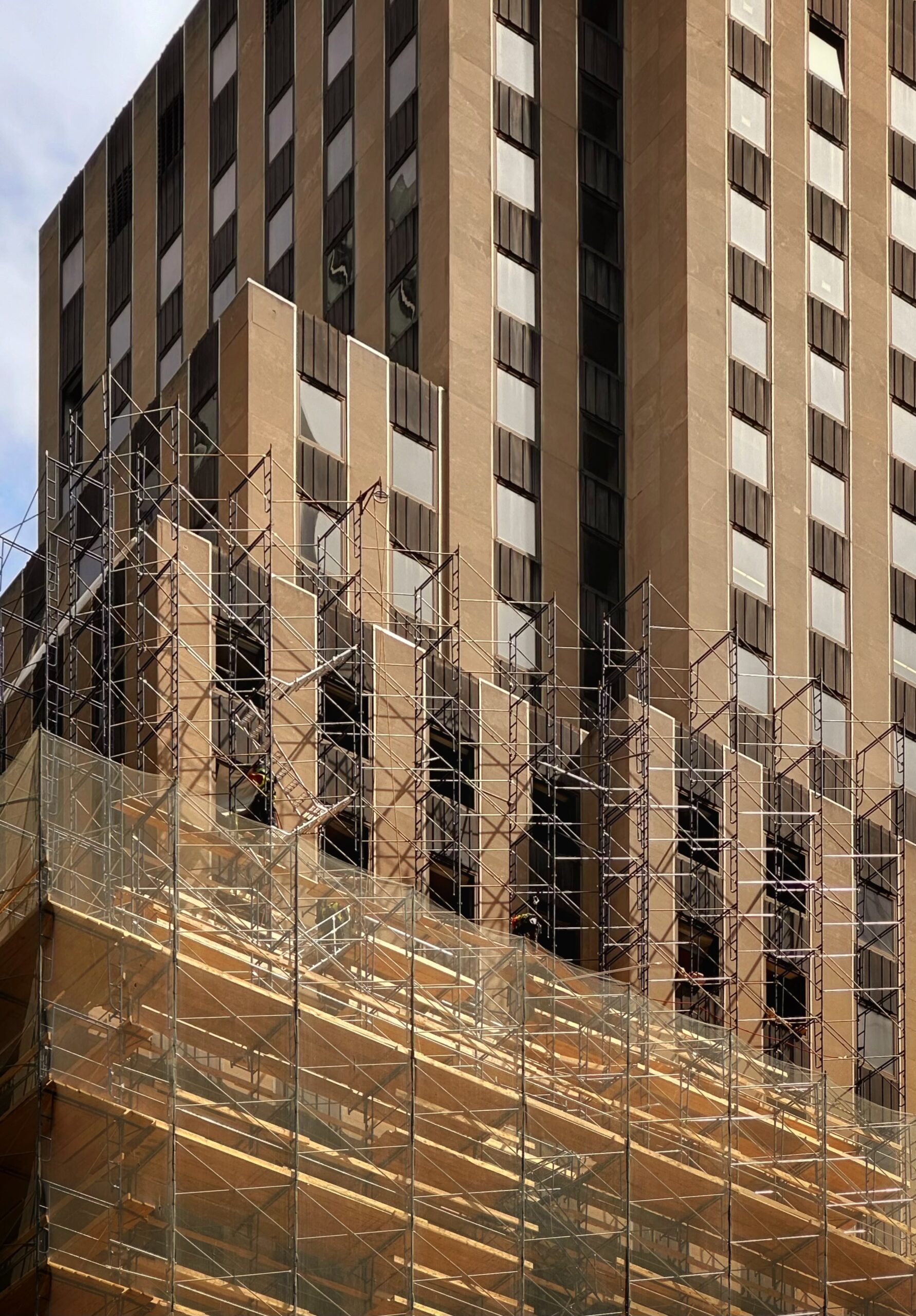
1740 Broadway. Photo by Michael Young.
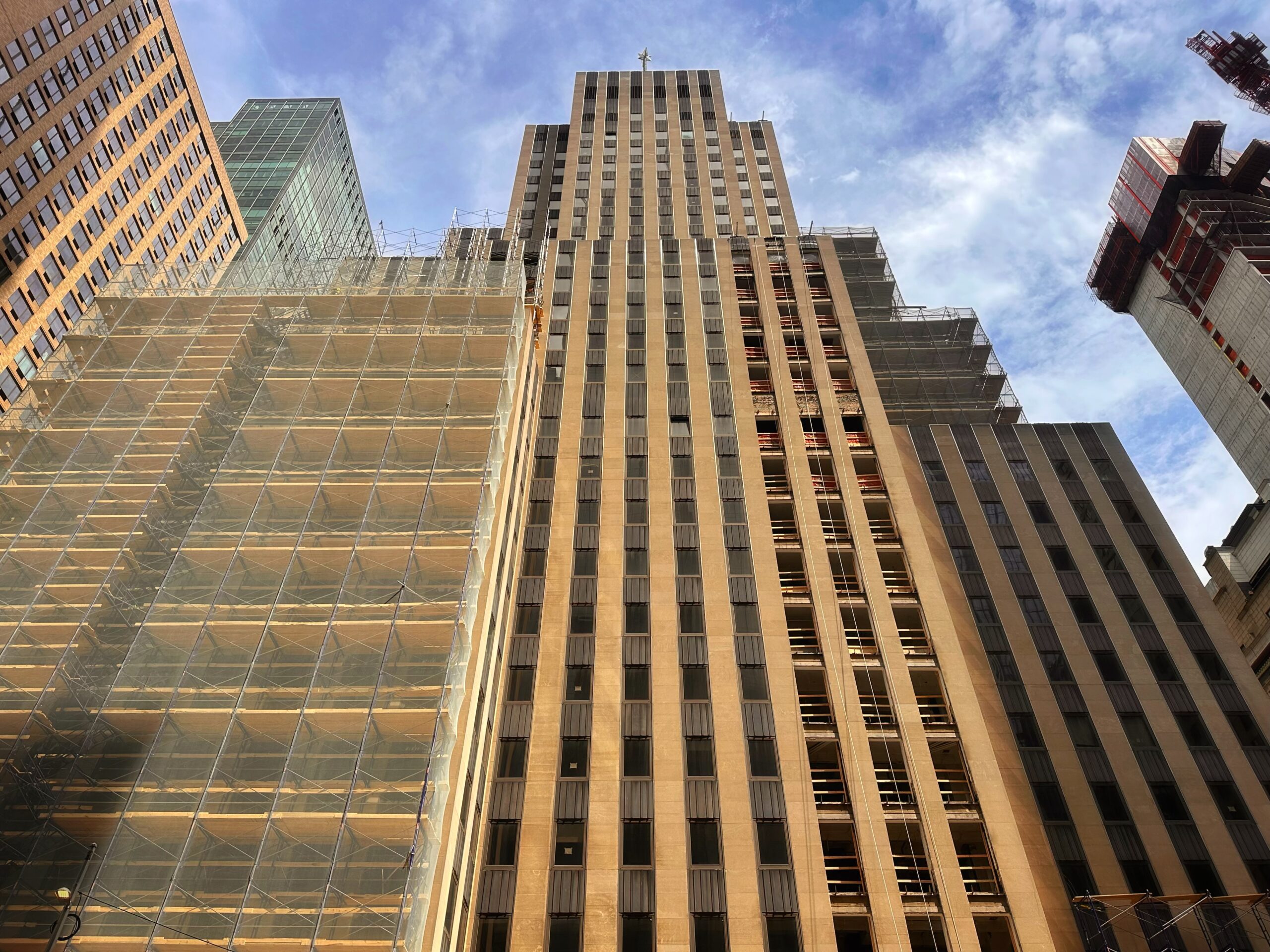
1740 Broadway. Photo by Michael Young.
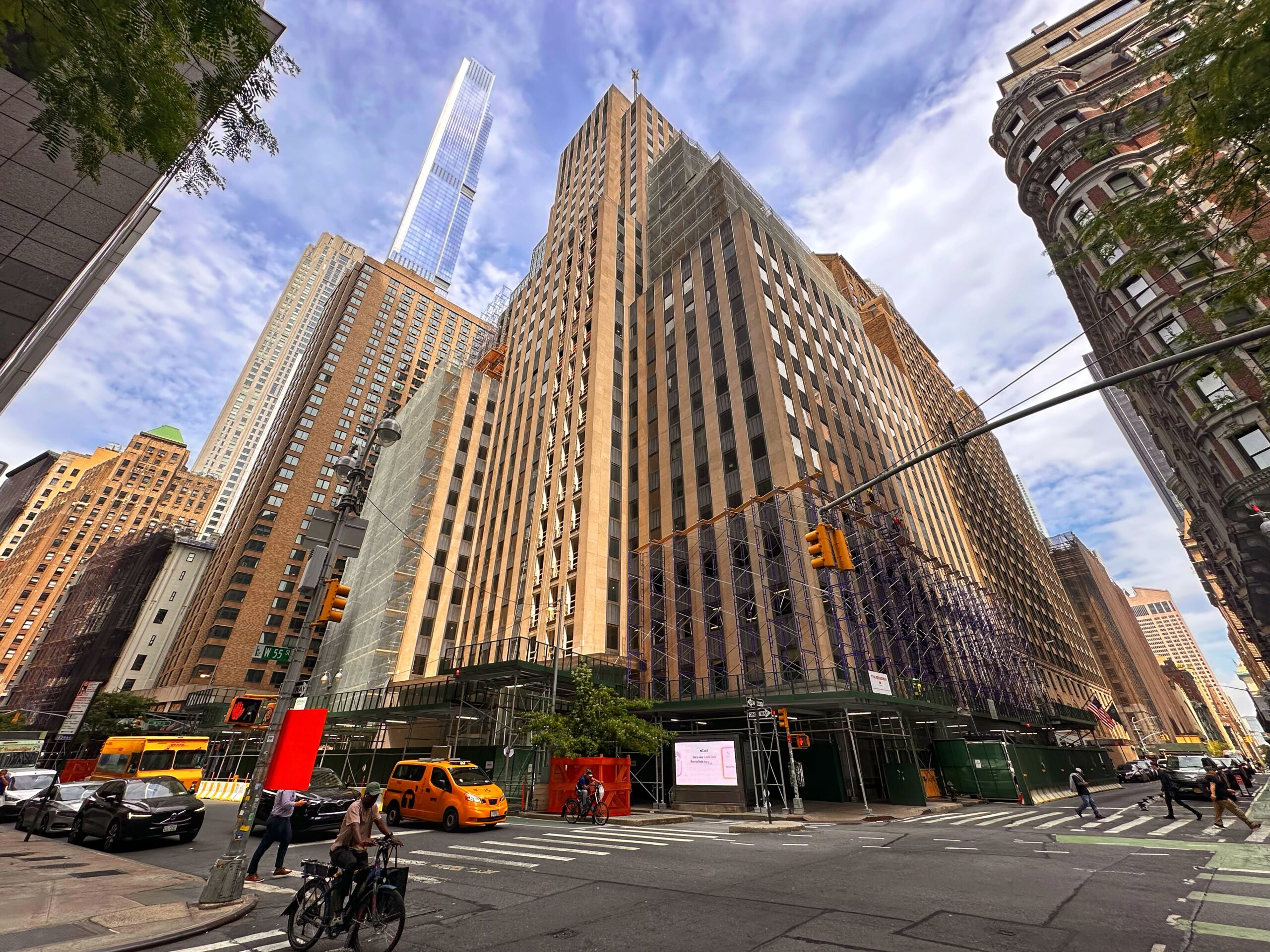
1740 Broadway. Photo by Michael Young.
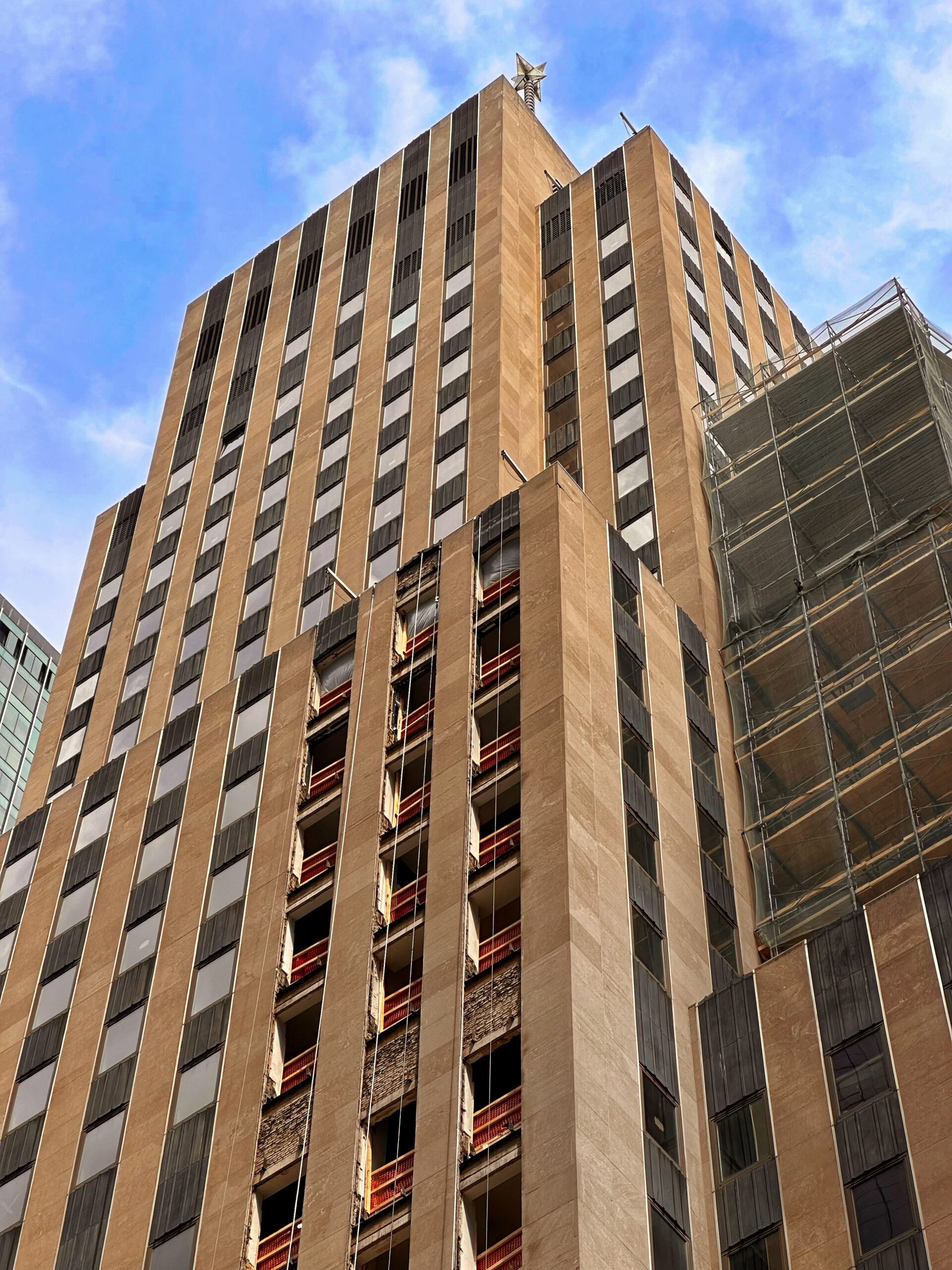
1740 Broadway. Photo by Michael Young.
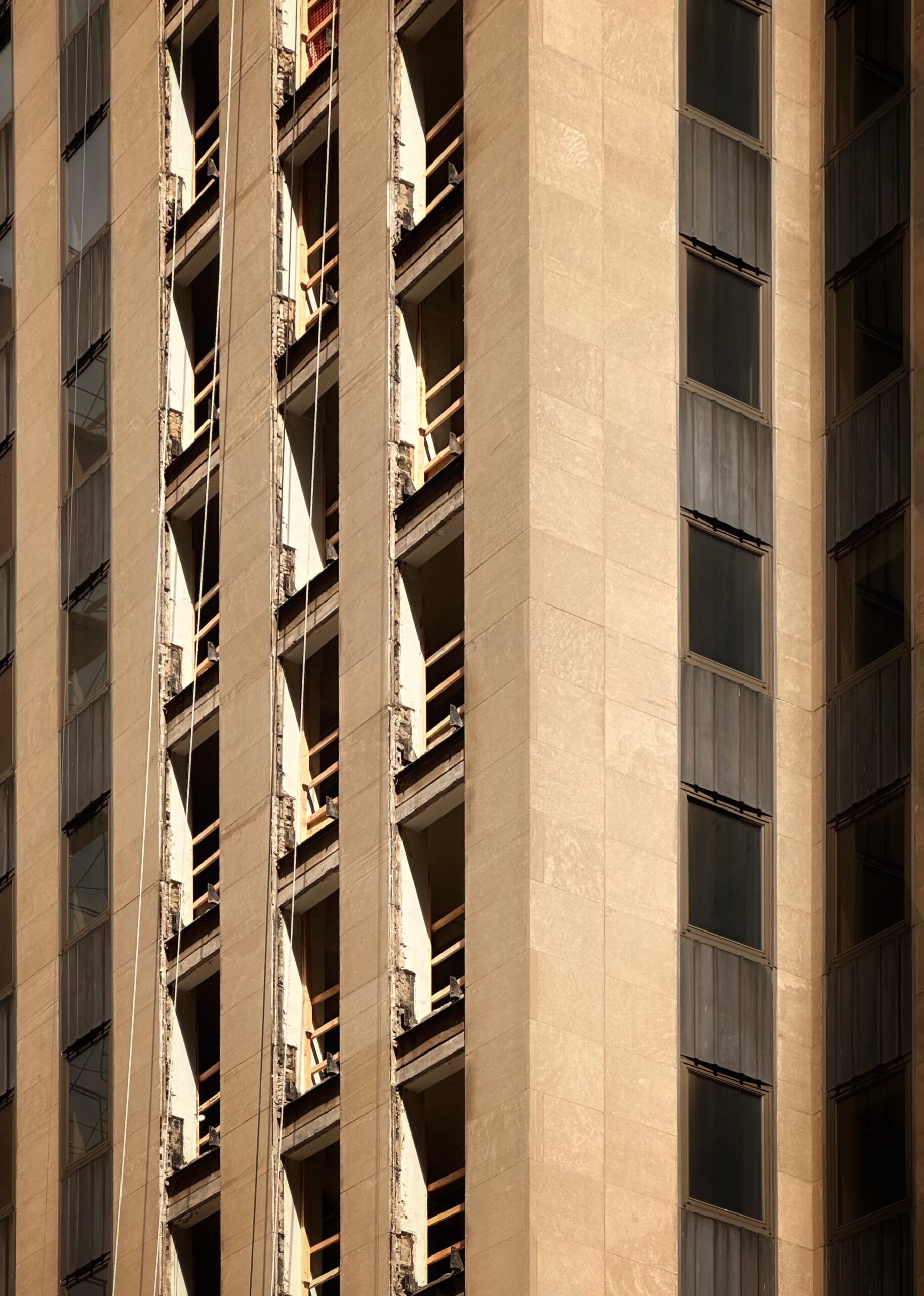
1740 Broadway. Photo by Michael Young.
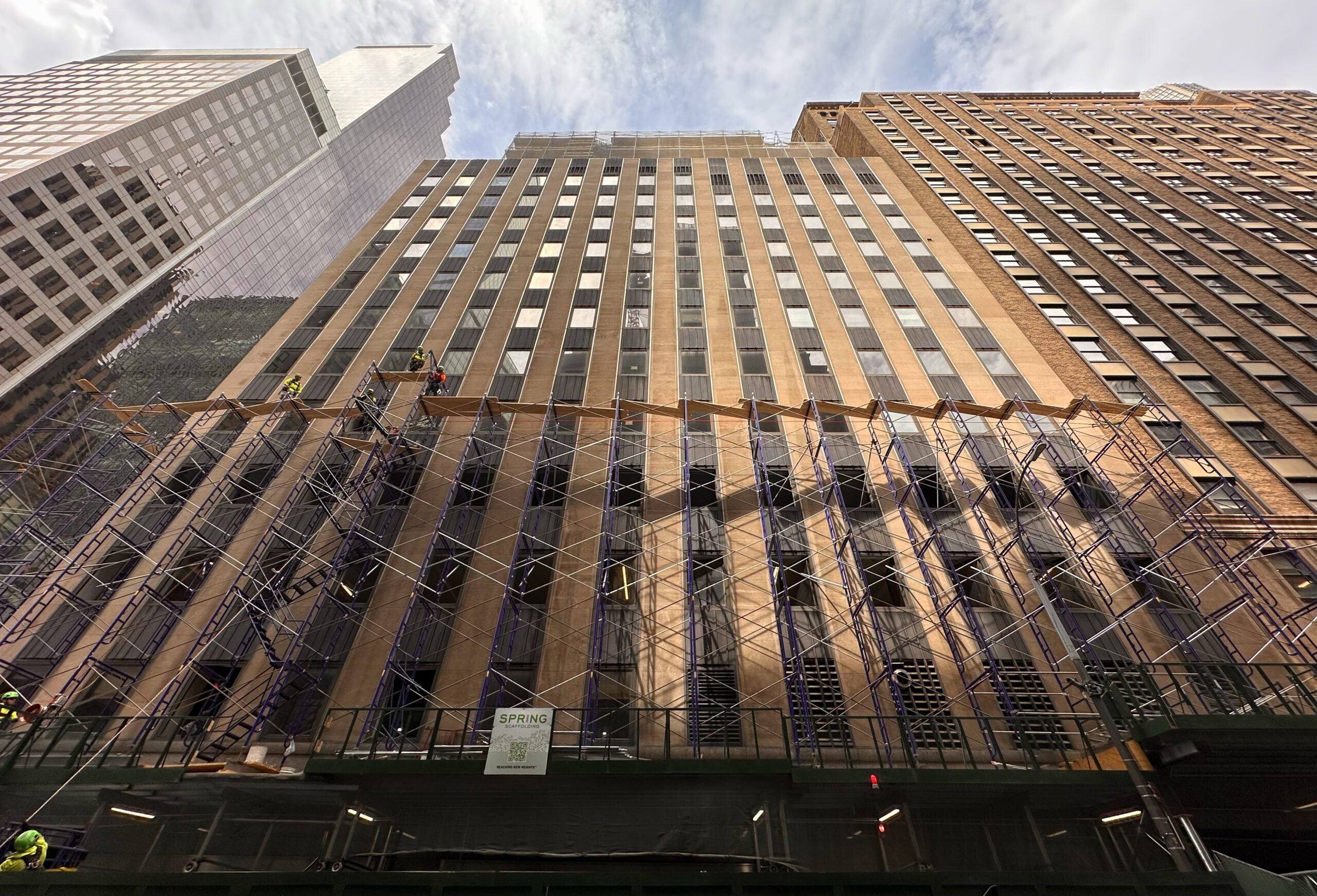
1740 Broadway. Photo by Michael Young.
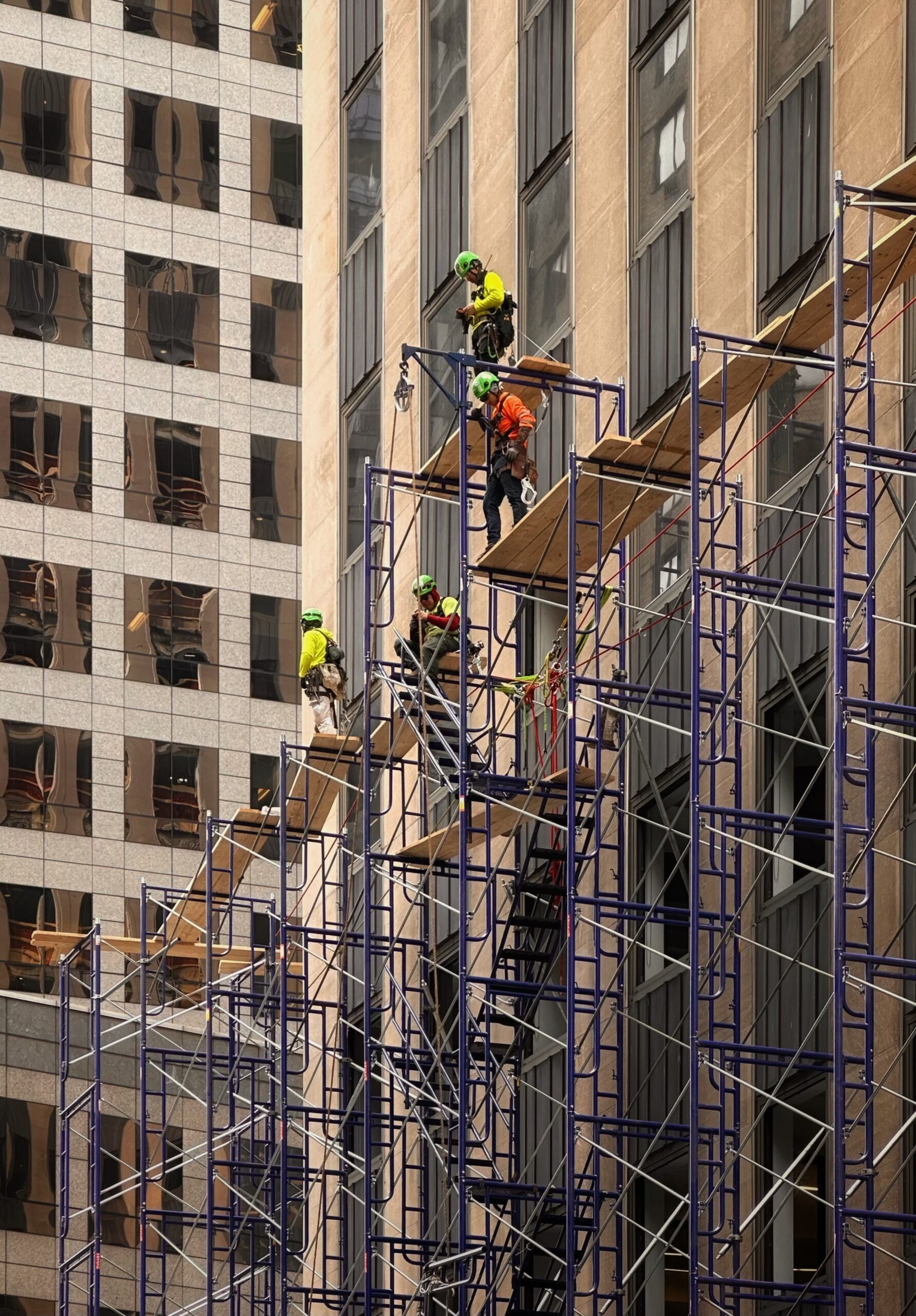
1740 Broadway. Photo by Michael Young.
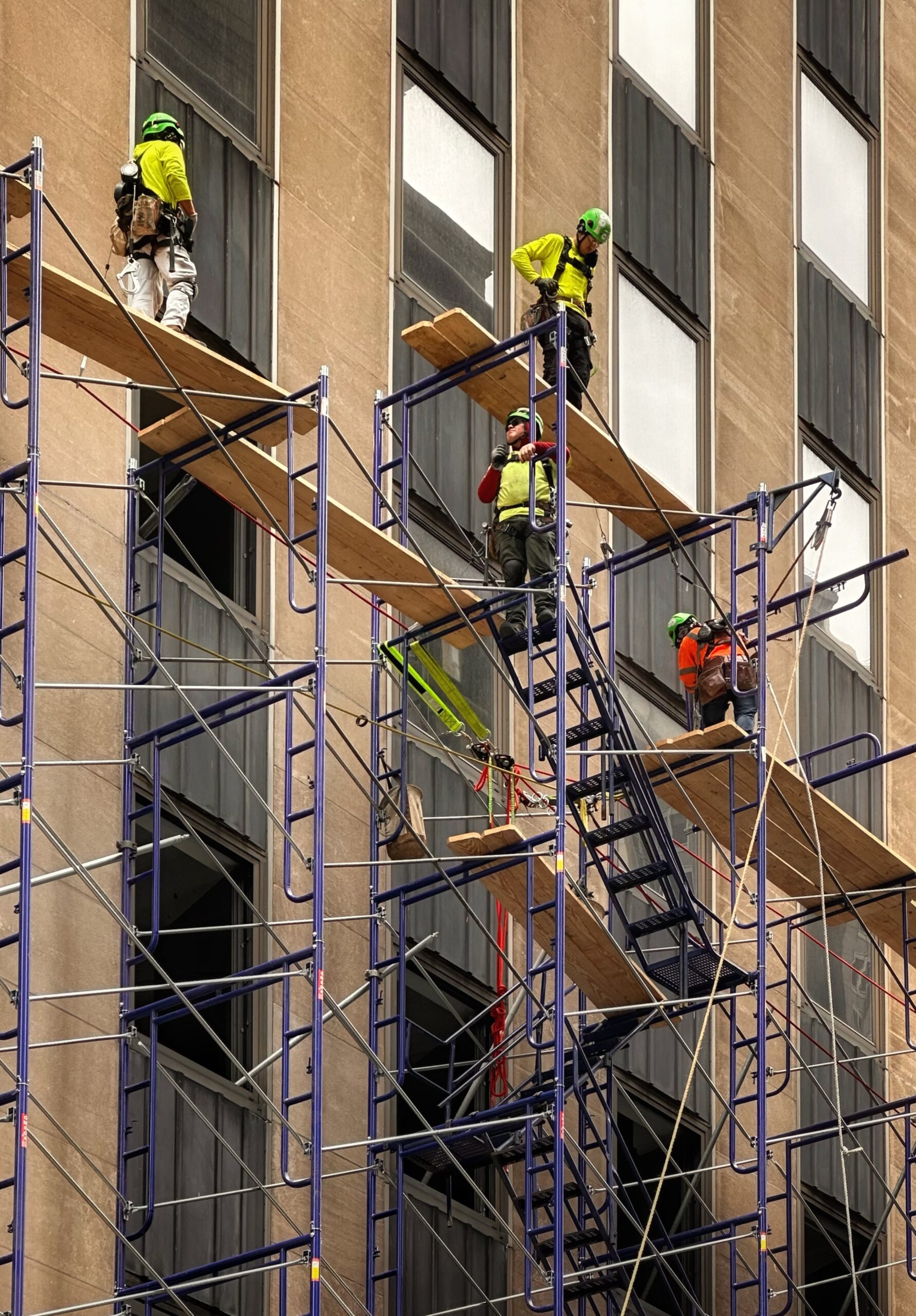
1740 Broadway. Photo by Michael Young.
A new rendering depicts the project, which will get rid of all the metal spandrels and will be replaced with a taller and larger set of glass windows. There also appears to be a new expansion on the upper levels of the southern elevation, along with several corner balconies.
1740 Broadway. Designed by BKSK Architects.
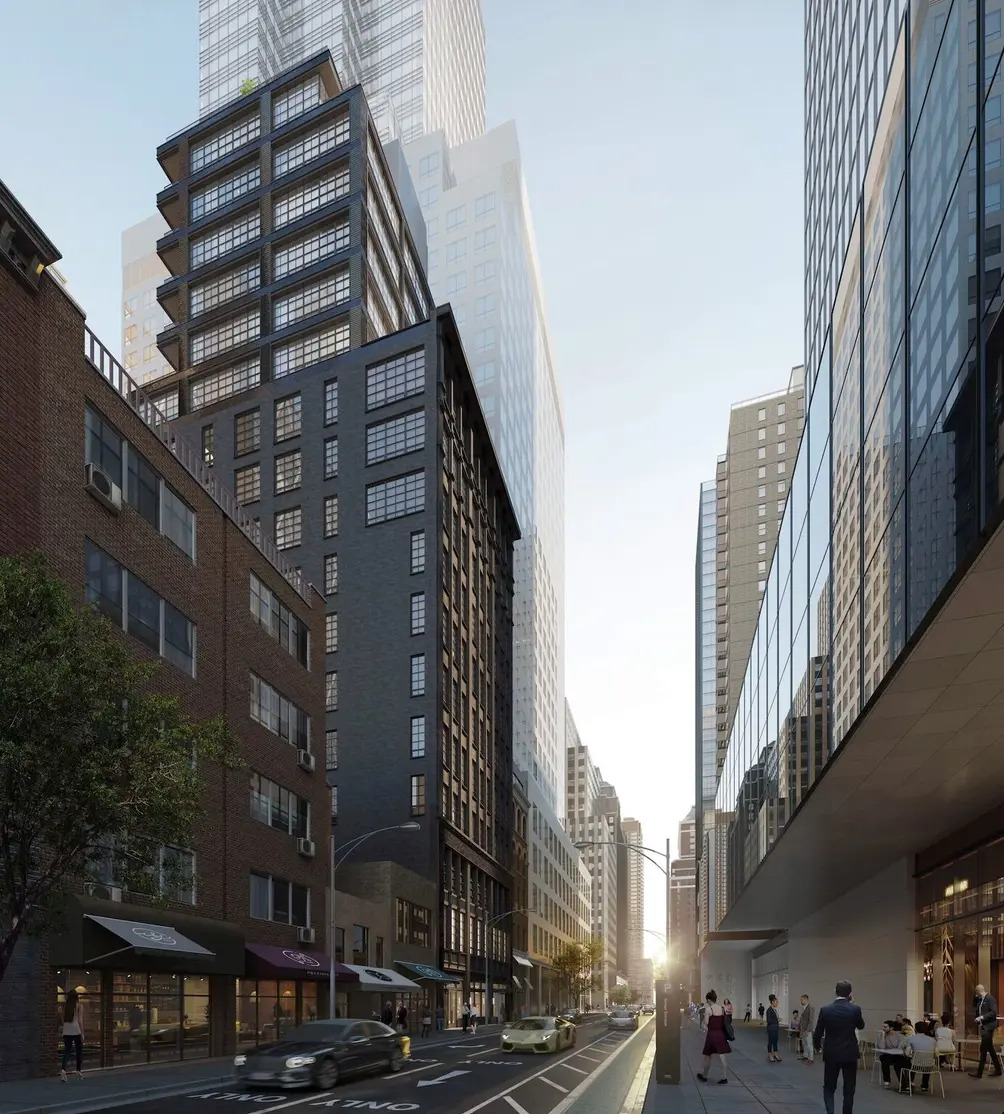
Construction is rising on the DuArt Building, a conversion and expansion at 245 West 55th Street on the border of Midtown and Hell’s Kitchen. Designed by Fogarty Finger and developed by New Jersey-based Mandelbaum & Mandelbaum under the 245 West 55th St LLC, the project will add six new stories atop the 135-foot-tall structure, bringing it to 18 stories, and will repurpose its 70,000 square feet into 42 condominium units. The property is located between Broadway and Eighth Avenue.
The developer acquired the building, which long served as a motion picture lab and processing studio facility, for $28.5 million in June 2023.
The renderings show the masonry on the building’s existing levels painted black, and the new levels above the roof with expansive industrial-style windows.
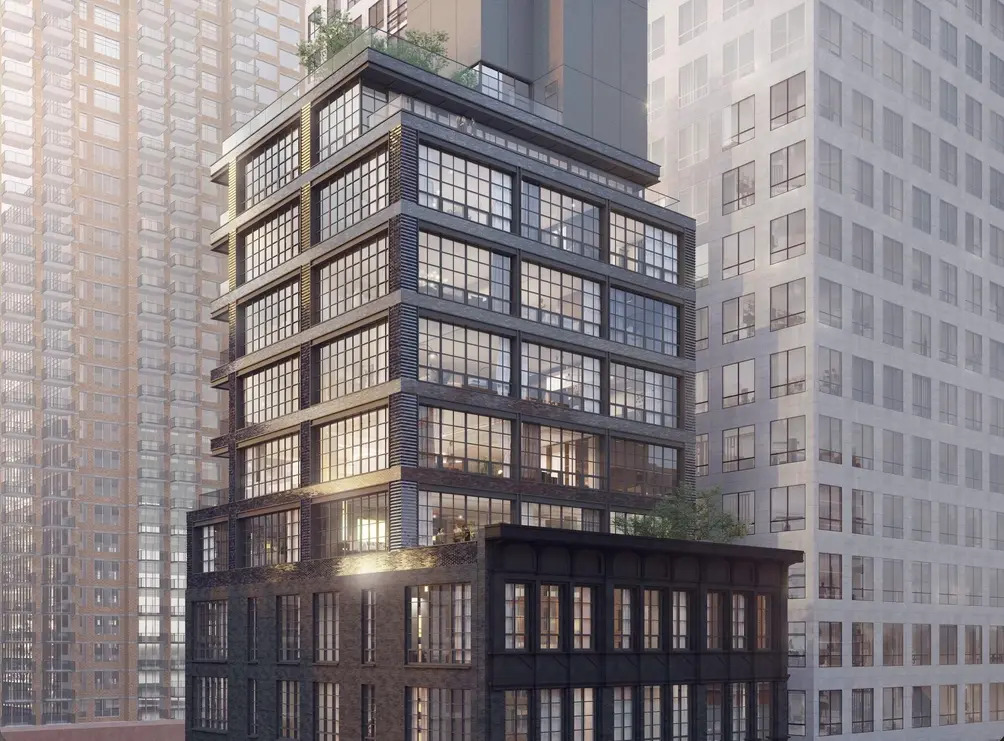
245 West 55th Street. Rendering courtesy of Fogarty Finger.
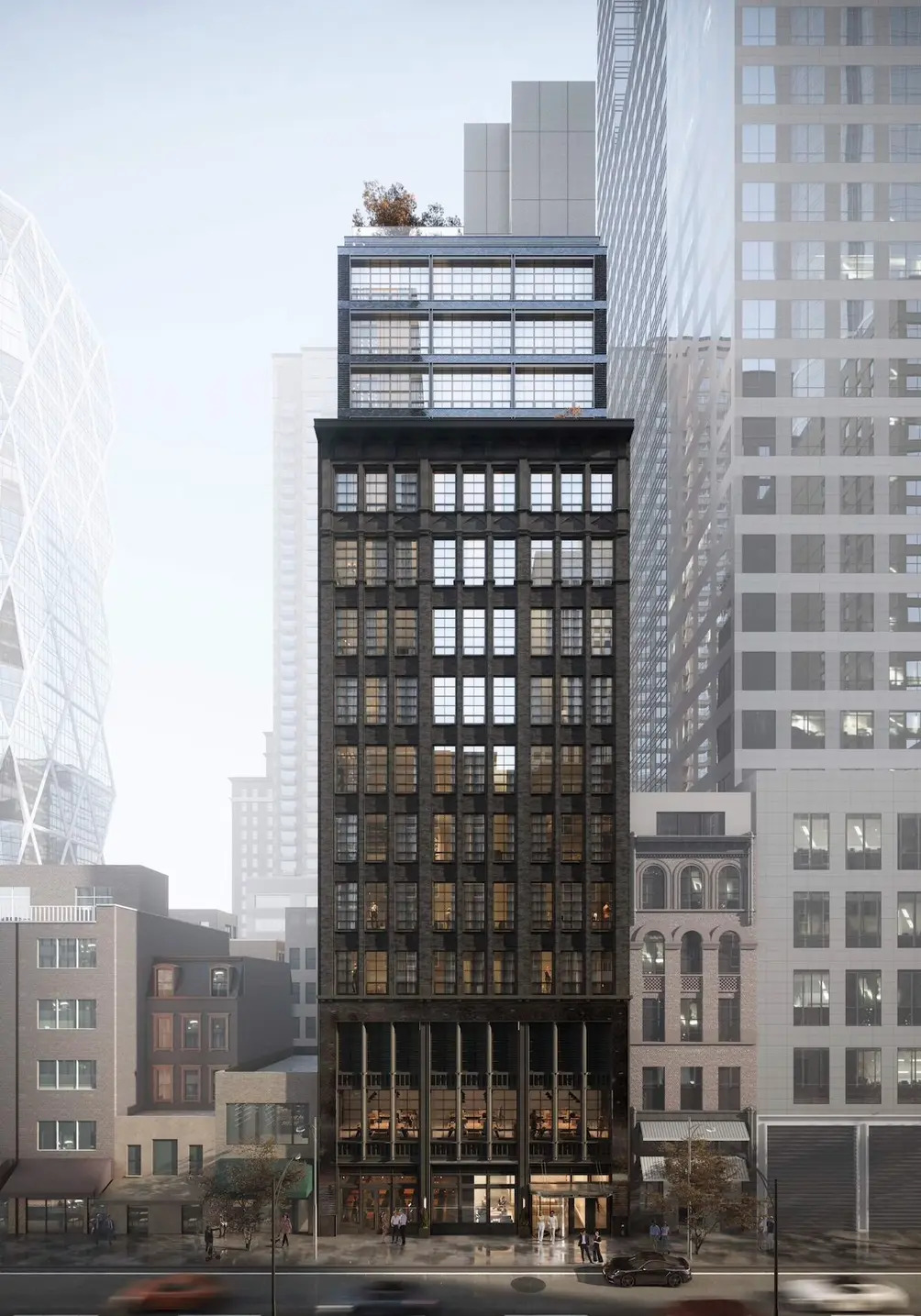
245 West 55th Street. Rendering courtesy of Fogarty Finger.
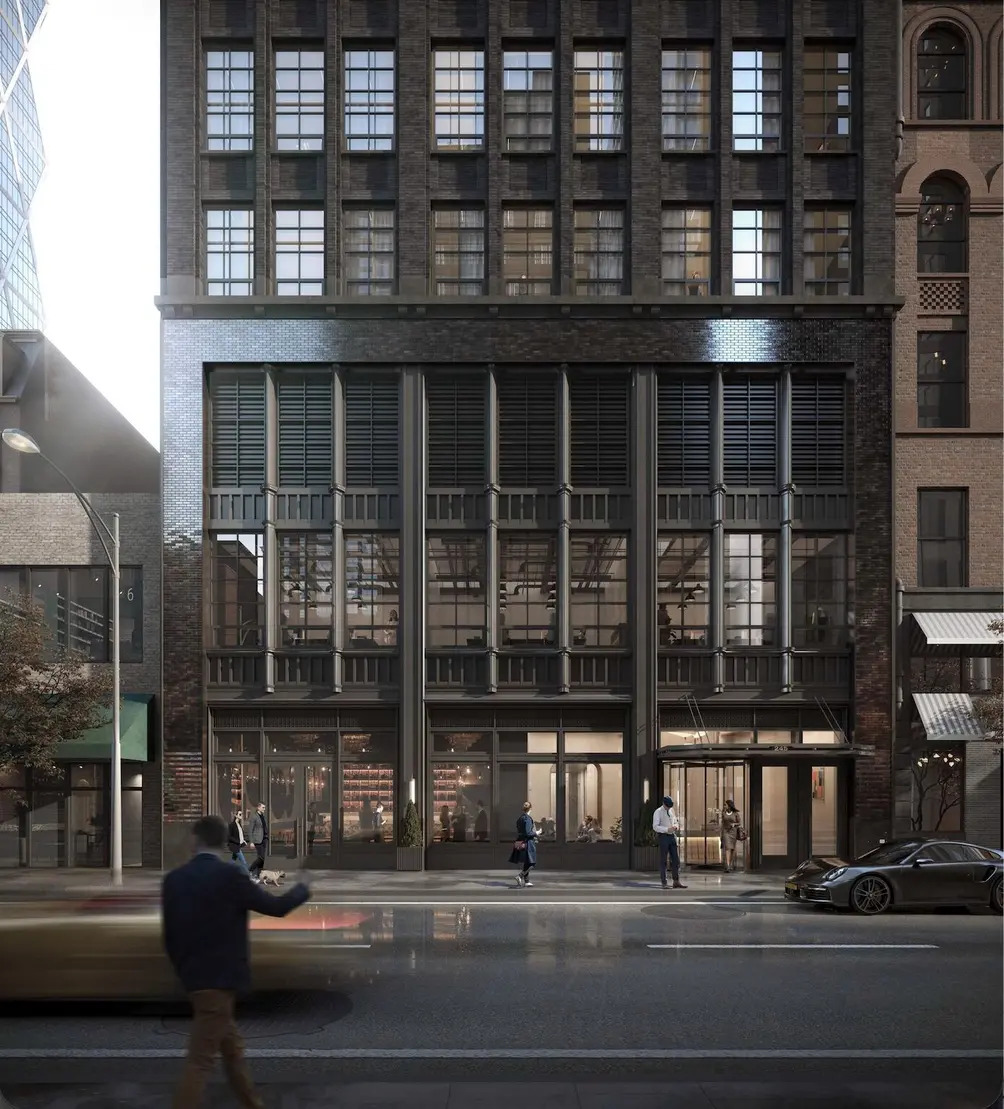
245 West 55th Street. Rendering courtesy of Fogarty Finger.
245 West 55th Street. Rendering courtesy of Fogarty Finger.
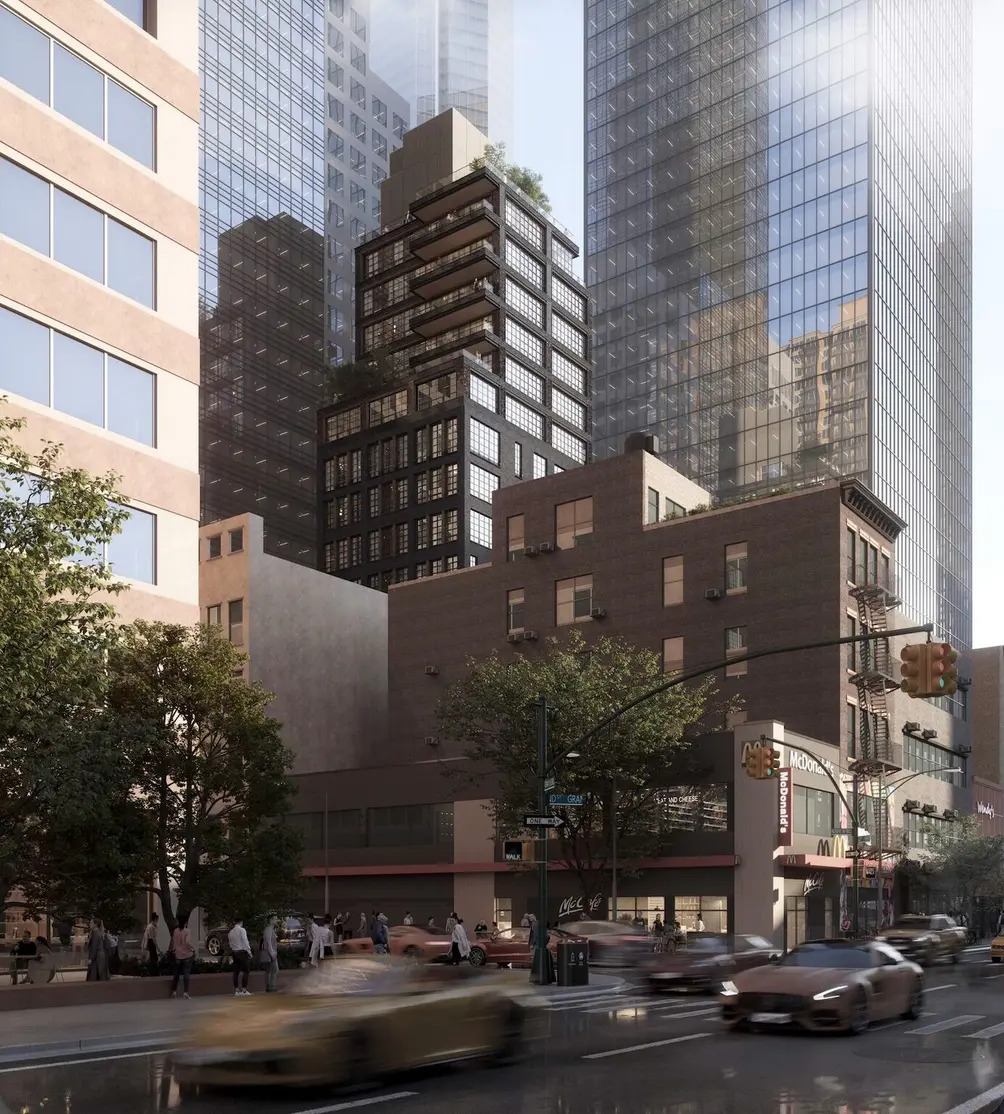
245 West 55th Street. Rendering courtesy of Fogarty Finger.
The building stands shrouded and scaffolding and construction netting, and the first level of the expansion has begun taking shape. 245 West 55th Street’s anticipated completion date is slated for spring 2027, as noted on site.
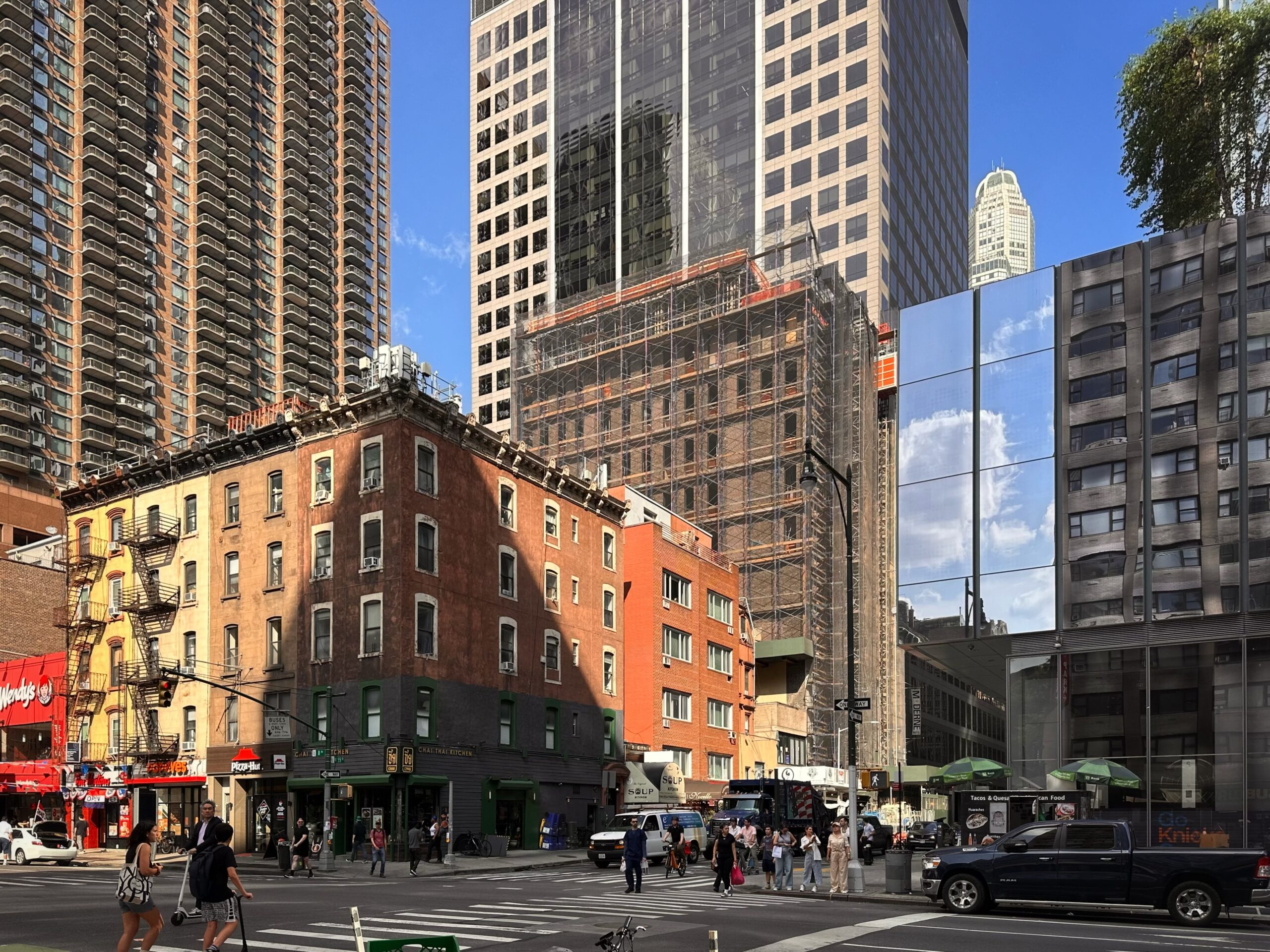
245 West 55th Street. Photo by Michael Young.
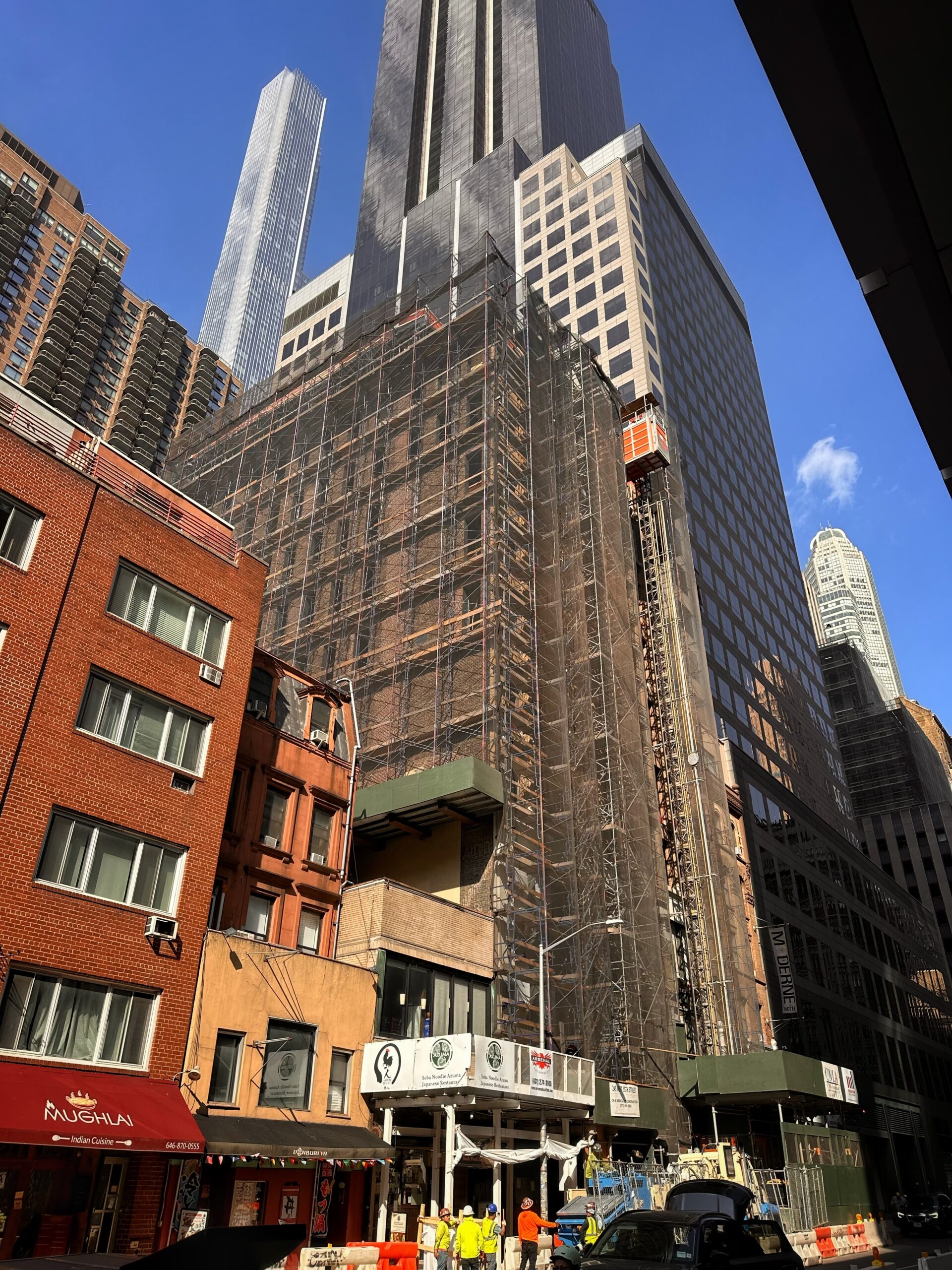
245 West 55th Street. Photo by Michael Young.
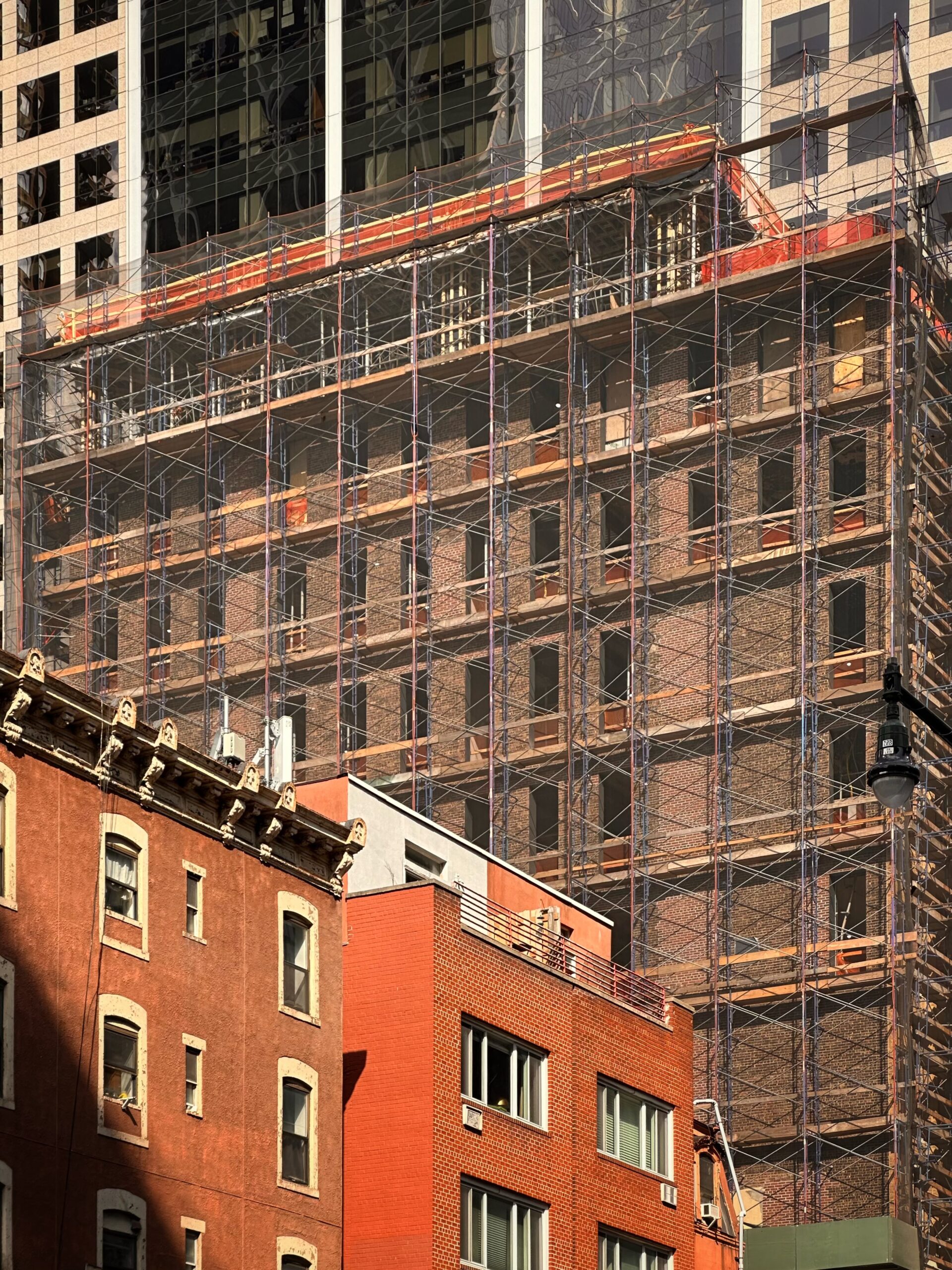
245 West 55th Street. Photo by Michael Young.
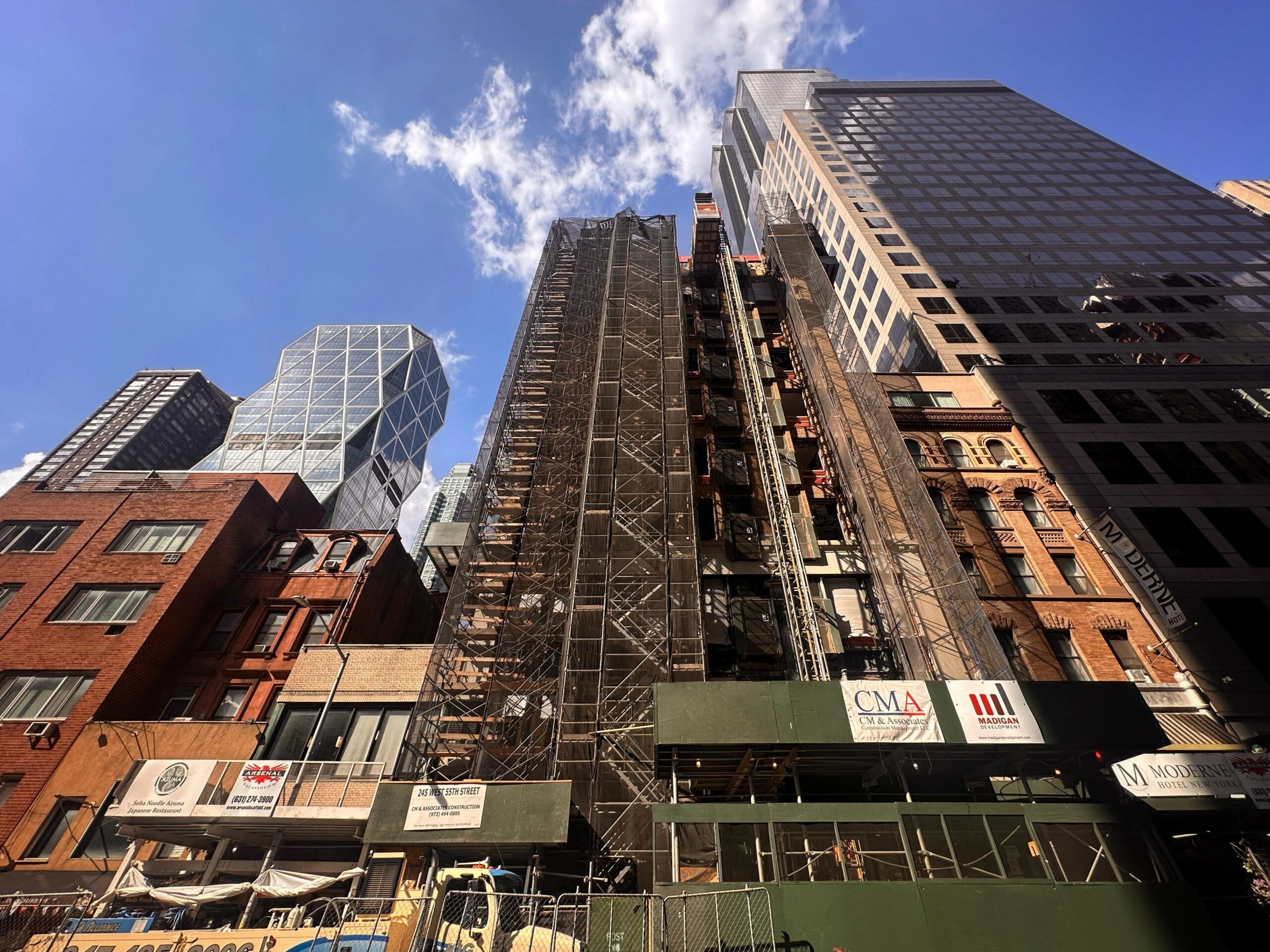
245 West 55th Street. Photo by Michael Young.
Work is getting underway on 333 West 52nd Street, a 14-story building in Hell’s Kitchen. Designed by CetraRuddy Architecture and developed by the Abramson Brothers, the project will convert the 90,000-square-foot structure to yield 108 residential units. The development will also include ground-floor retail space, coworking space, on-site parking, a fitness center, and a shared roof deck. The property is located between Eighth and Ninth Avenues.
A sidewalk shed has been installed around the 98-year-old building, but it appears that interior work has yet to begin. An anticipated completion date has not been announced.
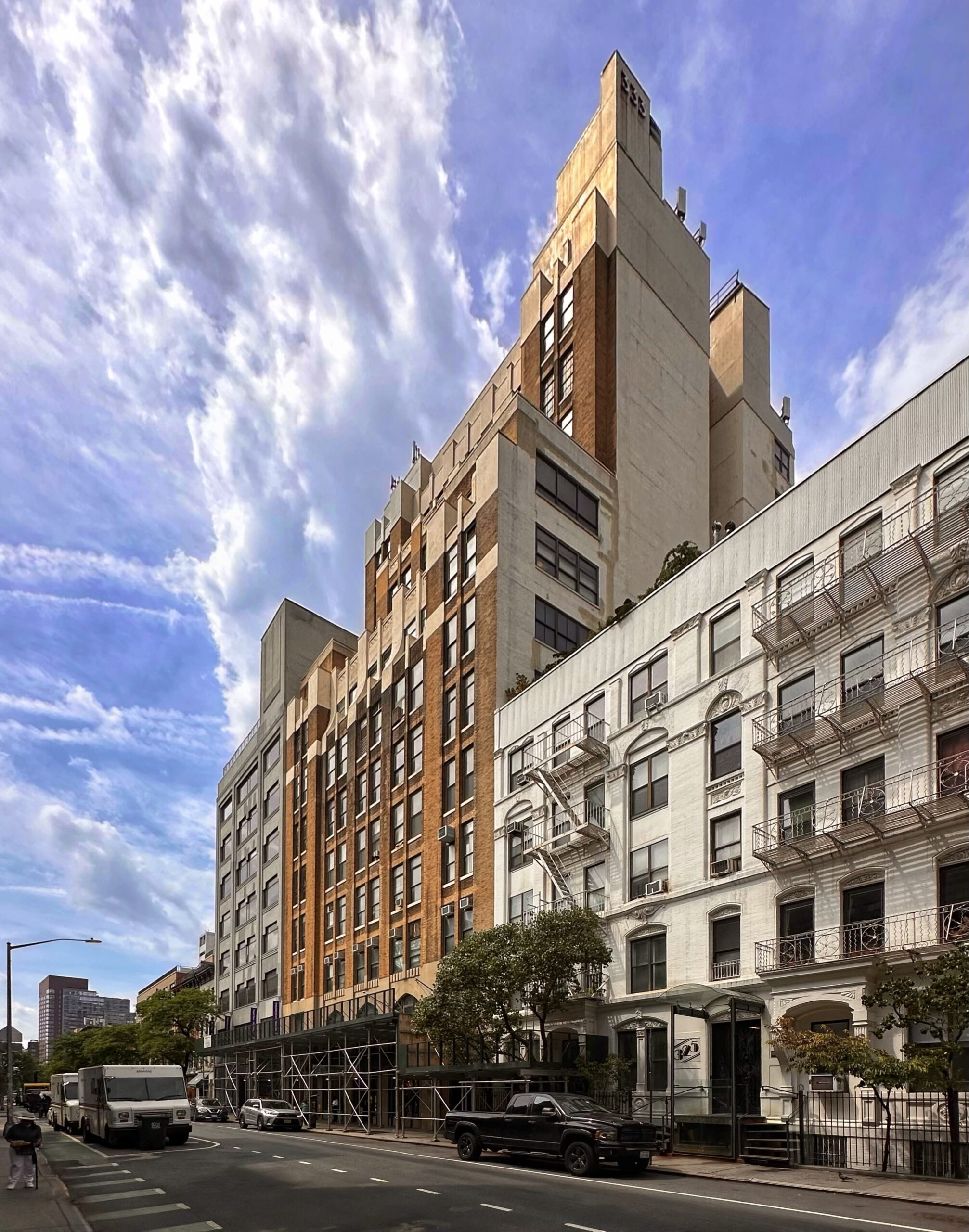
333 West 52nd Street. Photo by Michael Young.
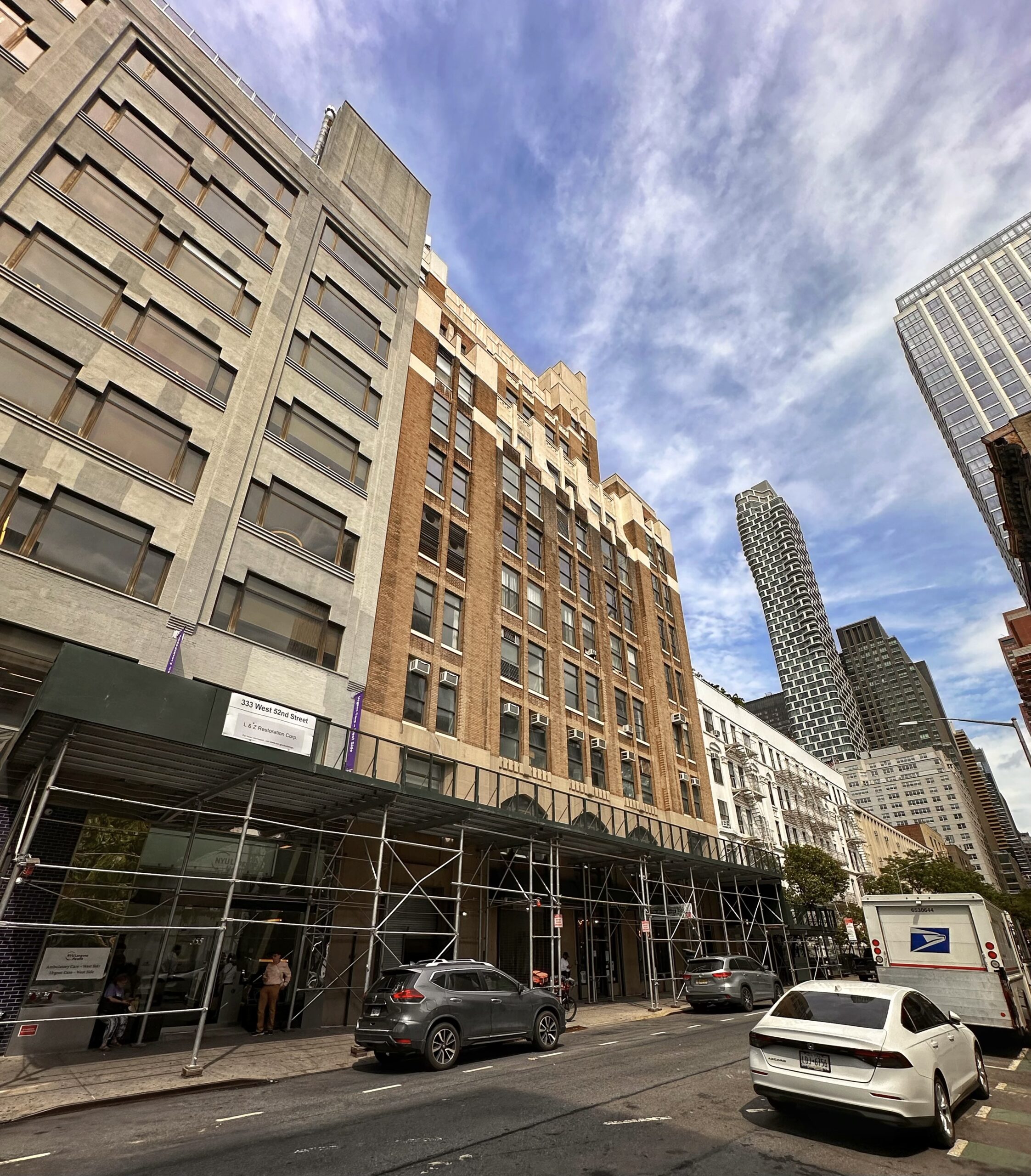
333 West 52nd Street. Photo by Michael Young.
Subscribe to YIMBY’s daily e-mail

Follow YIMBYgram for real-time photo updates
Like YIMBY on Facebook
Follow YIMBY’s Twitter for the latest in YIMBYnews
Good stuff.
So many of these former commercial office buildings were infill, or even corner placeholders, with facades that were quite nondescript or just plain, utilitarian-ugly. It appears the facades are bearing the brunt of the sacrifice in penciling out.
Keep up the local reporting! Please add the residential conversion of 750 Third Avenue in your next update.
333 W. 52nd St. already looks residential. Is it an update or a conversion from commercial?
Regarding 1740 Broadway…
Will the illuminated “MONY Weather Star” be retained? Will it still function, giving weather conditions based on color of the top lantern and direction of the “zip lights” on the stem? 😉